


As cloud computing, artificial intelligence (AI), edge computing, and digital transformation continue to reshape the global IT landscape, data centers are becoming larger, more complex, and more distributed than ever before.
Modern modular data centers and containerized data centers offer significant advantages in deployment speed, scalability, and operational efficiency. However, as infrastructure expands, managing thousands of servers, network devices, power systems, and cooling equipment becomes increasingly challenging.
For many organizations, asset management remains one of the most overlooked aspects of data center operations.
Traditional asset management methods that rely heavily on spreadsheets, manual inspections, and human record-keeping are no longer sufficient to support today's dynamic IT environments.
To achieve intelligent, automated, and highly efficient operations, organizations are increasingly adopting smart asset management technologies within modular data center environments.
This article explores the limitations of traditional data center asset management and the modern technologies transforming asset visibility, tracking, and lifecycle management.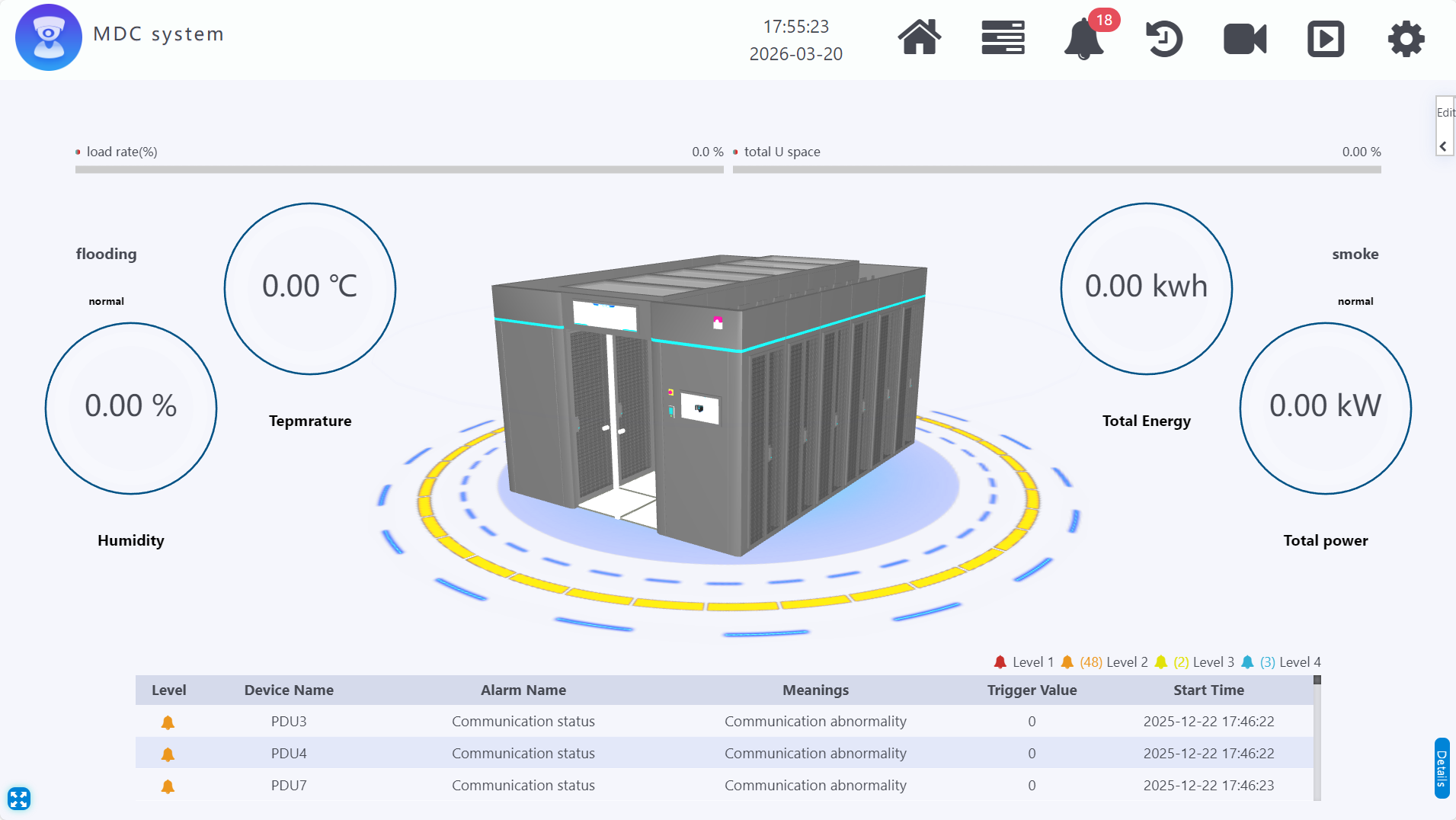
Every data center contains a vast number of assets, including:
● Servers
● Storage systems
● Network switches
● Routers
● UPS systems
● PDUs
● Cooling equipment
● Monitoring devices
● Security systems
As facilities grow, maintaining accurate information about asset location, status, ownership, utilization, and lifecycle becomes critical.
Effective asset management helps organizations:
✓ Improve operational efficiency
✓ Reduce maintenance costs
✓ Prevent asset loss
✓ Optimize resource utilization
✓ Accelerate deployment activities
✓ Support compliance and auditing requirements
✓ Enable data-driven decision making
Without a reliable asset management strategy, organizations risk operational inefficiencies and unnecessary capital expenditure.
Historically, many organizations have relied on:
● Excel spreadsheets
● Access databases
● Small asset management software
● Manual data entry
● Physical inventory checks
These methods create several challenges.
Data collection often requires technicians to physically inspect equipment and manually update records.
As the number of assets grows, this process becomes:
● Time-consuming
● Labor-intensive
● Expensive
● Error-prone
Large telecom operators and internet service providers (ISPs) may operate dozens of data centers and manage tens of thousands of assets.
Maintaining accurate records manually becomes nearly impossible at scale.
Today's IT infrastructure changes constantly.
Every month, organizations may:
● Install new servers
● Decommission old equipment
● Upgrade network devices
● Relocate hardware between racks
Traditional asset management workflows often lack standardized change management procedures.
As a result:
● Asset records become outdated
● Equipment locations become inaccurate
● Capacity planning becomes difficult
● Deployment activities slow down
Many organizations still send technicians into the data hall simply to identify available rack space before installing new equipment.
This inefficiency increases operational costs and deployment delays.
Many traditional data centers suffer from fragmented asset information.
Common issues include:
● Unknown assets
● Idle equipment
● Duplicate purchases
● Underutilized resources
Without accurate asset visibility, organizations struggle to answer critical questions:
● Which assets are active?
● Which assets are available?
● Which assets are approaching end-of-life?
● Where is available rack space located?
This lack of transparency often leads to unnecessary hardware investments and poor resource utilization.
As data centers become increasingly automated, intelligent asset management has emerged as a key component of modern Data Center Infrastructure Management (DCIM).
Leading modular data center providers now integrate:
● Automated asset identification
● Real-time asset tracking
● Intelligent monitoring
● Lifecycle management
● Capacity analytics
These technologies enable operators to manage infrastructure with greater accuracy and significantly less manual intervention.
Barcode systems represent the first step toward digital asset tracking.
A typical solution includes:
● Barcode labels
● Handheld scanners
● Asset management software
● Centralized databases
During inventory checks, technicians scan equipment labels and update records.
● Low implementation cost
● Easy deployment
● Improved record keeping
● Requires manual scanning
● Labor intensive
● Prone to human error
● Difficult to manage large facilities
For modern hyperscale or modular data centers, barcode solutions alone are often insufficient.
One of the biggest challenges in data center asset management is identifying the exact rack and U-position occupied by each device.
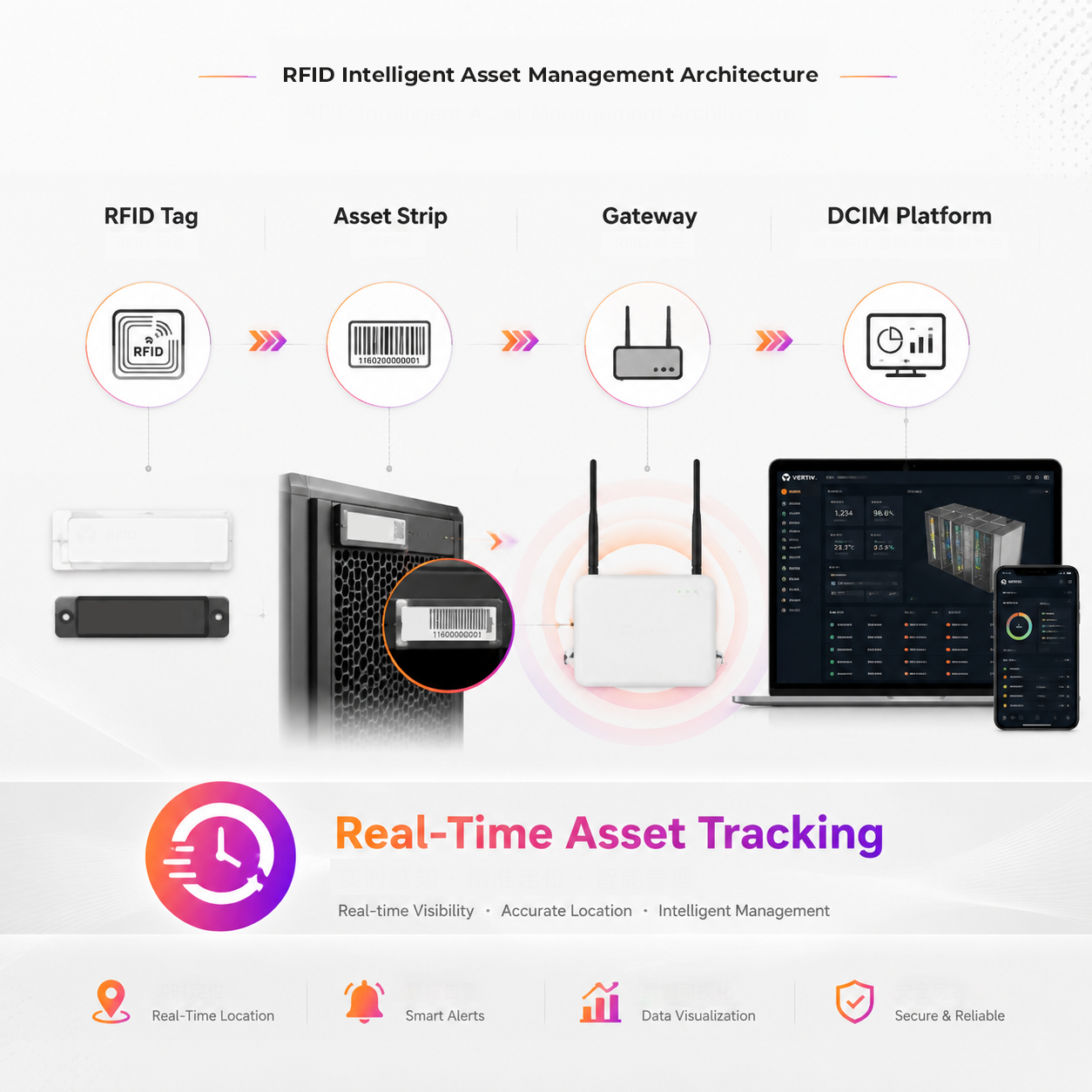
To address this challenge, many manufacturers have developed intelligent rack asset identification systems based on Internet of Things (IoT) technologies.
These solutions typically include:
● RFID-enabled asset strips
● Smart rack sensors
● Automatic occupancy detection
● Real-time location tracking
Installed inside the rack, intelligent asset identification strips automatically determine:
● Which U-space is occupied
● Which U-space remains available
● Which equipment is installed in each location
This information is continuously synchronized with the asset management platform.
✓ Real-time asset visibility
✓ Accurate rack capacity management
✓ Faster equipment deployment
✓ Improved planning accuracy
✓ Reduced manual inspections
For blade servers and high-density deployments, accurate U-level tracking dramatically simplifies operations.
Unlike servers and network devices, infrastructure equipment such as:
● UPS systems
● Cooling units
● Power distribution systems
often cannot be automatically discovered by traditional network management platforms.
To solve this issue, modern smart devices now support:
● Electronic identification tags
● Embedded communication modules
● Automatic registration capabilities
When connected to the network, these devices automatically:
● Identify themselves
● Register within management platforms
● Upload asset information
● Synchronize operational status
This creates a self-updating asset database with minimal human intervention.
● Faster commissioning
● Reduced configuration effort
● Improved data accuracy
● Real-time lifecycle tracking
As smart infrastructure becomes more common, self-registering equipment is expected to become a standard feature in future-ready modular data centers.
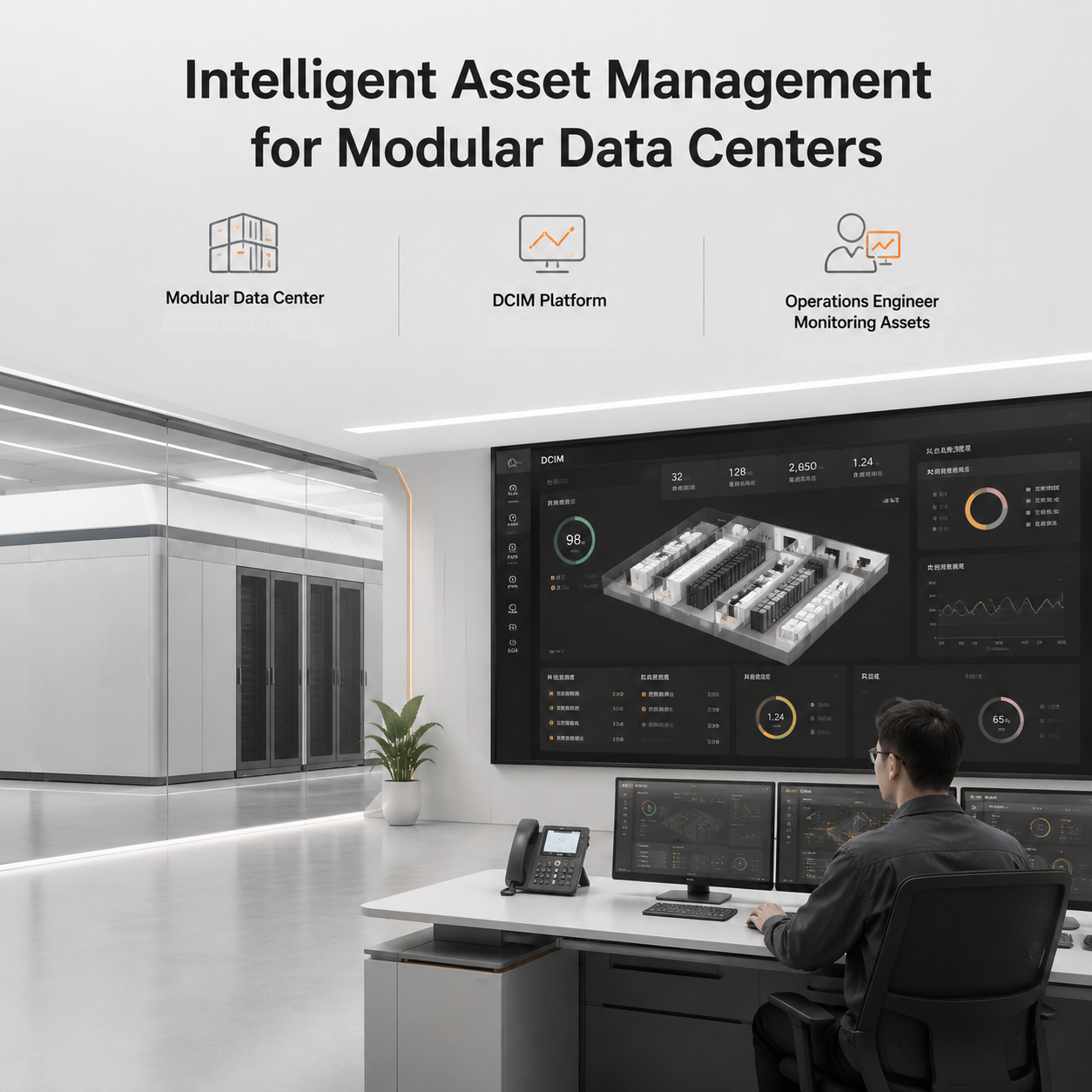
Modern Data Center Infrastructure Management (DCIM) platforms integrate asset management with operational intelligence.
A DCIM platform provides:
Track every asset across multiple sites.
Monitor rack space, power capacity, and cooling availability.
Automatically record infrastructure modifications.
Track assets from installation through retirement.
Generate actionable insights to improve operational performance.
By combining asset data with power, cooling, and environmental monitoring, organizations gain a complete view of their infrastructure ecosystem.
Organizations implementing intelligent asset management solutions can achieve:
Automation significantly lowers labor requirements.
RFID and automated identification technologies eliminate manual errors.
Real-time visibility accelerates installation and expansion projects.
Operators can accurately identify available rack space and infrastructure resources.
Accurate asset information supports preventive maintenance and operational planning.
Intelligent management enables highly automated and remotely operated facilities.
AI-driven data centers introduce unprecedented infrastructure complexity.
High-density computing environments require:
● Frequent hardware upgrades
● Dynamic capacity adjustments
● Precise asset tracking
● Automated operational workflows
Traditional manual asset management methods cannot keep pace with these demands.
Intelligent asset management provides the visibility, automation, and scalability required to support next-generation AI, cloud, and edge computing infrastructure.
Traditional asset management methods based on spreadsheets, manual inspections, and fragmented databases are becoming increasingly inadequate for modern data center operations.
As modular data centers continue to expand in scale and complexity, intelligent asset management technologies—including RFID tracking, automated asset discovery, U-level identification, and DCIM integration—are transforming the way infrastructure is managed.
By adopting automated asset management solutions, operators can improve accuracy, reduce operational costs, accelerate deployment activities, and create a foundation for highly efficient, future-ready data center operations.
For organizations investing in modular data centers, asset management is no longer just an operational function—it is a strategic capability that directly impacts efficiency, reliability, and business growth.
Tell us your needs for data center infrastructure, and our team will provide you with customized green & energy-saving integrated solutions with global delivery and fast response.

 EN
EN