

As digital transformation, artificial intelligence (AI), cloud computing, and edge computing continue to accelerate, data centers are consuming more power than ever before.
According to industry reports, power infrastructure accounts for a significant portion of a data center's total operating expenditure (OPEX). While servers and storage systems remain the primary consumers of electricity, the Uninterruptible Power Supply (UPS) system plays a critical role in ensuring power reliability and business continuity.
However, inefficient UPS systems can introduce substantial energy losses through power conversion, battery charging, and distribution processes.
For operators of modular data centers, micro modular data centers, and containerized data centers, improving UPS energy efficiency is one of the most effective ways to reduce Total Cost of Ownership (TCO), improve Power Usage Effectiveness (PUE), and support sustainability goals.
This article explores the key strategies organizations can use to maximize UPS efficiency while maintaining the highest levels of power reliability.
Why UPS Efficiency Matters in Modern Modular Data Centers
UPS systems provide uninterrupted power during utility outages and protect critical IT equipment from voltage fluctuations, power disturbances, and unexpected failures.
Although UPS systems are designed to improve reliability, they also consume energy during:
● AC-to-DC conversion
● DC-to-AC inversion
● Battery charging
● Power distribution
● Cooling requirements
Even a small improvement in UPS efficiency can result in significant annual energy savings for medium and large-scale data centers.
For example:
● A 500 kW UPS operating at 94% efficiency wastes approximately 30 kW of power.
● A modern UPS operating at 97% efficiency reduces losses by more than half.
Over a 10-year lifecycle, these savings can translate into hundreds of thousands of dollars in reduced electricity costs.
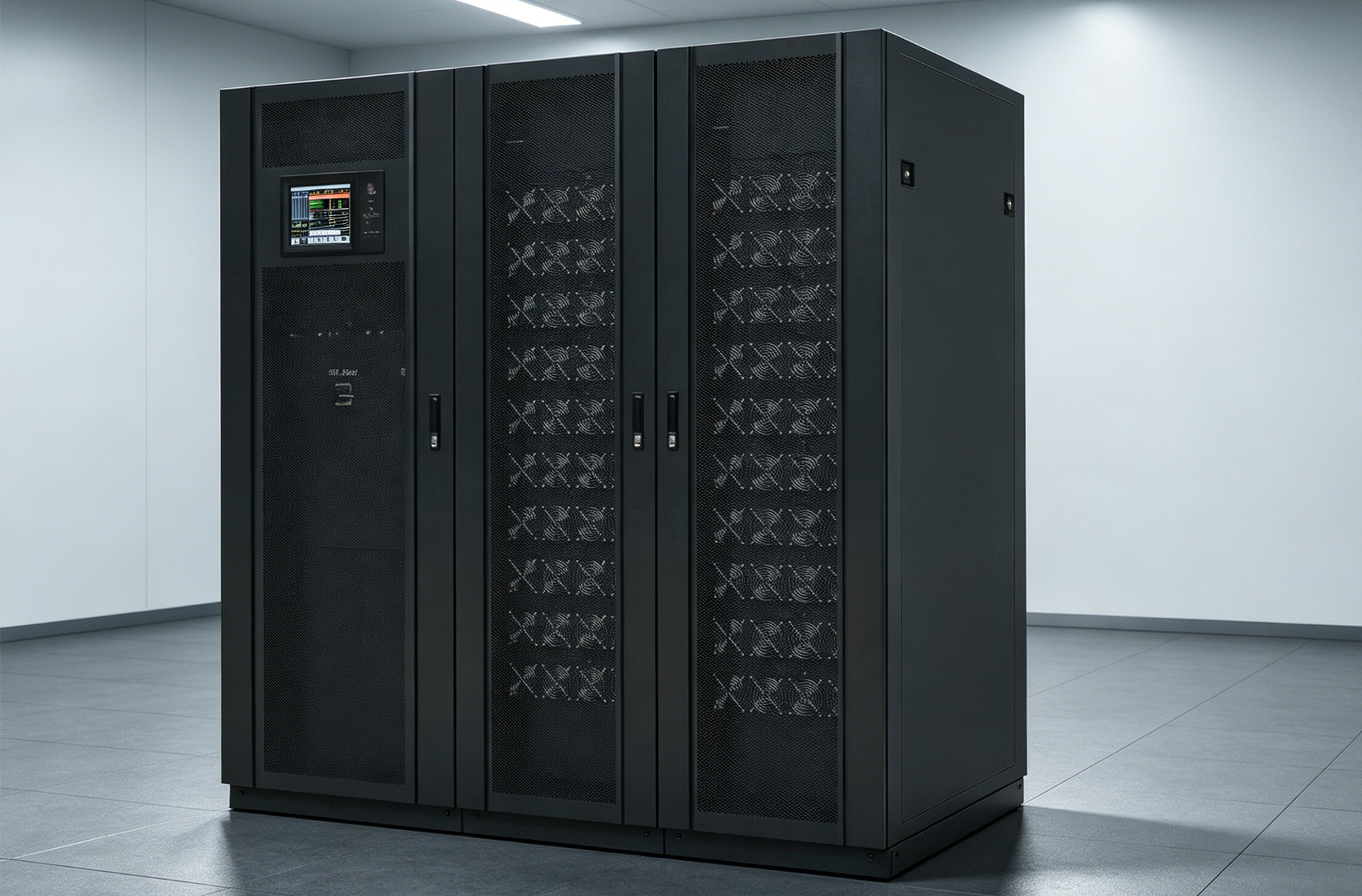
1. Choose High-Efficiency Modular UPS Systems
The first step toward energy savings is selecting the right UPS architecture.
Traditional monolithic UPS systems often operate inefficiently under partial loads.
Modern modular UPS solutions offer significant advantages:
Higher Operating Efficiency
Leading modular UPS systems can achieve:
● Up to 97% efficiency in double-conversion mode
● Up to 99% efficiency in ECO mode
Right-Sized Capacity
Modular UPS systems allow operators to install only the capacity required today and add modules as demand grows.
Benefits include:
✓ Reduced initial investment
✓ Higher efficiency at partial loads
✓ Lower energy losses
✓ Improved scalability
This "pay-as-you-grow" model aligns perfectly with modular and containerized data center deployments.
2. Match UPS Capacity to Actual IT Load
One of the most common causes of power inefficiency is oversizing.
Many traditional data centers deploy UPS systems sized for future growth that may not occur for years.
As a result:
● UPS modules operate at low load levels
● Conversion efficiency decreases
● Energy losses increase
A modular data center should instead:
● Assess current IT demand
● Deploy only required UPS capacity
● Expand incrementally as workloads increase
Operating a UPS between 50% and 80% load typically delivers optimal efficiency performance.
This approach improves both energy utilization and capital efficiency.
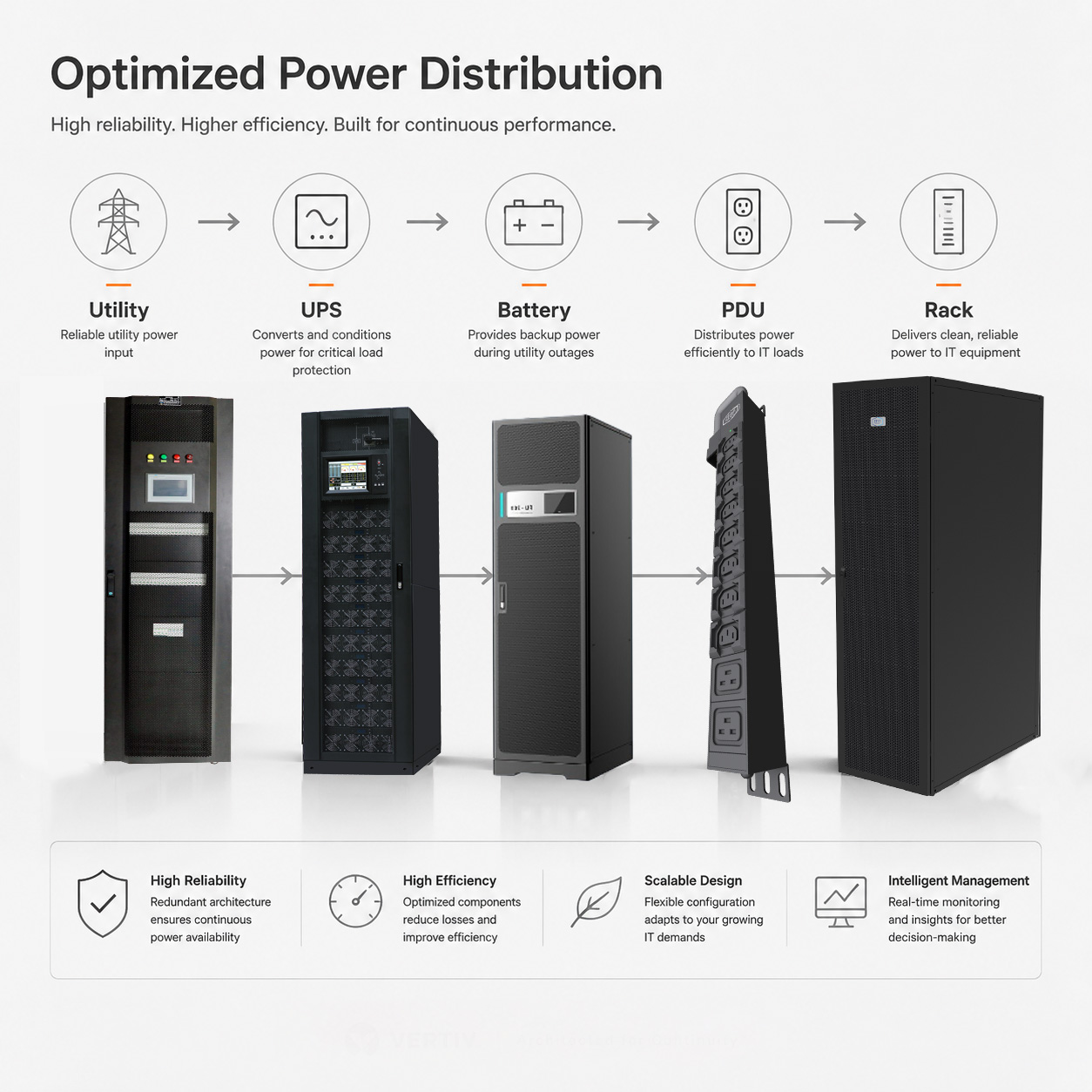
3. Optimize Power Distribution Architecture
Power losses do not occur only inside the UPS.
Electrical losses also occur throughout the distribution chain.
A well-designed modular data center power architecture should minimize:
● Long cable runs
● Excessive transformers
● Multiple conversion stages
● Unnecessary distribution equipment
Best practices include:
Distributed Power Architecture
Locating power equipment closer to IT loads reduces transmission losses.
Intelligent Power Distribution Units (PDUs)
Modern PDUs provide:
● Real-time power monitoring
● Branch circuit visibility
● Load balancing capabilities
High-Voltage Distribution
Using higher voltage distribution systems can significantly reduce electrical losses.
The result is greater overall power efficiency from utility entrance to rack level.
4. Improve Cooling Around UPS Equipment
UPS systems generate heat during operation.
Higher temperatures reduce efficiency and shorten component lifespan.
Many data centers focus cooling efforts solely on IT equipment while overlooking power infrastructure.
To maximize UPS performance:
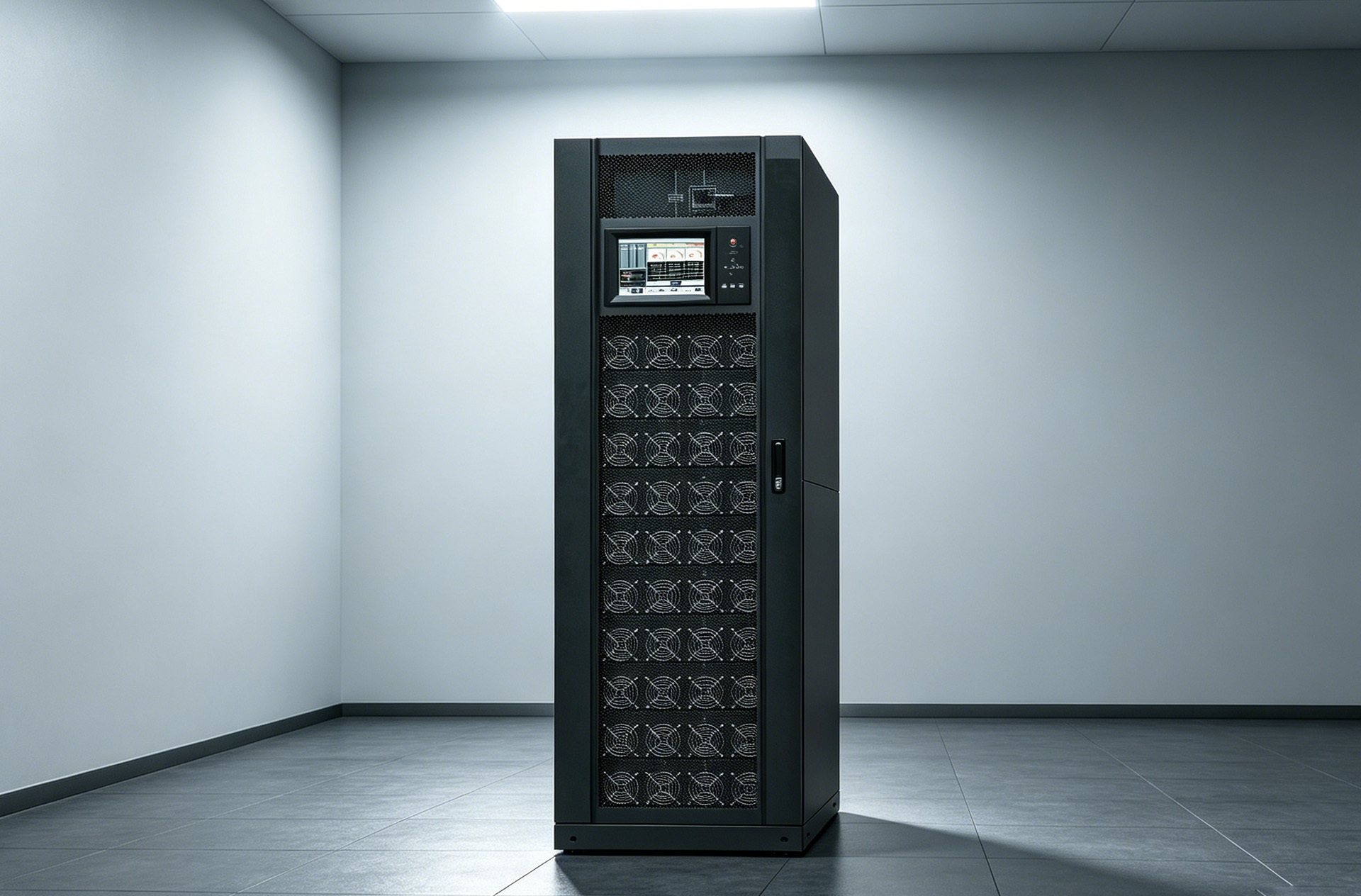
Maintain Recommended Operating Temperatures
Most UPS manufacturers recommend:
● 20°C to 25°C (68°F to 77°F)
Deploy Precision Cooling
Modern modular data centers often utilize:
● In-row cooling
● Precision air conditioning
● Intelligent airflow management
Separate Hot and Cold Airflows
Proper airflow organization prevents heat recirculation and improves cooling effectiveness.
Lower UPS operating temperatures result in:
● Higher efficiency
● Extended battery life
● Reduced maintenance costs
5. Utilize Lithium-Ion Battery Technology
Battery systems significantly impact UPS efficiency and operational costs.
Traditional VRLA batteries have limitations:
● Shorter lifespan
● Higher maintenance requirements
● Greater cooling demand
Many next-generation modular data centers are adopting lithium-ion battery technology.
Benefits include:
Reduced Energy Consumption
Lithium-ion batteries typically have:
● Higher charging efficiency
● Lower internal resistance
Longer Service Life
Typical lifespan:
● VRLA Batteries: 3–5 years
● Lithium-Ion Batteries: 10–15 years
Smaller Footprint
Higher energy density reduces space requirements.
For AI-ready modular data centers, lithium-ion technology is increasingly becoming the preferred solution.
6. Implement Intelligent Power Monitoring and DCIM
You cannot optimize what you cannot measure.
Modern Data Center Infrastructure Management (DCIM) platforms provide valuable visibility into UPS performance.
Key monitoring capabilities include:
● UPS load levels
● Energy consumption trends
● Battery health status
● Power quality analysis
● Capacity forecasting
Advanced analytics help operators identify:
● Underutilized UPS modules
● Inefficient operating conditions
● Potential failures before downtime occurs
This proactive approach supports both energy savings and operational reliability.
7. Reduce Data Center Cooling Demand Through Better Airflow Management
Although UPS systems are part of the power infrastructure, overall facility efficiency is closely connected to cooling performance.
Poor airflow management forces cooling systems to consume additional energy.
Effective strategies include:
Hot Aisle/Cold Aisle Containment
Separating hot and cold air streams improves cooling efficiency.
Sealing Air Leakage
Preventing unwanted airflow leakage reduces cooling waste.
Optimized Rack Layout
Proper equipment placement improves air circulation and temperature control.
By reducing overall cooling demand, the entire facility—including UPS systems—operates more efficiently.
8. Improve Building Insulation and Environmental Control
Energy losses often occur outside the power room itself.
Many facilities overlook the impact of building insulation on energy consumption.
Recommended measures include:
● Insulated walls and ceilings
● Sealed doors and windows
● Thermal barriers
● Weather-resistant enclosure designs
For containerized data centers and outdoor modular facilities, high-performance insulation is particularly important.
Reduced heat gain translates directly into lower cooling requirements and lower energy consumption.
Preparing UPS Infrastructure for AI Data Centers
Artificial Intelligence workloads are transforming power requirements.
AI clusters can require:
● 30 kW racks
● 50 kW racks
● 100 kW+ racks
These high-density environments demand:
● Highly efficient UPS systems
● Scalable modular architecture
● Intelligent energy management
● Advanced cooling integration
Modular UPS systems provide the flexibility needed to support future AI expansion without sacrificing energy efficiency.
Benefits of Energy-Efficient UPS Systems in Modular Data Centers
Organizations implementing high-efficiency UPS strategies can achieve:
Lower Operating Costs
Reduced electricity consumption lowers annual OPEX.
Improved PUE
Higher power conversion efficiency contributes directly to better PUE performance.
Reduced Carbon Emissions
Lower energy consumption supports sustainability goals and ESG initiatives.
Higher Reliability
Optimized UPS systems experience less thermal stress and improved equipment longevity.
Faster ROI
Energy savings accumulate throughout the lifecycle of the facility.
Conclusion
As power demands continue to rise across AI, cloud, telecom, and edge computing applications, UPS efficiency has become a critical component of modern modular data center design.
By deploying high-efficiency modular UPS systems, right-sizing capacity, optimizing power distribution, improving cooling performance, implementing intelligent monitoring, and adopting advanced battery technologies, organizations can significantly reduce energy consumption while maintaining maximum reliability.
For operators seeking a greener, more scalable, and future-ready infrastructure, energy-efficient UPS architecture is no longer optional—it is a strategic investment that drives long-term operational success.
Tell us your needs for data center infrastructure, and our team will provide you with customized green & energy-saving integrated solutions with global delivery and fast response.

 EN
EN