


A micro data center makes sense when you need somewhere between 5 and 125 kW of IT capacity running within weeks, on a site with no server room and no time to build one. The whole thing arrives as one factory-tested unit - racks, UPS, cooling, monitoring, fire suppression - and connects to building power on day one. This guide walks through the three formats we manufacture, how to size each one, and what real projects actually shipped with.
Strip the marketing language away and a micro data center is a power chain, a cooling loop and a monitoring layer pre-assembled around your IT racks, then tested as a system before it leaves the factory. That last part matters more than it sounds: in a conventional server room, the rack vendor, the UPS vendor and the air-conditioning contractor each test their own piece, and the interfaces between them get tested on your site, on your schedule, at your risk.
The category covers a wider range than most buyers expect. At our own works it spans three product lines:
All three ship pre-installed and pre-tested. Where they differ is density, footprint and how much site works they demand - which is exactly what the next section sorts out.
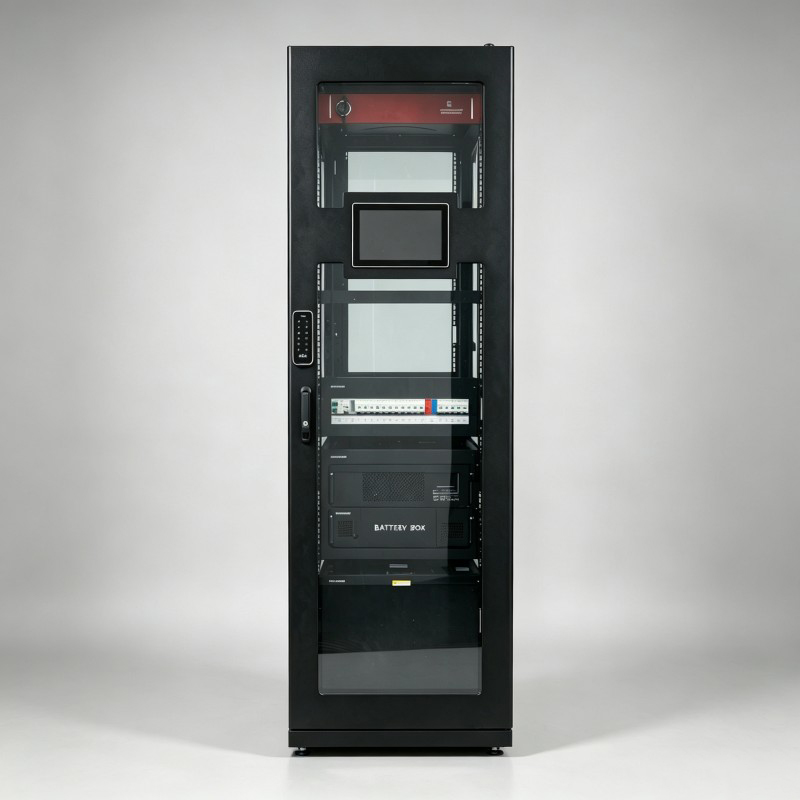
| Warrior (single cabinet) | Wizard (1-10 racks) | Nebula (micro module) | |
| IT load | One rack, up to ~8 kW cooling | 10-80 kW typical | 20-125 kW per module (145 kW with integrated PDU) |
| UPS | 3 / 6 / 10 kVA rack-mounted, PF >= 0.9 | 10-30 kVA, N / N+1 / 2N | 25-125 kVA integrated, efficiency 96% |
| Cooling | Rack AC 3.5 / 4.2 / 8.1 kW | Rack-mounted or in-row AC | In-row AC 25-60 kW, R410A/R407C |
| Fire suppression | FM200 / Novec 1230, rack-mounted | Fire trace tube (optional), local + remote alarm | FM200 with intelligent detection |
| Onsite install | Under one day | Under one day | Days, crane not required |
| Typical sites | 5G nodes, branches, retail | Branch IT, campus, small server rooms | Energy & petrochemical, public safety, banking |
One detail buyers overlook: the Wizard panel connects directly to the existing building power supply - no busbar project, no separate electrical room. On a branch-office retrofit that alone can remove weeks from the schedule.
Datasheets list dozens of parameters. Four of them decide most projects:
The power chain
Ask how the UPS, the distribution panel and the batteries are matched. In the Wizard line, the power distribution module carries up to 100 A three-phase on a rail-mounted frame with the UPS circuit separated from the AC circuit, and takes 7 Ah or 9 Ah battery strings in lead-acid or lithium. Nebula goes bigger: an integrated UPS from 25 to 125 kVA with input power factor above 0.99 at full load and a main MCCB at 250 or 400 A. If a vendor cannot tell you the input power factor and the MCCB rating of their integrated UPS, they are reselling boxes, not engineering a power chain.
Cooling and airflow containment
Both Wizard and Nebula use fully enclosed hot-aisle or cold-aisle containment - the separation of hot and cold airstreams is where the efficiency comes from, not from the air conditioner badge. Cooling capacity is matched to the actual equipment power rather than sold as a fixed bundle. Two unglamorous spec lines are worth checking on any quote: emergency exhaust (we build one draught fan per enclosure, moving 239-288 CFM) and condensate drainage (PPR hot-melt piping, DN25 supply, DN40 discharge). Projects that skip these two lines discover the problem on the hottest day of the year.
Fire suppression
Warrior cabinets carry a rack-mounted FM200 or Novec 1230 unit with local alarm light and smoke sensor, plus email alerts to the admin. Nebula modules pair FM200 with intelligent detection. On the Wizard series a fire trace tube is optional - for low-density rooms it is a reasonable place to save budget; above roughly 20 kW per row we would not.
Monitoring
Standard on every unit: temperature and humidity sensors (RS485, MODBUS/TCP-IP, 0.3 degree C accuracy), door magnetic switches, smoke sensors and web monitoring. Optional layers include a 10-inch touch screen, SMS and mobile-app alerts, water leak detection, cameras and fingerprint, swipe-card or password access control. All modules report into one centralized platform, so a distributed fleet can be run unattended from a single screen.
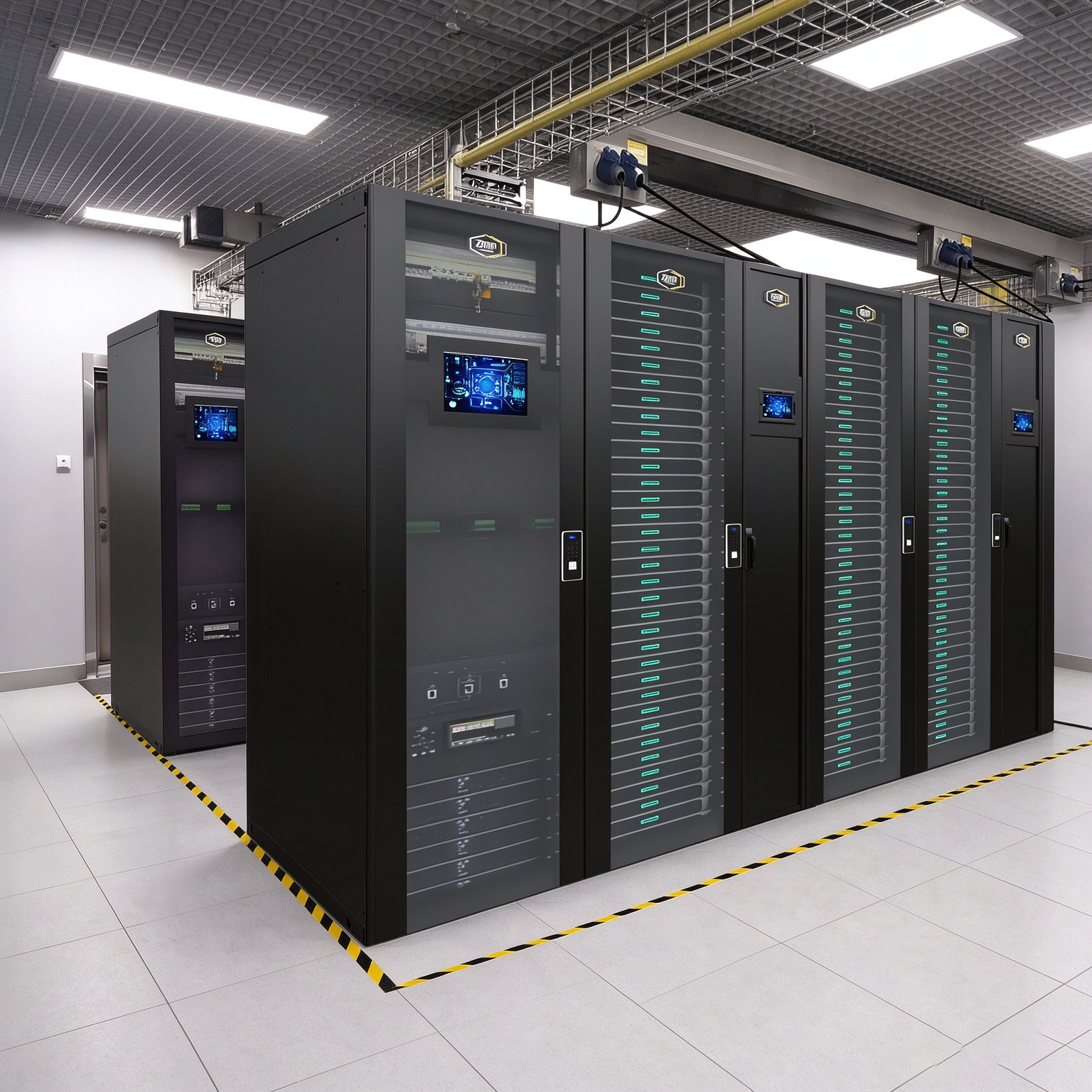
Factory-built modules cut deployment time by roughly half against conventional construction, and the last step is shorter than buyers expect: because Warrior and Wizard cabinets arrive pre-integrated, onsite installation takes under a day - position, connect building power, power-on test. Nebula modules need a few days for assembly and commissioning.
What that looks like at project scale: an energy and petrochemical customer in Brunei runs five Nebula units at 3 kW per rack, air-cooled - 80 racks, 240 kW of IT capacity on 2N UPS with 2-hour VRLA backup. A public-safety deployment in China pushed it further: six units, 120 racks, 360 kW. And a banking project fields eight units and 112 racks at 224 kW. Different industries, same pattern - the infrastructure arrived as tested modules, and the site works ran in parallel instead of in sequence.
List prices are rare because configurations vary, but the cost drivers are consistent, and one of them works in your favor: our modular line reaches in projects where the alternative is a new server room build, the avoided civil and electrical works alone typically cover a significant share of the module cost. against a traditional server room, mostly because it eliminates the room itself.
| Cost driver | Impact | How to control it |
| UPS redundancy (N vs N+1 vs 2N) | High | Match redundancy to actual downtime cost - our banking projects chose 2N; a retail back office rarely needs it |
| Battery runtime and chemistry | High | 7 Ah / 9 Ah strings are standard; right-size runtime before upsizing chemistry |
| Cooling capacity | Medium-high | Rack AC from 3.5 kW for a Warrior cabinet to 60 kW in-row units - pay for watts of heat, not for badge value |
| Monitoring options | Low-medium | Web monitoring and email alerts are standard; add SMS, app and access control where sites are unattended |
| Access control | Low | Card and password standard on Warrior; fingerprint and face recognition optional |
Practical advice: ask every vendor to quote a base unit plus itemized options. It exposes where the margin hides and lets you defer what the site does not yet need.
What is considered a micro data center?
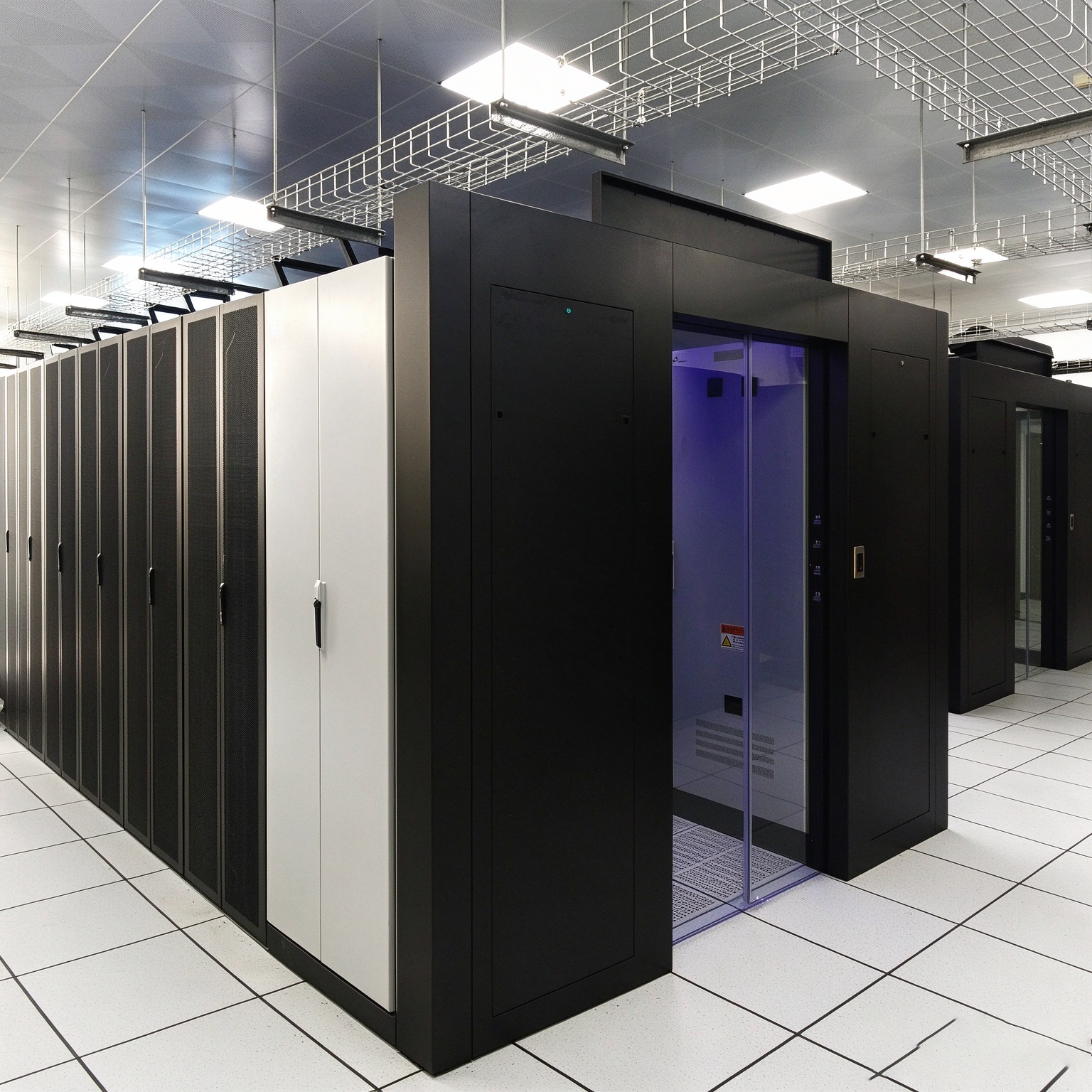
Any factory-integrated unit serving roughly 5 to 125 kW of IT load: from a single all-in-one cabinet like the Warrior series, through a 1-10 rack row like the Wizard, up to a contained micro module like the Nebula with up to 24 or 48 cabinets.
How long does deployment take?
Single-cabinet and rack-row formats install in under a day on site once delivered; micro modules take a few days. Against a conventional server room build - months of electrical, cooling and integration works - the schedule difference is usually the whole business case.
Can a micro data center run unattended at edge sites?
Yes, and most of ours do. Temperature, humidity, smoke, door status and water leakage are monitored as standard, with email alerts out of the box and SMS or app notifications as options - one centralized platform covers the whole fleet, which is how a five-unit installation in Brunei or an eight-unit banking cluster stays supervised without resident staff.
Author: [Yvonne Sun], Overseas Marketing, Zhejiang Zhiting Information Technology Co., Ltd. - manufacturing data center infrastructure since 2009. Warrior, Wizard and Nebula series are shipped worldwide with CE / ISO / ROHS certification, MOQ 1, OEM/ODM supported.
Tell us your needs for data center infrastructure, and our team will provide you with customized green & energy-saving integrated solutions with global delivery and fast response.
 EN