 EN
Understanding Why Liquid Cooling Data Centers Are Becoming Important for AI Infrastructure
As artificial intelligence, machine learning, and high-performance computing continue to develop, data center infrastructure is facing new thermal challenges. Modern AI servers rely on powerful processors and accelerators that generate much higher heat compared with traditional enterprise workloads. For these environments, conventional cooling methods may not always provide the flexibility and thermal control required for long-term operation.
A liquid cooling data center is designed to manage high-density computing environments by using liquid-based thermal management technologies to remove heat more efficiently from critical IT components. Instead of depending only on airflow, liquid cooling transfers heat closer to the source, helping maintain stable operating conditions for advanced computing equipment.
From our experience working with modular data center projects, many customers initially focus on GPU capacity, power availability, and deployment speed. However, cooling design often becomes one of the most important factors affecting future expansion. A well-planned liquid cooling system can help organizations prepare for increasing computing requirements while reducing the complexity of upgrading infrastructure later.
Compared with traditional facility-based solutions, a modular liquid cooling approach integrates cooling systems with power distribution, monitoring, and IT infrastructure inside a factory-built environment. This allows customers to deploy AI computing capacity in locations where traditional data center construction may be difficult or time-consuming.
According to ASHRAE TC 9.9 guidance, thermal management for modern data centers should consider IT equipment characteristics, cooling architecture, environmental conditions, and operational requirements. The organization has also published resources covering liquid cooling technologies and their application in high-density computing environments.
How Liquid Cooling Technology Supports AI and High-Density Computing
The core difference between conventional data centers and liquid cooling data centers lies in how they pull heat away from IT hardware. Air cooling works by blowing conditioned air across server racks. Liquid cooling, on the other hand, leverages fluids with far better heat transfer properties to capture heat right next to high power components.
Direct to chip liquid cooling is one widely used method. With this setup, cooling cold plates mount directly onto power hungry components like CPUs and GPUs. Liquid soaks up heat from these parts and carries it away through a closed cooling loop. This keeps performance stable even when systems are hammered by heavy workloads.
Immersion cooling takes a completely different approach. IT hardware sits submerged inside specially formulated cooling fluid. Heat can escape from multiple components all at once. This makes it a solid fit for select high density computing environments.
For AI infrastructure projects, selecting the right liquid cooling architecture requires careful evaluation of several factors:
- The type of AI processors being deployed
- Computing density requirements
- Maintenance procedures
- Cooling loop design
- Future expansion plans
- Deployment environment
A practical liquid cooling solution is not simply about choosing the most advanced technology. It is about matching the cooling architecture with the actual workload and operational requirements.
The AI Data Center Container (Liquid Cooling) solution is designed around this principle. By integrating liquid cooling systems into a modular containerized platform, it helps simplify deployment for customers requiring AI computing capacity in locations such as remote sites, edge facilities, industrial environments, and distributed computing locations.
Integrated Design of Liquid Cooling Data Center Containers
A successful liquid cooling data center requires more than cooling equipment alone. The entire infrastructure needs to work together, including power supply, thermal management, monitoring systems, physical protection, and maintenance access.
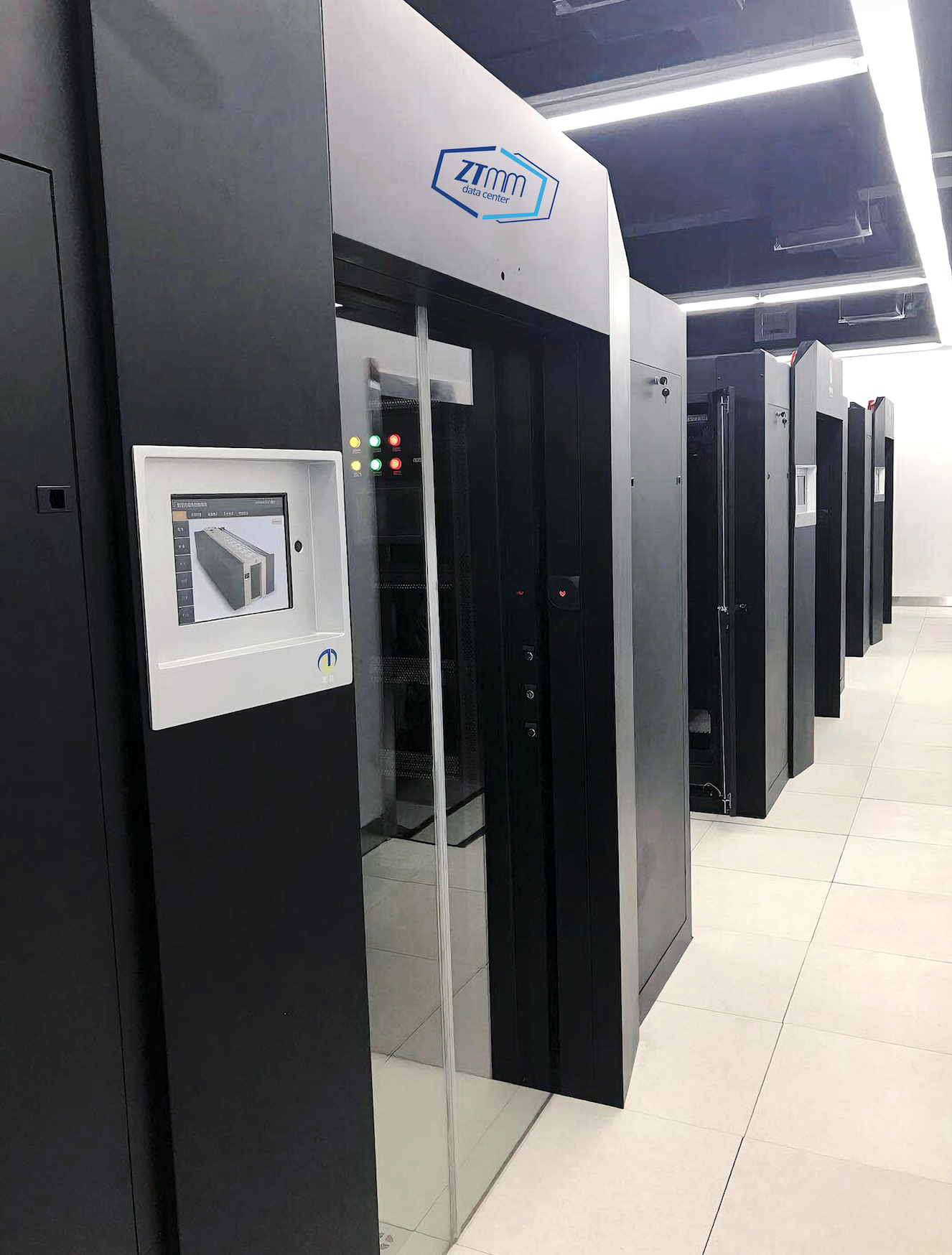
AI Data Center Container (Liquid Cooling) solutions combine these elements into a pre-engineered platform. Instead of building every system separately onsite, key components can be integrated and tested before delivery. This approach helps reduce coordination complexity during installation and provides a more predictable deployment process.
For outdoor or edge applications, environmental protection is another important consideration. Data center containers may need to operate in locations exposed to temperature changes, dust, humidity, or other environmental conditions. Therefore, the enclosure design, cooling system, and monitoring platform must work together to maintain reliable operation.
A modular liquid cooling system can also support phased deployment. Organizations can add computing capacity based on actual business growth rather than investing in a large traditional facility before demand is fully established.
From an engineering perspective, liquid cooling projects require careful planning of coolant circulation, leak detection, control systems, and maintenance procedures. ASHRAE TC 9.9 has emphasized the importance of proper liquid cooling design practices, including system reliability, coolant management, and integration between IT equipment and facility infrastructure. [1]
Why Modular Liquid Cooling Solutions Fit Future AI Infrastructure Needs
The rise of AI applications is reshaping how businesses plan their data center rollouts. Many companies are no longer fully dependent on large centralized facilities. Instead, they are turning to distributed computing models, placing processing power much closer to where data originates.
This shift fuels demand for flexible infrastructure that can go live fast and adapt to a wide range of site conditions.
Modular liquid cooled data centers bring real world practical benefits:
- They handle AI workloads that call for sophisticated thermal management.
- They work for sites where building a conventional brick and mortar data center is simply not feasible.
- They merge separate infrastructure subsystems into one unified solution.
- They leave plenty of room to scale up capacity down the line.
For EPC contractors, system integrators and project developers, modular liquid cooling cuts down heavy on site integration work and smooths out the whole project delivery cycle. Thanks to factory pre integration, all subsystems get aligned and checked long before equipment arrives at the target site.
For investors and operators running AI infrastructure, this alternative lets them build out compute capacity while striking a good balance between deployment speed, solid reliability and long term scalability.
Uptime Institute points out that modular designs deliver scalable infrastructure only with thoughtful design coordination, thorough commissioning and solid operational planning. Modular solutions are not a one size fits all fix to replace traditional facilities. Teams should assess them against each project’s unique set of requirements.
Selecting the Right Liquid Cooling Data Center Solution for AI Projects
Choosing a liquid cooling data center requires a clear understanding of application requirements. Different AI projects may have different expectations for computing density, deployment location, maintenance methods, and future expansion.
Before selecting a solution, organizations should evaluate:
- AI workload requirements
- Server and accelerator configuration
- Available power infrastructure
- Site environment
- Cooling maintenance strategy
- Long-term expansion plans
For organizations deploying AI computing infrastructure, the best solution is not always the largest or most complex system. A properly designed solution should balance performance, reliability, operational convenience, and future scalability.
As a modular data center solution provider, we focus on developing integrated AI infrastructure solutions that combine liquid cooling technology with containerized deployment. The AI Data Center Container (Liquid Cooling) solution is designed to help customers deploy advanced computing capacity in a more flexible and efficient way.
Whether for AI training, edge computing, industrial intelligence, or distributed computing applications, selecting the right liquid cooling architecture is an important step toward building reliable next-generation infrastructure.
Frequently Asked Questions
What is a liquid cooling data center?
A liquid cooling data center is a computing facility that uses liquid-based thermal management systems to remove heat from IT equipment. It is commonly used for high-density applications such as AI computing and high-performance workloads.
Why do AI data centers need liquid cooling?
AI servers and accelerator-based systems generate significant heat during operation. Liquid cooling helps transfer heat closer to the source and provides improved thermal management for demanding computing environments.
What is the difference between air cooling and liquid cooling?
Air cooling removes heat by circulating conditioned air, while liquid cooling uses cooling fluids to capture heat more directly from high-power components. The suitable choice depends on workload requirements and system design.
Can liquid cooling data centers be deployed outdoors?
Yes. Modular liquid cooling container solutions can be designed for outdoor and edge deployment scenarios, including remote locations and industrial environments, with appropriate environmental protection.
What should companies consider before adopting liquid cooling?
Companies should consider workload requirements, IT hardware configuration, power availability, maintenance capabilities, deployment location, and future expansion plans before selecting a liquid cooling solution.
For organizations planning AI infrastructure, high-performance computing, or edge data center projects, selecting the right liquid cooling architecture is an important step toward reliable long-term operation.
Our team provides integrated AI Data Center Container (Liquid Cooling) solutions designed for flexible deployment, advanced thermal management, and future scalability.
- ASHRAE TC 9.9 Liquid Cooling Guidelines2024| PDF|Data Center | Coolant
Table of Contents
- Understanding Why Liquid Cooling Data Centers Are Becoming Important for AI Infrastructure
- How Liquid Cooling Technology Supports AI and High-Density Computing
- Integrated Design of Liquid Cooling Data Center Containers
- Why Modular Liquid Cooling Solutions Fit Future AI Infrastructure Needs
- Selecting the Right Liquid Cooling Data Center Solution for AI Projects
- Frequently Asked Questions