 EN
Understanding the Role of Data Center Cooling Solutions in Modern Infrastructure
As computing needs keep expanding, cooling has turned into a vital piece of modern data center design. Servers running AI programs, cloud platforms and high-performance tasks churn out large amounts of heat around the clock. Poorly planned thermal management can easily hold back device performance, undermine operational reliability, and disrupt long-term stable running.
Data center cooling systems are built to tackle heat buildup effectively and keep IT hardware working under steady, controlled conditions. There is no one size fits all cooling approach for every scenario. Most modern data center projects adopt a hybrid cooling setup, tailoring combinations of different technologies to match actual workload density, site environment and long-term expansion goals.
From our hands on experience with modular data center deployments, we’ve noticed a common trend: most clients prioritize computing capability and power infrastructure at the initial design stage, yet tend to overlook cooling system planning. In reality, the cooling framework lays the foundation for seamless future data center upgrades. A well thought out cooling design does not just meet current heat dissipation needs — it also leaves ample room to accommodate ongoing IT scale-ups and business growth down the line.
According to ASHRAE TC 9.9 guidelines, effective data center thermal management should consider equipment characteristics, airflow management, environmental conditions, and emerging cooling technologies to maintain reliable operation in different computing environments. [1]
Air Cooling Solutions for Flexible and Reliable Data Center Deployment
Air cooling still dominates as one of the go to cooling options across data centers. Its technology is well proven, day to day maintenance stays straightforward, and it plays nicely with nearly all types of IT hardware.
For enterprise sites, telecom facilities and edge computing locations, air-cooled containerized AI data center solutions strike a sensible middle ground between solid performance and hands on operational ease. These units bundle cooling hardware right into modular infrastructure. They cut down heavy on site build work, while wrapping servers and network gear in a stable, controlled operating environment.
Old school cooling layouts often ran into real headaches from poorly managed airflow. Hot spots would pop up here and there, leaving temperatures uneven across the whole room. Today’s air cooled setups fix this pain point with refined airflow routing, physical containment structures and smart monitoring tools to push cooling performance further.
Take in row cooling for instance. It places cooling units shoulder to shoulder with server racks, grabbing heat close to where it is generated, instead of leaning entirely on distant central cooling gear. This fits perfectly for modular data centers, where rack density and layout flexibility carry real weight.
In row cooling lets teams build cooling capacity in self contained, expandable zones. You can ramp up compute power without tearing down and reworking your whole facility. That makes it a natural fit for edge locations, on prem enterprise server rooms and modular data centers — scenarios where floor space and fast deployment sit high on the priority list.
Liquid Cooling Solutions for AI and High-Density Computing Applications
As AI workloads grow more widespread, traditional air cooling often struggles to keep up with the thermal demands of high-density compute environments. Modern advanced processors and accelerator-heavy hardware crank out far higher heat loads, calling for more targeted cooling approaches.
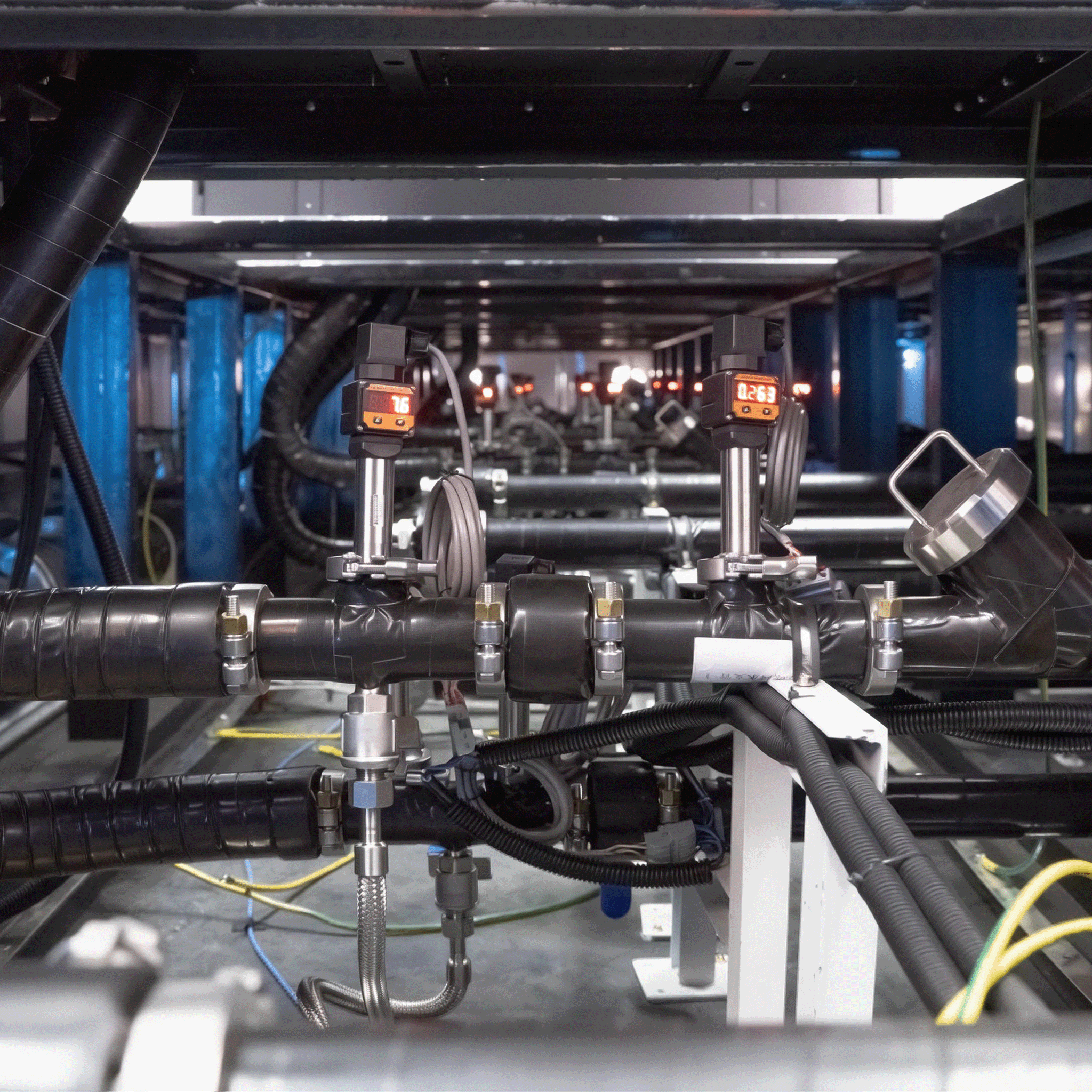
Liquidcooled containerized AI data center solutions step in to handle these tough operating conditions with liquid-based thermal management techniques. Unlike standard air cooling, liquid cooling pulls heat away much closer to its source, giving far tighter thermal control for high-performance computing hardware.
Direct-to-chip liquid cooling is one widely adopted method. It circulates coolant through custom cold plates mounted right onto major heat-generating parts, including processors and accelerators. This keeps operating temperatures steady and reliably meets the thermal demands of today’s AI infrastructure.
Immersion cooling serves as another option reserved for select high density use cases. IT hardware sits fully submerged in specialized cooling fluids, letting heat dissipate directly off individual components. There is no universal pick here; teams weigh up workload profiles, maintenance overheads, and operational targets when choosing between direct to chip, immersion and air-cooled setups.
ASHRAE TC 9.9 has also released practical guidelines covering liquid cooling, with useful insights on environmental considerations and proven best practices for high-density compute deployments.
For teams building out AI infrastructure, locking in the right cooling strategy early in a project avoids costly redesign work down the road and creates a much smoother path for future capacity expansion.
Integrated Cooling Strategies for Modular and Edge Data Centers
Modern data center builds are shifting toward a distributed model. Rather than putting all their eggs in large scale centralized facilities, many businesses are placing compute resources right next to end users, manufacturing plants, telecom points and remote field sites.
This shift brings a fresh set of hurdles for cooling hardware. Outdoor installations, edge nodes and modular data centers frequently sit in locations with no access to conventional on site building infrastructure.
Integrated data center cooling solutions step up to solve these pain points. They tie power supply, cooling units, monitoring tools and IT hardware into one cohesive system. Container style AI data center solutions are built around factory pre integration. Every cooling component and supporting subsystem gets fully tested off site before shipping out.
This model makes life much easier for project owners and EPC contractors on site. There is no need to juggle dozens of separate vendors. Clients get a complete modular package that accounts for electrical interfaces, cooling connections, environmental safeguards and day to day operational needs all at once.
Uptime Institute has pointed out that modular, phased data center deployments let companies grow their infrastructure hand in hand with business expansion. Even so, teams cannot cut corners; proper coordination across design work, commissioning processes and reliability targets remains critical.
This approach really shines for sectors that need fast rollouts, such as telecom, energy production, manufacturing and remote site field operations.
Choosing the Right Data Center Cooling Solutions for Long-Term Growth
Selecting a cooling system is not only a technical decision but also a long-term infrastructure strategy. Different applications require different approaches.
For general enterprise workloads, telecom environments, and standard computing applications, air cooling solutions may provide a reliable and cost-effective choice.
For AI workloads, GPU-based computing, and high-density applications, liquid cooling solutions may offer better thermal management capabilities.
For modular deployments requiring flexible expansion, In-Row Cooling can provide targeted cooling control at the rack level.
A successful cooling design should consider several factors, including IT equipment type, rack density, deployment location, maintenance capability, and future scalability. There is no single cooling method suitable for every project.
As a modular data center solution provider, we focus on helping customers match cooling technologies with actual application requirements. By combining AI Data Center Container (Liquid Cooling), AI Data Center Container (Air Cooling), and In-Row Cooling solutions, customers can select an approach that fits their operational environment and growth plans.
The right data center cooling solutions should not only solve today's thermal challenges but also support tomorrow's infrastructure development.
Frequently Asked Questions
What are data center cooling solutions?
Data center cooling solutions are technologies and systems designed to remove heat generated by IT equipment and maintain stable operating conditions. They include air cooling, liquid cooling, and rack-level cooling solutions.
Which cooling solution is suitable for AI data centers?
AI data centers often require advanced thermal management because high-performance processors generate significant heat. Liquid cooling solutions, such as direct-to-chip cooling, are commonly considered for high-density AI environments.
What is In-Row Cooling used for?
In-Row Cooling is designed to provide cooling close to server racks. It helps improve airflow management and is commonly used in modular data centers, edge facilities, and environments requiring flexible cooling deployment.
Can modular data centers use both air cooling and liquid cooling?
Yes. Modular data centers can be designed with different cooling architectures depending on workload requirements. Some projects use air cooling, while others integrate liquid cooling for higher-density applications.
How should companies choose a data center cooling solution?
Companies should evaluate workload requirements, IT equipment, deployment environment, future expansion plans, and maintenance capabilities before selecting a cooling approach.
For organizations planning AI infrastructure, edge computing, or modular data center projects, selecting the right cooling architecture is an important step toward reliable long-term operation.
Our team provides integrated cooling solutions including liquid cooling containers, air-cooled AI data center containers, and in-row cooling systems to support different deployment environments.
[1]Achieving High Reliability, Energy Efficiency in Data Center Design, Operations |ashrae.org
Table of Contents
- Understanding the Role of Data Center Cooling Solutions in Modern Infrastructure
- Air Cooling Solutions for Flexible and Reliable Data Center Deployment
- Liquid Cooling Solutions for AI and High-Density Computing Applications
- Integrated Cooling Strategies for Modular and Edge Data Centers
- Choosing the Right Data Center Cooling Solutions for Long-Term Growth
- Frequently Asked Questions