

Why Site Readiness Determines the Real Deployment Speed of Modular AI Data Centers
“14 Days” Is Not a Construction Schedule — It Is What Becomes Possible After the Site Is Ready
|
The fastest factory-built AI system in the world still cannot produce a single token if power, cooling, fiber or the foundation is not ready when it arrives. |
On October 21, 2026, NVIDIA introduced DSX POD, a factory-integrated modular reference design for Vera Rubin AI factories.
One number immediately attracted attention: as little as 14 days.
NVIDIA states that factory-built DSX POD units can reduce deployment at a prepared site from roughly six months to as little as 14 days.
The two most important words are not ‘14 days.’ They are: prepared site.
That distinction explains one of the biggest misunderstandings in modular data center deployment.
Prefabrication can compress onsite work. It cannot eliminate site infrastructure.
Traditional deployment requires extensive work to happen after equipment reaches the site.
Factory integration moves portions of that work upstream.
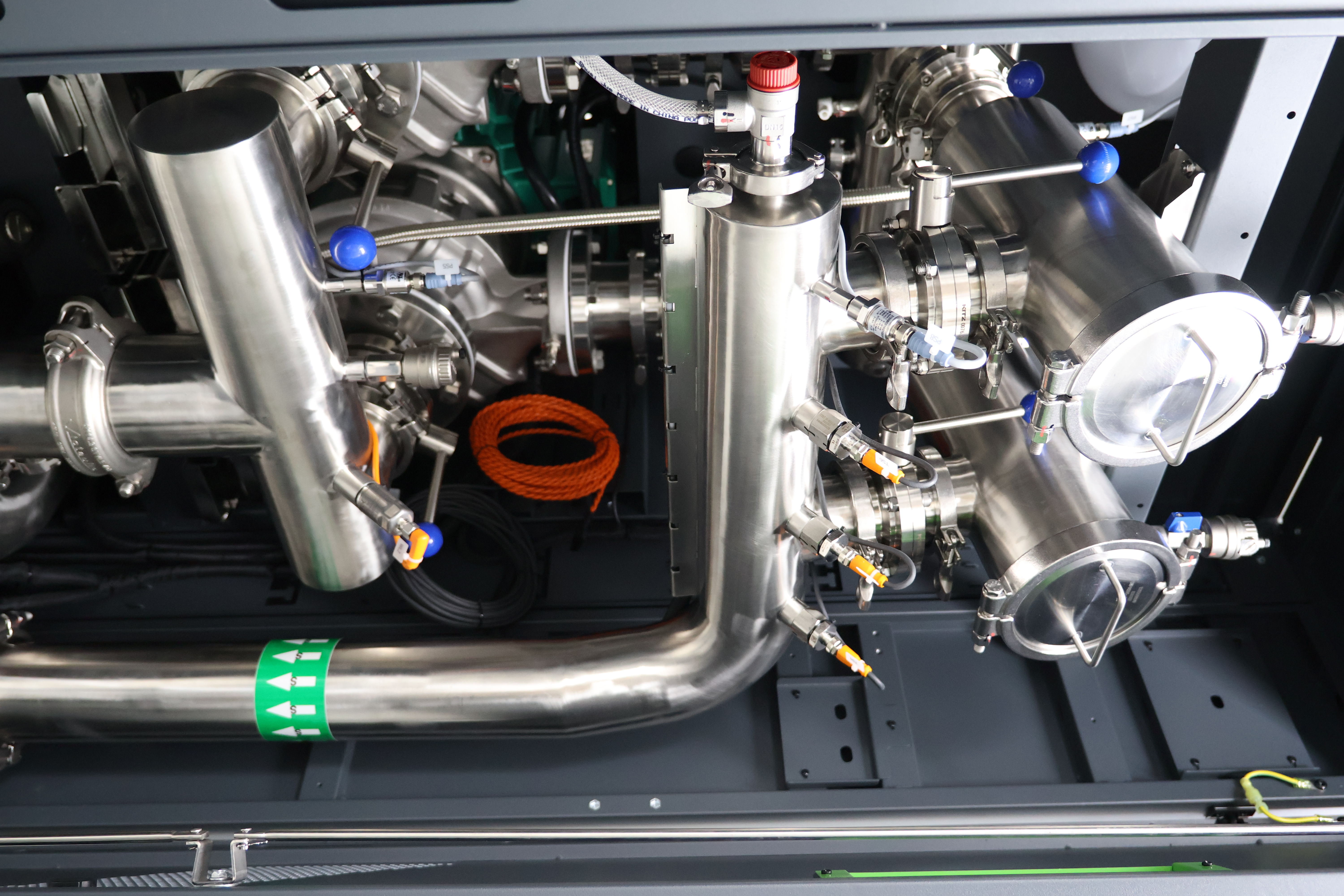
NVIDIA describes DSX POD as moving elements such as computing integration, networking, rack-to-rack cabling, wiring, rack-level power, liquid cooling and functional validation into the manufacturing environment.
That is a significant shift.
It allows the site team and manufacturing team to work in parallel.
While modules are being integrated in the factory, the site can prepare foundations, utility connections, cooling infrastructure, network infrastructure, access roads, crane plans and permits.
This parallel workflow creates speed. But only if both sides finish at roughly the same time.
A delivered AI module does not solve the upstream electrical problem.
The site still needs confirmed electrical capacity.
Depending on project scale, that may require utility interconnection, substation, transformers, medium-voltage switchgear, protection systems, generators or alternative backup, grounding, and cables or busway to the module interface.
A factory-built AI POD can shorten the work downstream of those systems.
It cannot energize a site whose utility connection is still waiting for approval or construction.
For many AI projects, therefore, ‘time to compute’ starts with MW availability rather than server delivery.
The same principle applies to liquid cooling.
A factory-integrated system may arrive with CDU, manifolds, internal piping, leak detection and rack connections.
But heat still has to leave the site.
The external infrastructure may include facility-water loop, pumps, chillers, dry coolers, cooling towers, water treatment, make-up water and drainage.
The module and site must agree on supply temperature, return temperature, flow, pressure, water quality, connection size and redundancy.
If those values change after manufacturing is complete, the ‘plug-and-play’ concept quickly becomes field re-engineering.
An AI factory creates value when compute can communicate.
Site readiness therefore includes carrier access, diverse fiber routes where required, external network handoff, storage connectivity, management network and security architecture.
A fully powered and cooled GPU cluster that cannot connect to the intended workload or data source is not productive capacity.
In AI infrastructure, the network is part of the machine.
Civil readiness means more than having a slab.
The module installation team needs verified information for elevation, flatness, anchor positions, embedded plates, drainage, equipment clearance, service corridors, grounding points and module spacing.
A prefabricated module may have tight dimensional tolerances.
The site interface should be held to the same level of control.
Otherwise, factory precision meets construction approximation — usually at the worst possible time.
Before the module ships, the project should know which port it will use, road limitations, maximum transport height, axle restrictions, turning radius, crane location, crane capacity, lifting sequence and temporary storage area.
For oversized AI modules, the last kilometre may be more difficult than the international shipment.
A transport study performed after production is complete is not logistics planning. It is risk discovery.
Prefabrication does not remove building approval, electrical approval, fire approval, environmental conditions, local safety requirements or utility inspections.
Factory testing may provide strong evidence of manufacturing quality.
But the Authority Having Jurisdiction still evaluates the installed facility according to the applicable local framework.
This means compliance strategy has to start during design.
Factory Acceptance Testing validates what can be tested before shipment.
After installation, Site Acceptance Testing needs to confirm the real site interfaces.
That may include actual utility power, protection coordination, field joints, external hydraulics, network connections, BMS/DCIM communication and alarm routing.
Integrated testing then evaluates how the facility behaves when systems interact.
For example: What happens when one cooling path is unavailable while the AI load is running?
That question can rarely be answered completely inside the factory.
Before releasing modules for shipment, I would want seven questions answered:
1. Is usable electrical capacity available at the required interface?
2. Is the external cooling system commissioned to the agreed water conditions?
3. Are foundations and anchor locations surveyed and accepted?
4. Are network and fiber handoff points ready?
5. Is the transport and lifting plan approved?
6. Are local permits and inspections sufficiently advanced for installation?
7. Is the SAT and integrated commissioning plan agreed by all parties?
If the answer to several of these is ‘not yet,’ shipping faster may simply move inventory from the factory to a construction site.
The NVIDIA DSX POD announcement is important because it demonstrates how far factory integration is moving.
But the deeper lesson is not that every AI data center can be built in 14 days.
It is that a large amount of onsite integration can be removed after interfaces have been standardized and the supporting site is prepared.
That changes how project teams should measure progress.
Instead of asking ‘When will the AI module be ready?’ ask ‘When will the module and the site be ready for each other?’
That is the point at which modular construction becomes operational speed rather than simply manufacturing speed.
1. NVIDIA Newsroom, NVIDIA Introduces DSX POD AI Factories to Accelerate Europe's Infrastructure Deployment, October 21, 2026. https://nvidianews.nvidia.com/news/nvidia-introduces-dsx-pod-ai-factories-to-accelerate-europes-infrastructure-deployment
2. NVIDIA, DSX POD Reference Design for AI Factory Infrastructure. https://www.nvidia.com/en-eu/data-center/products/dsx/pod/
3. NVIDIA Technical Blog, Achieve Productive AI Capacity Faster and More Predictably with NVIDIA DSX POD, October 21, 2026. https://developer.nvidia.com/blog/achieve-productive-ai-capacity-faster-and-more-predictably-with-nvidia-dsx-pod/
4. ASHRAE / PNNL / NEMA, AI Data Center Energy Performance Framework – Site Planning, 2026. https://www.ashrae.org/technical-resources/topics-and-initiatives/ai-data-center/site-planning
5. Vertiv, What Is a Modular Data Center?, 2026. https://www.vertiv.com/en-us/insights/articles/educational-articles/what-is-a-modular-data-center/
Tell us your needs for data center infrastructure, and our team will provide you with customized green & energy-saving integrated solutions with global delivery and fast response.
 EN