


C4 vs. C5 Corrosion Protection: What Data Center Buyers Should Know Before Outdoor Deployment
A Higher Corrosion Category Is Not Simply “More Paint”
|
Specifying “C5 coating” does not create C5 protection. If the substrate, surface preparation, layer system and inspection are wrong, the label on the specification means very little. |
Outdoor modular data centers expose structural steel and equipment enclosures to an environment that traditional indoor IT infrastructure rarely experiences.
Rain, humidity, airborne salts, industrial contaminants, ultraviolet radiation and temperature cycling can attack the same structure that supports mission-critical equipment.
That is why specifications increasingly include terms such as C4 corrosion protection or C5 corrosion protection.
Unfortunately, those terms are often treated as paint colours with different price levels.
That is not what ISO 12944 means.
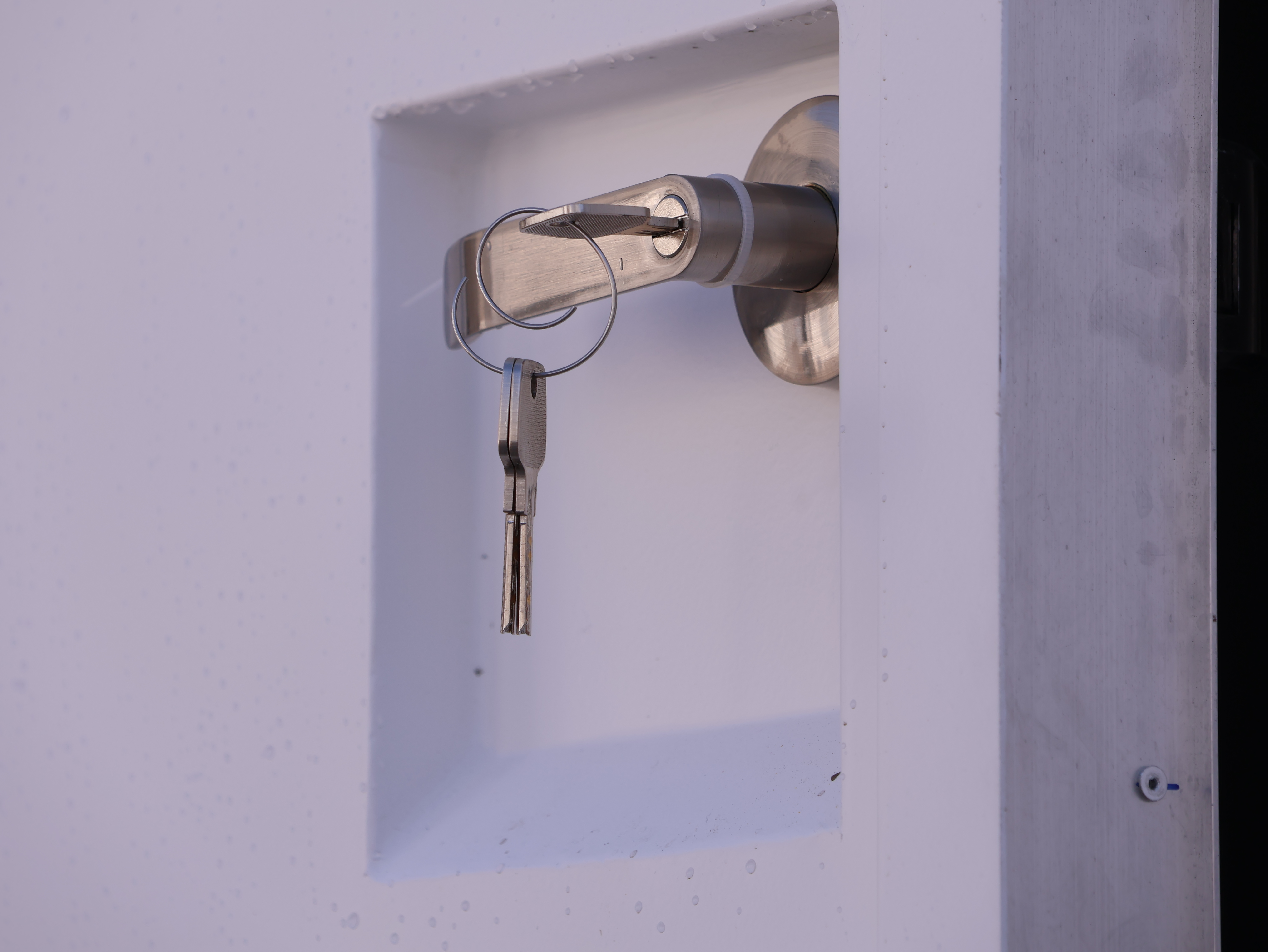
ISO 12944-2 classifies atmospheric environments according to their corrosivity.
C4 represents a high-corrosivity environment. C5 represents a very-high-corrosivity environment.
The classification helps engineers determine what level of protective system may be required for the expected exposure.
In practical project discussions, C4 may be relevant to certain industrial and coastal environments, while C5 is associated with more severe industrial or marine exposure.
But the category should be selected from the actual environment. It should not be chosen because higher sounds safer.
Over-specification adds cost. Under-specification creates lifecycle risk.
This distinction matters.
Corrosivity describes the severity of the environment. Durability describes the expected period before the first major maintenance painting operation is likely to be required.
Durability is a planning concept, not automatically a warranty period.
Therefore, C5 does not equal 25 years, and C4 does not equal a fixed coating thickness.
A complete coating specification needs to combine environmental category, substrate, surface preparation, coating chemistry, number of coats, nominal dry film thickness, expected durability, application and inspection requirements.
Without those details, ‘C5’ is incomplete.
The coating does not protect steel independently of the surface beneath it.
Before coating, the surface may need removal of mill scale, rust, welding residue, oil, soluble salts, dust and contaminants.
Blast cleaning is commonly used for structural steel when specified by the coating system.
ISO 8501-1 defines visual rust grades and preparation grades for steel surfaces.
This is where good corrosion protection begins.
Applying a premium coating over inadequately prepared steel is like installing a high-performance cooling system on a blocked airflow path: the product may be good, but the system will still fail.
Protective coating should be understood as a system.
Depending on environment, substrate and specified durability, it may include combinations such as primer, intermediate coat and topcoat.
Primer provides adhesion and initial corrosion protection. Zinc-rich epoxy systems are one common option for severe environments.
The intermediate coat adds film build and barrier protection. The topcoat provides weathering, UV and additional environmental resistance.
Epoxy and polyurethane combinations appear frequently in industrial protective systems, but they are not the only valid approach.
ISO 12944-5 provides guidance for selecting protective paint systems for different environments.
The engineering question therefore is not ‘How many microns is C5?’ It is ‘Which tested coating system is suitable for this substrate, environment and durability requirement?’
Dry Film Thickness, or DFT, is an important quality-control measurement.
Too little coating may reduce protection. Excessive thickness can also create defects depending on the coating chemistry and application.
But DFT alone does not prove system quality.
Inspection should also consider surface cleanliness, environmental conditions during application, recoat intervals, adhesion, edge coverage, weld coverage, pinholes or holidays and mechanical damage.
A coating can meet average DFT while still failing at edges and welded joints.
Those are often exactly the locations where corrosion begins.
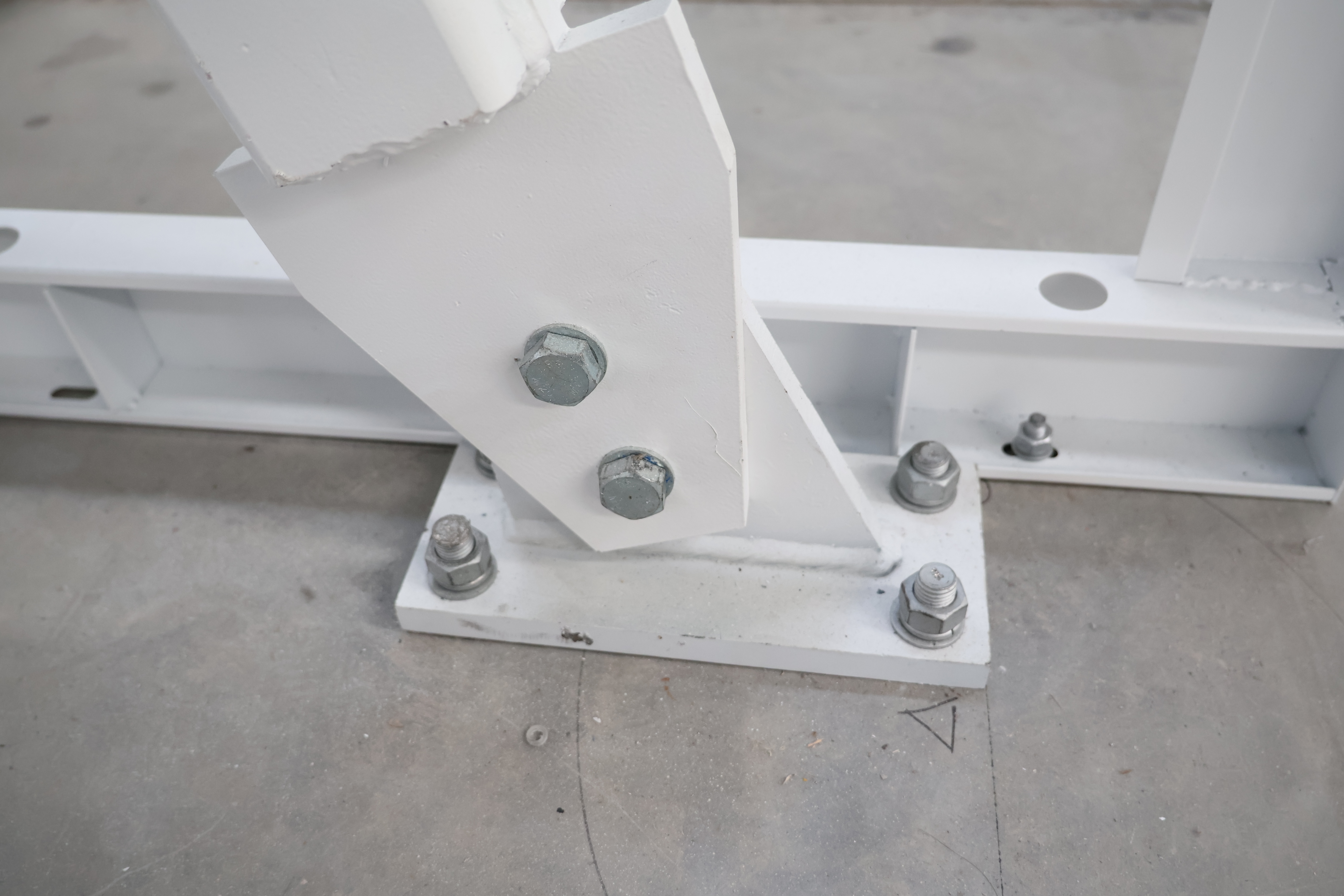
Flat steel plates are relatively easy to coat.
Real modular data center structures are not flat plates.
They contain welded corners, cut edges, bolt holes, brackets, fasteners, lifting points, door frames and equipment mounts.
Coating tends to become thinner around sharp edges. Weld spatter and irregular surfaces may also create coating defects.
Good fabrication practice therefore supports good corrosion protection.
The discussion should include edge treatment, weld finishing, stripe coating where required, compatible fasteners and repair procedures after assembly.
Corrosion engineering begins before the spray gun is turned on.
Data center buyers sometimes ask: ‘Is powder coating better than paint?’
That question is too broad.
Both technologies can perform well when they are properly designed and validated for the intended environment.
The correct evaluation should consider substrate, pretreatment, coating chemistry, achievable film build, geometry, curing, UV exposure, repairability, field maintenance and required corrosion performance.
A standard indoor powder coating should not automatically be interpreted as C4 or C5 protection.
Likewise, simply adding more layers of wet paint does not automatically create a compliant system.
The complete system needs a defined performance basis.
For an outdoor data center, the structural frame is only one part of the corrosion discussion.
Project reviews should also consider cooling coils, dry coolers, chillers, electrical enclosures, cable trays, outdoor switchgear, fasteners, louvers, piping, external doors, hinges and lifting hardware.
A coastal site can expose outdoor heat-rejection equipment to salt-laden air even when the main IT module itself is well protected.
The system is only as resilient as its weakest exposed component.
International delivery creates another risk.
Coatings may be damaged by lifting chains, transport restraints, forklift contact, module handling and site installation.
That does not necessarily mean the coating system has failed. It means the project needs an approved repair procedure.
Inspection after delivery should identify scratches, chipped coatings, exposed steel and damaged edges.
Repairs should use compatible materials and restore the required coating system rather than simply covering damage with colour-matched paint.
Instead of asking only for a corrosion category, request a coating schedule that identifies the applicable ISO 12944 environment, durability target, steel substrate, surface-preparation standard, coating manufacturer, primer type, intermediate coat, topcoat, nominal DFT per layer, total DFT, application method, inspection method and repair procedure.
That turns ‘C5’ from a marketing phrase into a verifiable manufacturing requirement.
Corrosion protection is a chain: Environment → steel design → surface preparation → coating system → application → inspection → maintenance.
Breaking any link weakens the result.
For outdoor AI infrastructure, particularly in coastal, humid or industrial locations, the coating should be treated the same way as power or cooling: as an engineered subsystem with a defined operating environment and acceptance criteria.
1. ISO 12944-2:2017, Classification of Environments. https://www.iso.org/standard/64834.html
2. ISO 12944-5:2019, Protective Paint Systems. https://www.iso.org/standard/77795.html
3. ISO 8501-1:2007, Visual Assessment of Surface Cleanliness. https://www.iso.org/standard/43426.html
4. ABB, Surface Treatment and Paint Systems – ISO 12944 Corrosivity Categories. https://library.e.abb.com/
Tell us your needs for data center infrastructure, and our team will provide you with customized green & energy-saving integrated solutions with global delivery and fast response.

 EN