
 EN
EN
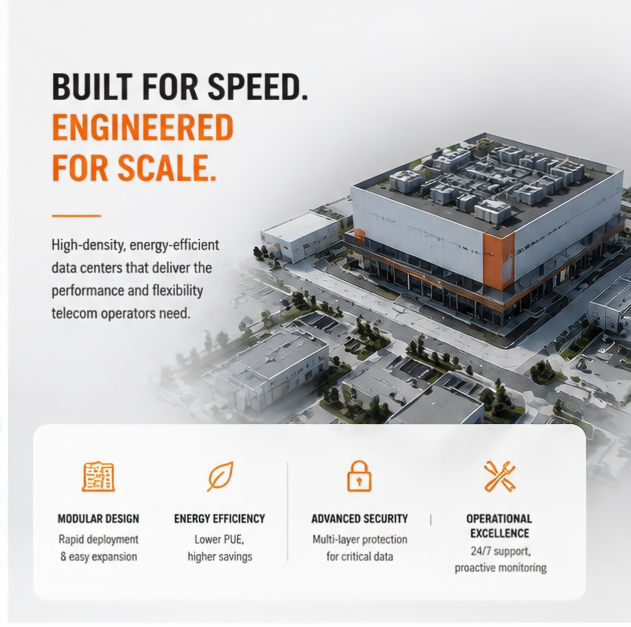
Why EPC Contractors Are Adopting Modular Data Center Delivery
The growth of cloud computing, edge infrastructure, and high-performance applications has increased demand for faster and more flexible data center construction methods. For EPC contractors, modular data centers represent a shift from traditional site-based construction toward a more integrated delivery model.
Traditional data center projects often require multiple onsite activities, including structural construction, electrical installation, mechanical systems integration, and commissioning. These processes usually depend on sequential execution, which can create schedule pressure and coordination challenges.
Modular data center delivery changes this approach by moving a significant portion of manufacturing and system integration into controlled factory environments. While site preparation, foundations, and utility planning are completed onsite, modular components can be manufactured, assembled, and tested in parallel.
For EPC contractors, this approach can improve project predictability, reduce onsite complexity, and provide greater control over quality and delivery processes. However, successful execution requires early coordination between the EPC team, module supplier, designers, and local authorities.
Key Project Considerations for EPC Contractors in Modular Data Center Projects
Although modular delivery reduces some traditional construction challenges, it introduces new areas that EPC contractors need to manage carefully.
Transportation planning is one of the most important considerations. Prefabricated modules must be designed with transportation requirements in mind, including road access, lifting methods, delivery routes, and site conditions. Early coordination between design teams and logistics providers helps avoid issues during installation.
Regulatory coordination is another critical factor. Modular data center projects may involve different interpretations from local authorities depending on location, building codes, and project classification. EPC contractors should engage with Authorities Having Jurisdiction (AHJs) early in the project to confirm documentation requirements, inspection processes, and approval expectations.
Site preparation and interface management also play an important role. Foundations, electrical connections, mechanical systems, and network infrastructure must align with the requirements of factory-built modules. Clear documentation and early design coordination help reduce onsite modifications and improve commissioning efficiency.
How Modular Delivery Changes the Role of EPC Contractors
In traditional construction projects, EPC contractors often focus heavily on coordinating onsite trades and managing sequential construction activities. Modular delivery expands this role toward system integration and lifecycle coordination.
EPC contractors involved in modular data center projects typically focus on:
- Coordinating module suppliers and site activities
- Managing transportation and installation processes
- Ensuring electrical and mechanical interfaces are properly integrated
- Supporting testing and commissioning activities
- Maintaining project quality and schedule objectives
Because major systems are partially completed before arriving onsite, supplier selection becomes increasingly important. EPC teams need to evaluate manufacturing capabilities, quality control processes, testing procedures, and previous project experience.
The EPC contractor’s role evolves from simply managing construction activities to ensuring that factory-built systems and onsite infrastructure operate together as a complete data center solution.
Building Successful Partnerships for Large Data Center Projects
As data center projects become more complex, collaboration between EPC contractors and modular solution providers becomes increasingly important.
Successful modular projects usually involve early involvement from all stakeholders, including owners, designers, EPC teams, and manufacturers. This allows key decisions regarding module design, site requirements, integration methods, and commissioning processes to be addressed before construction begins.
For EPC contractors, modular delivery creates opportunities to participate in larger and more complex data center projects by providing a scalable approach to project execution. It can help improve delivery flexibility, reduce construction risks, and support the growing demand for rapidly deployable digital infrastructure.
While modular data centers are not suitable for every project, they provide EPC contractors with an additional delivery strategy for projects where schedule control, repeatability, and construction efficiency are important.
Frequently Asked Questions
What are modular data centers?
Modular data centers are prefabricated infrastructure solutions where key systems such as power, cooling, and IT equipment are integrated into factory-built modules before being transported to the deployment site.
Why are EPC contractors interested in modular data centers?
Modular delivery allows EPC contractors to reduce onsite construction complexity, improve project coordination, and manage data center projects through a more standardized delivery approach.
What challenges should EPC contractors consider?
Key considerations include transportation planning, regulatory coordination, site preparation, supplier management, and integration between factory-built modules and onsite infrastructure.
Does modular construction replace traditional data center construction?
Not always. Modular solutions are an alternative delivery method that may be suitable for projects requiring flexibility, faster deployment, or repeatable infrastructure approaches.
How can EPC contractors work with modular data center suppliers?
Successful partnerships require early collaboration, clear technical interfaces, quality management processes, and coordinated planning between suppliers and project teams.