
 EN
Shifting operational realities driving infrastructure update for telecom carrier services
From my hands on work supporting global network operators, I have observed that telecom carrier services keep expanding beyond traditional voice and broadband into AI inference, local edge processing and network slicing workloads. Many operators hold large inventories of legacy machine rooms built for older generation network hardware. These existing spaces often struggle to match new requirements brought by modern digital traffic patterns. Site renovation can drag on for many months, and construction permit procedures create further delays when operators try to roll out upgraded telecom carrier services across wide geographic regions.
One practical overseas project illustrates this common industry pain point. A regional network operator planned to expand its telecom carrier services to support rising AI edge traffic across multiple dispersed service zones. Initial plans relied on renovating existing on premise computer rooms. However site reconstruction complexity, limited local skilled labor and inconsistent construction quality from different subcontractors pushed project timelines far beyond business targets. The project team shifted strategy and selected both AI Data Center Container (Air Cooling) and AI Data Center Container (Liquid Cooling) as turnkey compute nodes. Major subsystems completed assembly and multi stage factory acceptance testing before shipment. Once containers arrived at target sites, field teams only handled utility hook up work. This cut overall project lead time substantially and allowed new telecom carrier services to launch according to business schedules.
This real world project aligns with guidance from ASHRAE Handbook HVAC Applications Chapter 20: Data Centers and Telecommunication Facilities. This reference provides practical design direction for hybrid network and IT infrastructure deployed in non traditional telecom premises. Many telecom sites do not have fully controlled data hall environments, so environmental resilience, power redundancy and thermal stability become core evaluation factors for hardware supporting telecom carrier services.
Differentiated hardware selection for evolving telecom carrier services workloads
Different traffic patterns within telecom carrier services place very distinct demands on underlying infrastructure. General core network functions, media gateway processing and standard cloud offload tasks operate well under moderate power density conditions. Meanwhile AI related workloads, high speed packet processing and real time analytic modules generate much higher heat output and place stricter requirements on cooling and power distribution. Operators need flexible hardware options instead of one uniform infrastructure blueprint for every deployment site.
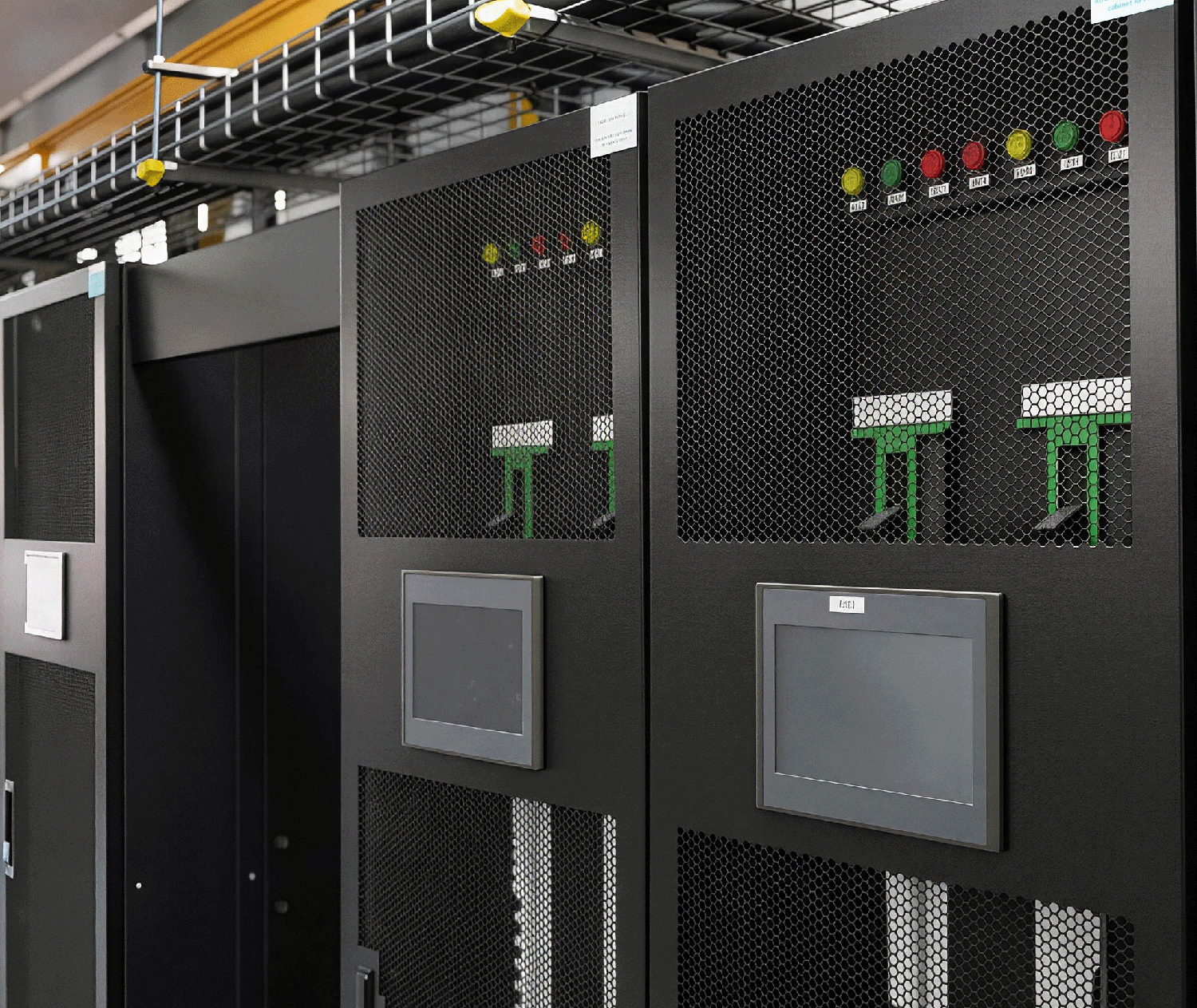
The AI Data Center Container (Air Cooling) fits well for many mainstream scenarios within telecom carrier services. It integrates IT racks, N+1 in row cooling, redundant UPS power supply and fire suppression systems inside prefabricated container enclosures. All functional modules go through complete inspection inside our 30000 square meter manufacturing facility. For telecom sites running moderate density core network workloads, this air cooled container delivers stable continuous operation. It suits tower adjacent locations, regional central office expansions and distributed edge points where total IT load stays within suitable ranges.
When telecom carrier services incorporate heavy AI inference or high performance packet processing tasks, operators can turn to AI Data Center Container (Liquid Cooling). This unit adopts hybrid air liquid cooling architecture paired with free cooling capable chillers and cooling tower assemblies. It supports higher rack power density that air only solutions can hardly sustain. Built in CDU equipment, leak detection sensors and DCIM management modules get fully integrated during factory production. Every fluid loop passes hydrostatic pressure testing and cyclic debugging before delivery. Operators can deploy liquid cooled containers for regional AI gateway nodes where telecom carrier services process large volumes of locally generated data. Operators can also combine air cooled and liquid cooled container units within one site to match mixed workload profiles without overinvesting infrastructure resources.
Site constraints and compliance considerations for telecom carrier services deployment
Most sites used to host telecom carrier services were built for radio and transmission hardware. These sites often have physical constraints such as limited floor space, varying ambient temperature, limited onsite maintenance staff, and stringent local safety rules and regulations. Infrastructure solutions cannot always expect ideal raised floor data center conditions at telecom facilities.
The engineering team has evaluated dozens of operator premises in various continents for rollouts of telecom carrier services. We assess three primary dimensions. The first is environmental adaptability. The second is footprint compatibility. Lastly, we evaluate remote manageability. Both, AI Data Center Container (Air Cooling) and AI Data Center Container (Liquid Cooling), are designed to operate within the constraints of a typical telecom central office and edge environment. Their cooling systems can adjust their operating curves and ranges to accommodate seasonal temperature variations. AI Data Center Container’s cooling systems maintain IT hardware at inlet conditions within the ranges suggested by ASHRAE. The containers’ form factor reduces the need for site construction and helps telecom service providers avoid large scale building modification work.
The remote monitoring functionality of the data center containers is utilized to manage hundreds of containers across a geographically dispersed telecom network. Each container is equipped with DCIM to record power, thermal, and equipment alarm data. Operators of telecom carrier services can benefit from reduced site visits and swift response to abnormal conditions across dispersed telecom facilities. The data center containers ship with complete factory test reports, sensor calibration records, and user manuals to assist customer in complying with local regulations and telecom operator governance.
Phased capacity expansion aligned with telecom carrier services business growth cycles
Telecom carrier services rarely reach full traffic volume immediately after launch. Operators commonly adopt phased rollout patterns. They activate limited service capacity first to test market response, then scale resources as subscriber volume and data throughput grow. Traditional fixed building infrastructure forces operators to forecast peak demand years ahead. This practice often results in underutilized capital investment during early operation phases. Containerized architecture removes much of this planning pressure.
Operators can start small for telecom carrier services by deploying a small quantity of either air cooled or liquid cooled AI Data Center Container units according to initial workload characteristics. When business traffic builds up, additional containers can connect through standardized mechanical and electrical interfaces. Expansion work will not force full shutdown of existing running telecom carrier services. This pay as you grow approach aligns capital spending closer to actual service revenue generation.
This incremental deployment model also lowers technical risk for telecom projects. New service features under telecom carrier services can first run on a small set of container nodes for field verification. Operators gather real operational feedback before wide regional rollout. If certain service lines see slower user adoption, operators will not carry heavy sunk cost from over provisioned infrastructure. When demand expands rapidly, our production workflow supports additional unit manufacturing and delivery without full redesign of the on site layout. This flexibility draws attention from system integrators working with telecom clients on network slicing, local traffic breakout and multi access edge computing projects.
Lifecycle operation and risk mitigation for telecom carrier services container infrastructure
Many service level agreement breaches for telecom carrier services trace back to inadequate long term operation arrangements at distributed telecom sites, rather than initial hardware defects. Remote telecom facilities often maintain minimal on site technical staff. Infrastructure supporting telecom carrier services needs simple repeatable maintenance workflows, clear fault isolation mechanisms and consistent spare part definitions across deployed hardware. Both container product lines are built around these real world operation requirements.
All core subsystems inside AI Data Center Container (Air Cooling) and AI Data Center Container (Liquid Cooling) complete standardization and full pretesting within factory environments. Spare part lists and service procedures keep uniform across every delivered unit. This cuts training burden for field technicians responsible for running telecom carrier services. DCIM systems log complete power and thermal event histories. Engineering teams can trace intermittent performance anomalies remotely before minor issues escalate into service interruption. For liquid cooled container variants, service access points are intentionally designed for convenient component replacement without full module disassembly.
During project handover, we supply full sets of operational documentation for each delivered container. Documents include factory test records, subsystem commissioning logs and step by step maintenance guidance. Transparent documentation helps telecom operators satisfy internal audit requirements and smooth handover processes between construction teams and ongoing operation groups. We also provide cross border remote diagnostic support after delivery. This helps maintain consistent performance of hardware supporting telecom carrier services throughout multi year service lifecycles.
Frequently Asked Questions
Q1: What infrastructure challenges come along with modern telecom carrier services?
A: Evolving workloads create higher thermal and power requirements. Many legacy telecom sites lack conditions for traditional data hall buildouts. Prefabricated container infrastructure helps resolve deployment timeline and site adaptation pain points.
Q2: How to choose between air cooled and liquid cooled AI Data Center Container for telecom carrier services?
A: Select air cooled variants for moderate density core network workloads. Liquid cooled containers fit sites running AI inference or high density processing tasks. Evaluate local site utility conditions before final selection.
Q3: Does container hardware follow widely accepted telecom and data center industry standards?
A: Design references ASHRAE Handbook HVAC Applications Chapter 20 for telecom facility infrastructure. Every unit completes multi stage factory testing before shipment. Final performance also depends on correct on site utility connection and commissioning.
Q4: Can capacity expand after telecom carrier services go live on container hardware?
A: Yes. Operators add extra container modules as service traffic grows. Standardized connection interfaces support incremental expansion without interrupting active telecom carrier services.
Q5: What operational support exists for container hardware at remote telecom premises?
A: Built in DCIM delivers remote monitoring and alert functions. Standardized component sets and complete factory documentation simplify field troubleshooting. Cross border remote diagnostic assistance is available post delivery.
Table of Contents
- Shifting operational realities driving infrastructure update for telecom carrier services
- Differentiated hardware selection for evolving telecom carrier services workloads
- Site constraints and compliance considerations for telecom carrier services deployment
- Phased capacity expansion aligned with telecom carrier services business growth cycles
- Lifecycle operation and risk mitigation for telecom carrier services container infrastructure