 EN
The practical gap between cloud telecom services and 5G edge deployment
Many of the international telecom teams I work with for 5G deployments, quickly learn that centralized core data centers will not work with cloud telecom services. Latency becomes the obvious bottleneck as 5G radio access units start serving smart factories and retail. Traditional large scale data centers are hundreds of kilometers away from end users, and with every packet round trip there is delay which breaks real time communication like controlling machines or vehicles remotely, or live processing of media.
A recent field deployment illustrates this. A 5G regional telecom operator needed to provide cloud telecom services for its 5G subscriber base which was scattered across suburban locations. The initial plan was to construct on site brick and mortar server rooms at each tower location. However, long and unpredictable civil construction permits, on site wiring, and long acceptance cycles, made the project implausible.
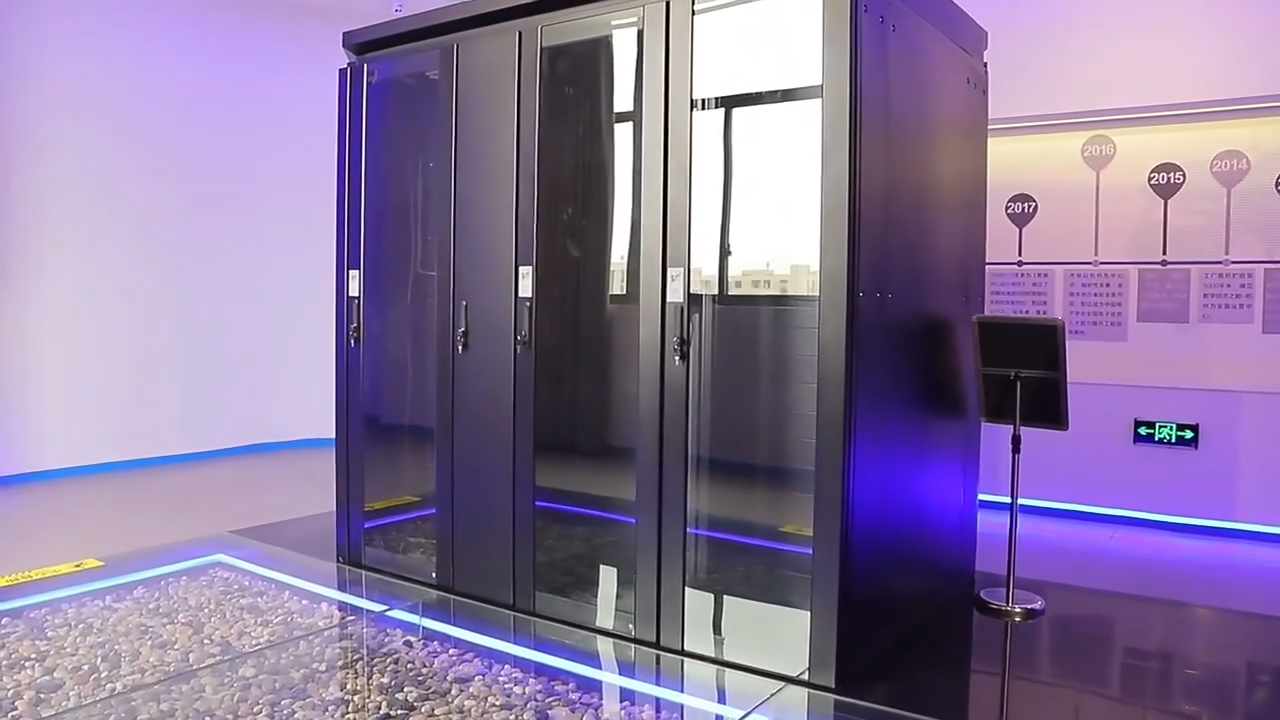
Following an evaluation of a variety of options, the project team selected the Wizard Modular Data Center as the local edge compute node. The unit is delivered fully fabricated with power and cooling systems, control and monitoring systems and rack spaces, and only requires basic utility connections upon delivery. Constructing edge nodes in centralized data centers and shipping them to edge locations is much faster than deploying edge compute nodes using a traditional construction method. Edge nodes, placed in a variety of environments, enable the placement of cloud telecom services as close to the 5G user as possible.
This application is consistent with the Thermal Guidelines for Data Processing Environments, 5th Edition published by ASHRAE TC 9.9. The IT hardware stable environmental envelopes, described in the standard, apply to the conditions of cloud telecom services located at edge 5G sites and allow service providers to better accommodate their customers at the edge. Modular systems and design thinking provide an edge over traditional systems when it comes to addressing the wide-ranging and uncontrolled nature of edge sites.
How Wizard Modular Data Center addresses 5G edge infrastructure demands
The Wizard Modular Data Center's edge architectures are factory integrated and built specifically for cloud telecom edge situations. Unlike custom built rooms where subsystems are sourced and installed on site, major components like IT racks, power, cooling systems, and DCIM are pre-assembled and tested within controlled factory environments. Each unit goes through multiple factory acceptance tests, thus minimizing inconsistencies in workmanship and improving uniformity.
Prebuilt designs of Wizard Modular Data Center facilitate swift deployments. The 5G edge use cases particularly benefit from the modular design. Telecom operators trying to meet the insatiable demand for cloud based edge services typically face challenges deploying them quickly enough. Timely delivery is particularly important to edge deployments as it minimizes the time services are unavailable to end users. The Wizard Modular Data Center minimizes the typical civil engineering dependencies in the construction process that edify cloud based services.
Second, the total cost of ownership remains lower over the full service lifecycle, due to standardized modules that reduce maintenance complexity and support phased capacity expansion. Operators can add new modules as user traffic increases, instead of investing in a fully built out facility that they would operate underutilized during early stages.
The cooling design of the Wizard Modular Data Center is constructed to match the variable load characteristics of cloud telecom services. Race-track style cooling units respond to changing heat loads in IT modules. Wizard Modular Data Centers’ use of hot aisle/cold aisle containment and continuous airflow helps to eliminate hot spots, and allows continued operation while edge nodes operate at peak loads.
Site selection and environmental considerations for 5G edge cloud telecom services
When creating edge infrastructure for cloud telecom services, engineers spend the most time optimizing space and power efficiency of edge servers, with little focus on how local site conditions may influence long-term infrastructure reliability. Edge nodes for 5G services can be deployed in many non-traditional data center locations including next to a telecom tower, in an industrial building, or in a utility room in a business park. These sites often have limited space, and may have wide variations in ambient temperature. Design flexibility is required for edge infrastructures to accommodate these sites as opposed to requiring a finished data center.
Our engineering team has evaluated many edge sites for cloud telecom services and has consistently prioritized three factors. Thermal tolerance, physical footprint and service access. The Wizard Modular Data Center can be operated at temperature extremes and has a small physical footprint, making it suitable for deployment in less controlled locations. Like other data centers, it can be fitted with DCIM to monitor and manage the health of edge components and alert cloud telecom service operators if there are problems. This reduces travel costs for site visits and improves service time for edge site faults. Remote monitoring is even more valuable for edge sites deployed in geographically disperse locations, as it may take a long time to travel to the site for on-site service.
Scaling cloud telecom services with phased modular expansion for 5G
Telecom operators start their cloud telecom services with a few edge nodes, typically to build 5G use cases, and then add more edge nodes with increased demand and customer adoption. Operators are stuck with inflexible, fixed designs for their data centers, which can lead to a lot of waste. Often operators must predict peak demands years in advance, which can greatly increase costs. The Wizard Modular Data Center, for example, can grow with the telecom operators’ demands thanks to its modular design.
With the modular design of the Wizard Modular Data Center, operators can start small with a single unit and then add more as needed. New modules connect with existing modules using standardized interfaces, allowing for continuous operations during expansion. This makes the edge cloud services more elastic to meet real-world demands. Operators also do not need to worry about making large upfront investments for inflexible data center infrastructure.
A similar modular edge infrastructure based on Wizard Modular Data Centers is useful for telecom systems integrators because it allows for better risk management. Operators can roll out 5G services edge cloud functions to a few data centers first before committing to a large region-wide rollout. If edge services do not take off, the operator doesn't suffer a large sunk cost. If services do take off, more modules can be added to fulfill the demands quickly.
Operations and lifecycle maintenance for edge infrastructure supporting cloud telecom services
Many cloud telecom services fail to meet service level agreements not from hardware defects, but from poor long term maintenance planning at 5G edge sites. Remote edge locations usually have fewer on site technicians, so the infrastructure must support simple, repeatable maintenance workflows and clear fault isolation. The Wizard Modular Data Center is built around this operational reality.
All core subsystems are standardized and pretested in the factory. Spare parts lists and service procedures remain consistent across every deployed unit, which cuts training overhead for field teams supporting cloud telecom services. The DCIM system logs all thermal and power events, so engineering teams can trace intermittent performance issues remotely before they develop into service outages. The cooling subsystem uses easily accessible service points, and critical components can be replaced without full disassembly of the whole module.
We also work closely with clients to define operational handover documents during project delivery. Factory test reports, sensor calibration records and operating manuals are provided for every Wizard Modular Data Center unit. This transparent documentation helps telecom operators maintain compliance with internal operational standards and makes handover between construction and operations teams smoother. When operators run cloud telecom services on these edge nodes, they can maintain stable 5G user experience without constant heavy on site intervention.
Frequently Asked Questions
Q1: How does edge infrastructure improve cloud telecom services for 5G networks?
A1: Edge infrastructure brings compute resources closer to end users which decreases latency for cloud telecom services. Edge data centers also help distribute the computing load to places that are closer to end users. Local processing helps support real time applications of 5G.
Q2: What makes Wizard Modular Data Center appropriate for telecom edge deployments?
A2: Preintegration and compact size of Wizard Modular Data Center helps it be suited for remote 5G sites. It also has integrated cooling and monitoring which support edge deployments. It supports a phased rollout of cloud telecom services, and reduces on-site construction work.
Q3: Is the design in compliance with global thermal standards for IT hardware?
A3: Thermal design refers to ASHRAE TC 9.9 Thermal Guidelines for Data Processing Environments, 5th Edition and maintain stable inlet conditions for edge IT equipment.
Q4: Is capacity expandable after the first 5G edge service launch?
A4: Yes, capacity is expandable. Cloud telecom services support a large number of services and users which increases the traffic load. When this happens, more Wizard Modular Data Center modules can be added to edge locations.
Q5: What type of maintenance is available for remote edge nodes?
A5: Remote edge nodes contain DCIM which helps remotely monitor and alert for problems. Other components are standardized. Factory test documents and information ease onsite troubleshooting.
Table of Contents
- The practical gap between cloud telecom services and 5G edge deployment
- How Wizard Modular Data Center addresses 5G edge infrastructure demands
- Site selection and environmental considerations for 5G edge cloud telecom services
- Scaling cloud telecom services with phased modular expansion for 5G
- Operations and lifecycle maintenance for edge infrastructure supporting cloud telecom services
- Frequently Asked Questions