
 EN
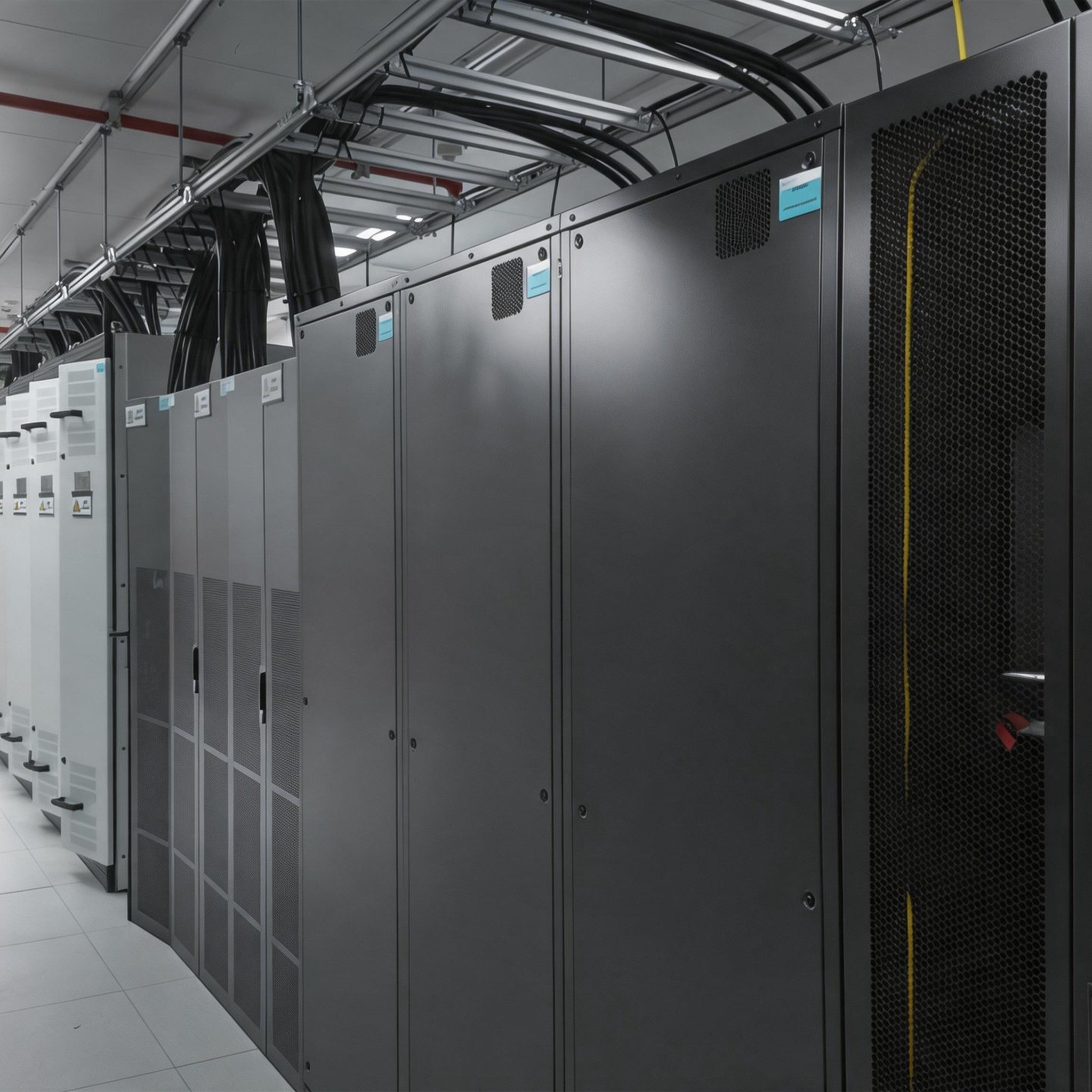
Core Drivers Behind Low PUE Prefabricated Data Center Deployment
Rising energy expenditure and stricter carbon-related regulatory requirements push infrastructure teams to re-evaluate traditional on-site built data center solutions. Low pue prefabricated data center integrates power, cooling, monitoring and IT enclosure modules inside factory-built units, delivering site-ready subsystems to cut construction cycles and control overall energy consumption. According to ASHRAE Technical Committee 9.9 energy efficiency guidelines for data centers, properly implemented modular prefabricated builds can deliver measurable PUE improvements versus conventional brick-and-mortar facilities, especially for mid-to-large scale compute deployments.
Many project teams discover that conventional builds often suffer from on-site assembly inconsistencies, air leakage and poorly matched cooling layouts, all of which push real-world PUE higher than initial simulation targets. Factory assembly and FAT testing reduce those site-induced deviations, creating more predictable energy performance once hardware goes live. Prefabricated builds are not a universal fix for every efficiency challenge, as site ambient conditions, utility quality and load profile still exert major influence over long-term operating results.
Thermal Isolation and Airflow Optimization for Energy Reduction
Airflow disorder remains one of the largest hidden sources of energy waste within data center environments. Poor containment mixing hot exhaust air back into cold aisles forces cooling hardware to run at higher capacity even under moderate IT loads. For low pue prefabricated data center units, thermal isolation gets handled during factory assembly rather than through makeshift on-site modifications.
- Rigorous panel sealing reduces bypass air loss across module wall joints
- Built-in hot-aisle or cold-aisle containment aligns with internal rack layout
- Adjustable venting components allow fine tuning after on-site installation
The Nebula Modular Data Center adopts pre-integrated airflow containment structures, removing much of the manual sealing work normally completed on construction sites. This approach lowers the risk of human error that frequently undermines thermal performance in traditional deployments. The table below compares typical operational indicators across different construction approaches.
|
Metric |
Low PUE Prefabricated Module |
Traditional On-Site Build |
Conventional Containerized Unit |
|
Typical Achievable PUE Range |
1.22-1.38 |
1.45-1.65 |
1.35-1.52 |
|
On-Site Air-Leakage Risk |
Low |
High |
Medium |
|
Factory FAT Thermal Validation |
Completed before shipment |
No factory-level thermal test |
Partial functional check |
|
Total Deployment Timeline |
3-5 months |
8-14 months |
4-7 months |
Power System Architecture That Supports Stable Low-PUE Operation
Cooling accounts for the biggest share of auxiliary consumption, yet power distribution losses still shape final measured PUE values. Unnecessary conversion stages, oversized uninterruptible hardware and inefficient busbar layouts add steady background load even when IT equipment runs at partial capacity. Design teams working on low pue prefabricated data center layouts focus on streamlining power conversion paths and matching component ratings to realistic load curves.
Redundant power paths are configured to avoid continuous low-efficiency partial-load operation. All power distribution assemblies complete factory FAT testing to verify conversion efficiency under multiple load points, so performance gaps do not surface only after site handover. Over-sizing power hardware for hypothetical peak loads is a common pitfall. Equipment running persistently below 30 percent rated capacity will drag up auxiliary loss and negatively impact real-world PUE readings.
Environmental Adaptation and Site-Specific Tuning Mechanisms
Even well-engineered prefabricated units cannot maintain target efficiency without proper site adaptation. Outdoor ambient temperature, humidity and available chilled water resources change performance outcomes substantially. During a 2024 green compute base project in central China, engineering teams observed identical prefabricated modules delivering divergent PUE figures when deployed at different positions across the same campus. Modules placed with unobstructed natural air intake recorded 7-9 percent lower auxiliary energy draw compared with units surrounded by adjacent building obstructions.
Site evaluation must cover natural cooling potential, heat rejection pathways and seasonal climate variation. Free-cooling capability built inside prefabricated assemblies can only deliver expected savings when external air quality and temperature fall within allowable operating windows. Limitations should be acknowledged. Regions with long periods of high humidity cannot rely fully on air-side free cooling, and hybrid mechanical cooling must remain available to maintain reliable operating conditions.
Performance Verification Methodology Including Factory FAT Validation
Claimed PUE values from marketing materials often come from ideal lab conditions, which rarely match real operating scenarios. Reliable performance assessment needs layered validation covering factory testing, commissioning and long-term continuous monitoring. Low pue prefabricated data center hardware undergoes structured FAT procedures before shipment, covering power subsystem efficiency, cooling loop response and containment sealing checks.
FAT work cannot fully replicate on-site climate, but it eliminates manufacturing defects and assembly faults that would otherwise degrade energy performance post-installation. After physical placement, site commissioning conducts multi-point PUE logging under varying IT load levels. Continuous DCIM tracking later captures seasonal shifts, helping operators separate hardware-related losses from site-driven efficiency changes. Three key validation stages should be followed:
- Factory FAT functional and thermal-relevant testing
- Post-installation commissioning with multi-load point measurement
- Long-term DCIM monitoring for seasonal performance trending
Trade-Off Analysis Between Target PUE and Overall Project Cost
Pursuing extremely low PUE targets brings rising capital expenditure, and marginal efficiency gains come with disproportionate cost increases. Project planners need to balance expected energy savings against module procurement, site modification and maintenance outlay. Pushing for PUE far below site-practical limits drives up total-cost-of-ownership without delivering proportional return.
Low pue prefabricated data center solutions deliver best economic value when targets align with local climate, utility pricing and actual IT load roadmap. Over-specifying free-cooling hardware for locations with limited usable free-cooling hours creates capital waste. Project design should set realistic performance baselines informed by local meteorological data rather than benchmark figures achieved in other geographic regions.
ZTMM manufactures integrated modular infrastructure including the Nebula Modular Data Center, with standardized FAT workflows executed within in-house production facilities. Rigorous factory-stage assembly verification reduces on-site performance uncertainty, supporting stable real-world energy performance for prefabricated compute infrastructure across diverse deployment environments.
Table of Contents
- Core Drivers Behind Low PUE Prefabricated Data Center Deployment
- Thermal Isolation and Airflow Optimization for Energy Reduction
- Power System Architecture That Supports Stable Low-PUE Operation
- Environmental Adaptation and Site-Specific Tuning Mechanisms
- Performance Verification Methodology Including Factory FAT Validation
- Trade-Off Analysis Between Target PUE and Overall Project Cost