 EN
Real-world pain points shaping modern cooling design
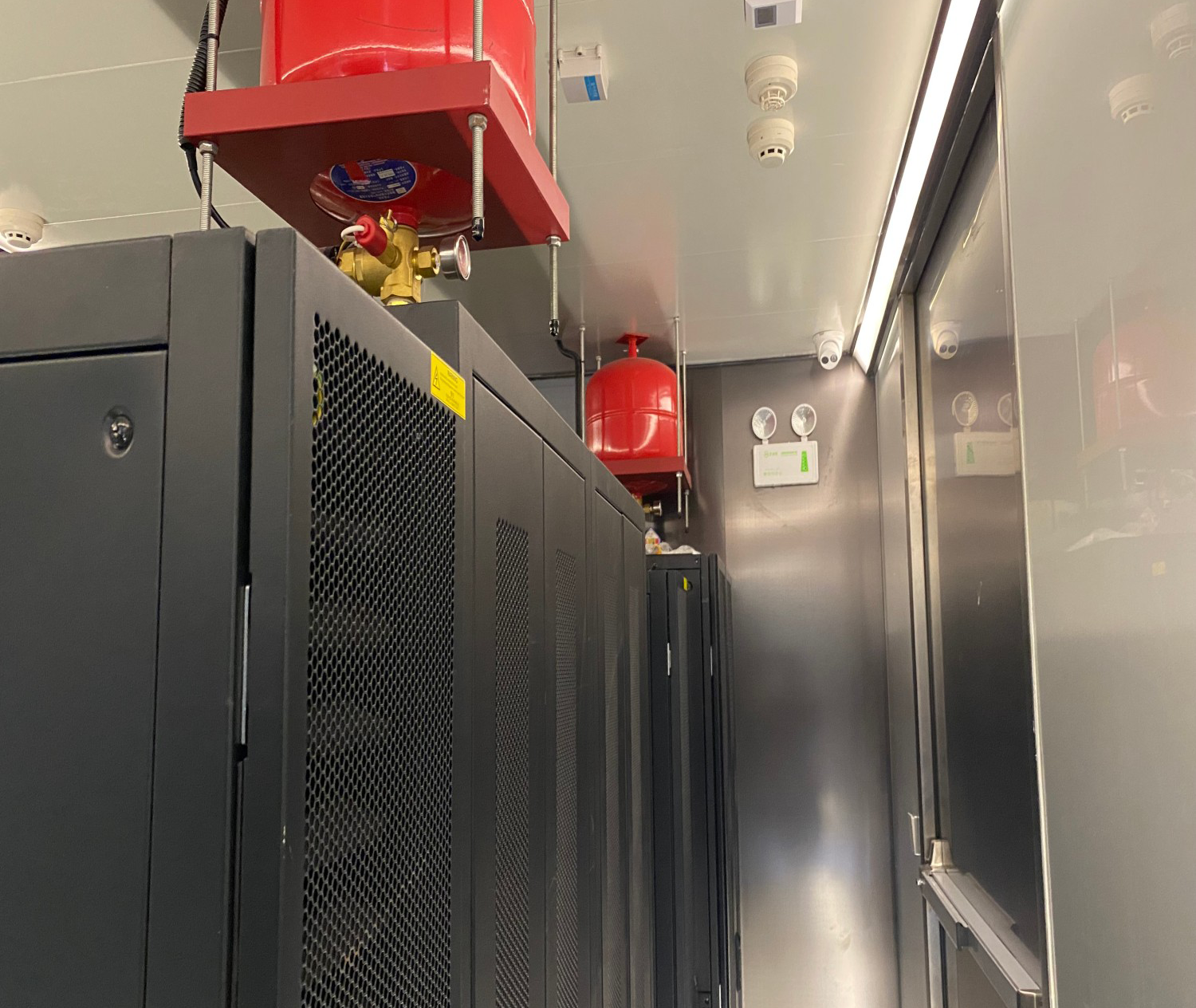
If you have worked hands-on with edge and AI-oriented infrastructure projects, you will notice that cooling challenges rarely come down to equipment alone. Many project teams I collaborated with in past deployments ran into avoidable issues because they picked cooling architecture without matching local climate, rack power density and site labor conditions. One representative field experience came from an overseas edge deployment where the client originally planned to roll out conventional on-site built-up machine rooms for regional 5G and financial workloads. Construction timelines stretched out, local skilled installation manpower was limited, and unexpected summer high-temperature episodes created repeated thermal throttling for computing hardware before full project hand-over. That project eventually switched toward containerized data center infrastructure, selecting the 20 ft Containerized Data Center as primary edge node hardware, with pre-integrated cooling subsystems delivered after complete factory acceptance testing.
This practical case is based on observations documented by the ASHRAE TC 9.9 community. Their thermal guidelines are the world’s most referenced guidelines for limiting IT equipment temperature operating envelopesASHRAE. Traditionally, using air cooling for IT was straightforward. However, the recent mix shift in data center workloads has challenged the air cooling industry, especially for AI and HPC workloads. With air cooling, the idea is to increase the surface area of the coils to deal with increased loads, and the height of the cooling units to increase the volume of air that can be cooled. These challenges have pushed the boundaries of IT equipment’s temperature operating envelope limits. Plugging in the limits or taking a conservative approach can end up being costlier in the long run. Cooling design engineers for containerized data center assets need to determine whether indirect evaporative, row-based air cooling, hybrid air-liquid or liquid-liquid cooling loops satisfy the desired rack power. Our manufacturing team does a pressure test and leak checks, along with a partial thermal load simulation, before shipping, in the 30,000 square meter facility. Most integration risks are addressed prior to containers being shipped to end users. This workflow lessens dependency on scarce field technicians, which is a major benefit for projects in the Middle East and Africa.
Technical trade-offs between air-cooled and liquid-cooled implementations
Some see liquid cooling and air cooling as opposing implementations. In practice, they complement one another for larger scale infrastructure projects. In-Row Precision Cooling Modules in our 20 ft containerized data centers utilize air cooling and remain cost-effective up to 25 kW of IT load, ideal for government and telecom edge installations and some cloud deployments. Air-cooled modular data centers simplify workflows, require less skilled personnel on-site and take advantage of free cooling, when the environment permits. As with liquid cooling, air cooling is limited, and imposes practical constraints when considering dense AI workloads.
Liquid-cooled designs replace air-cooled designs for high density AI applications. The Nebula series modular liquid-cooled micro data center and INFINITY SERIES dual-40ft container units offer a hybrid air-liquid cooling framework that can support rack level density of 100kW. These are targeted towards AI training and HPC. According to the ASHRAE/NEMA/PNNL AI Data Center Energy Performance Framework, hybrid thermal configurations should be reviewed for next generation compute infrastructures to cover the supply water temperature window and free-cooling chillers, as well as the operation of cooling towers throughout seasonal shifts. Liquid-cooled containerized data center products integrate CDU units, liquid loops, leak detection, and DCIM modules during factory integration. Every fluid loop undergoes hydrostatic pressure checks and cycle debugging, thus reducing the chances of pipeline incidents. Liquid-cooled paths have additional considerations such as fluid compatibility, filtration, and maintenance that product designers should disclose to the end users.
Factory pre-integration and quality assurance for cooling subsystems
In the endeavor to provide end-to-end cooling reliability, consideration must also be given to how and where the final assembly and validation of the cooling system take place. The principal differences in how traditional data center projects and the more recent containerized data center manufacturing projects approach the mechanical integration of cooling systems, offers some interesting insights into potential gaps in traditional data center construction. Most mechanical work for traditional data center projects is done at the customer site, which means the final cooling performance is impacted by a number of uncontrolled factors (variability in workmanship, weather delays, subcontractor coordination). Containerized data center manufacturing projects turn this upside down: the principal cooling system components are integrated and pre-tested in a factory environment and then transported to the customer site.
In our manufacturing process, we have developed a systematic approach to verifying the integrity of cooling subsystems. Mechanical assembly is followed by a static validation of piping and wiring. A series of functional checks are then performed, including rotation of fans, start-up of chillers, cross-validation of sensors and calibration of CDU flowmeters. Thermal dummy loads are simulated to create various heat profiles to fully stress the cooling system and observe system behavior. A partial load condition can be fully tested prior to delivery of the containerized data center to the customer site. Air, liquid and refrigerant cooling systems are available for each of the 20-ft containerized data center systems. Each unit is fully tested and documentation of cooling system performance is provided to the customer prior to shipping. This comprehensive off-site quality assurance approach is particularly valuable to customers in high-risk regions where little or no local support is available for the commissioning of critical systems.
Matching cooling architectures to geographic and business requirements
Cooling performance cannot be judged in isolation from operating geography. Solutions performing efficiently in temperate zones may face serious challenges under tropical high-humidity or desert high-temperature conditions. High ambient temperatures raise mechanical cooling runtime, while humid locations impose constraints on evaporative-style free-cooling modes. Many customers exploring containerized data center deployments aim for fast capacity expansion without waiting for lengthy brick-and-mortar construction cycles, yet they underestimate how climate shapes cooling equipment sizing and redundancy setup.
For edge-focused deployments such as remote telecom sites or branch-office-style financial infrastructure, the 20 ft Containerized Data Center offers flexible scaling. Clients can start with standalone 15-25 kW nodes and later cluster multiple containers together as compute demand grows, with cooling capacity scaling alongside added IT racks. Larger-scale AI-oriented deployments lean toward our 40-foot air-cooled container clusters or INFINITY SERIES liquid-cooled container groups, built to handle total IT capacity ranging from hundreds of kilowatts up toward multi-megawatt aggregated workloads. When we work on tender and custom design phases, our engineering group reviews local historical weather datasets together with client-provided IT load forecasts, to tune free-cooling activation thresholds, cooling equipment N+X redundancy schemes and water-usage expectations. DCIM monitoring embedded inside each containerized data center continuously logs cooling metrics, helping local operators track inlet temperatures, equipment runtime and energy consumption over long-term operation.
Balancing efficiency, resilience and total-cost-of-ownership for cooling roadmaps
There are trade-offs when setting cooling strategies. The cooling roadmap has to take into account constraints such as 'always-on' requirements, operational resilience, and the maintenance burden, among others. Generally, lowering PUE is a worthy goal; however, in the process of trying to meet increasingly lower targets, a company may unnecessarily overspend on hardware and risk uptime. Redundancy matters as well: cooling subsystems may be configured N+1 or 2N, resulting in a tradeoff between outage mitigation and ongoing cost of ownership.
Containerized data center systems offer architectural flexibility. For example, some projects have adopted a 'mixed thermal strategy' whereby liquid cooling is employed for select modules (i.e. AI segment) while air cooling is used for other modules (i.e. general purpose computing). Some project references include large-scale enterprise deployments in Kazakhstan, as well as AI workloads in the USA (one of the references is carrier-class, while the other is public safety-related). The primary focus should be on the lifecycle of the equipment. A case in point: while Company A's hardware may cost the same as Company B's hardware, Company A's equipment may have a lower uptime, a higher maintenance burden, and offer less flexibility in trade-offs. Our company has a remote diagnostic platform and we provide cross-border field-support to help clients post-delivery. This is done to ensure that cooling systems in containerized data centers are aligned with their original design.
Frequently Asked Questions
Q1: How to select air-cooled or liquid-cooled containerized data center? A: Evaluate rack power density, local climate and on-site maintenance capacity. The 20 ft Containerized Data Center air-cooled version fits loads under 25kW total container IT. Liquid cooling suits high-density AI workloads and requires competent liquid-loop maintenance.
Q2: Does factory-integrated cooling meet international thermal standards? A: Designs follow ASHRAE TC 9.9 IT thermal guidelines. Each unit passes factory thermal tests. Final site performance still relies on proper on-site utility installation and commissioning.
Q3: What are key risks for liquid-cooled container data centers? A: Main risks include pipeline leakage, filter clogging and cold source mismatching. Built-in leak sensors and DCIM real-time monitoring help mitigate these risks.
Q4: Can cooling capacity expand after container delivery? A: A single container has fixed internal cooling capacity. Expansion is achieved by adding extra containers to build a cluster. Share future growth plans in early design.
Q5: How important is site installation quality? A: Most integration work finishes at factory. However, proper power, grounding and cold source connection remain critical for stable cooling performance.
ASHRAE:AI Data Center Energy Performance Framework
Jointly published by ASHRAE, NEMA and PNNL (Pacific Northwest National Laboratory)
Table of Contents
- Real-world pain points shaping modern cooling design
- Technical trade-offs between air-cooled and liquid-cooled implementations
- Factory pre-integration and quality assurance for cooling subsystems
- Matching cooling architectures to geographic and business requirements
- Balancing efficiency, resilience and total-cost-of-ownership for cooling roadmaps
- Frequently Asked Questions