
 EN
EN
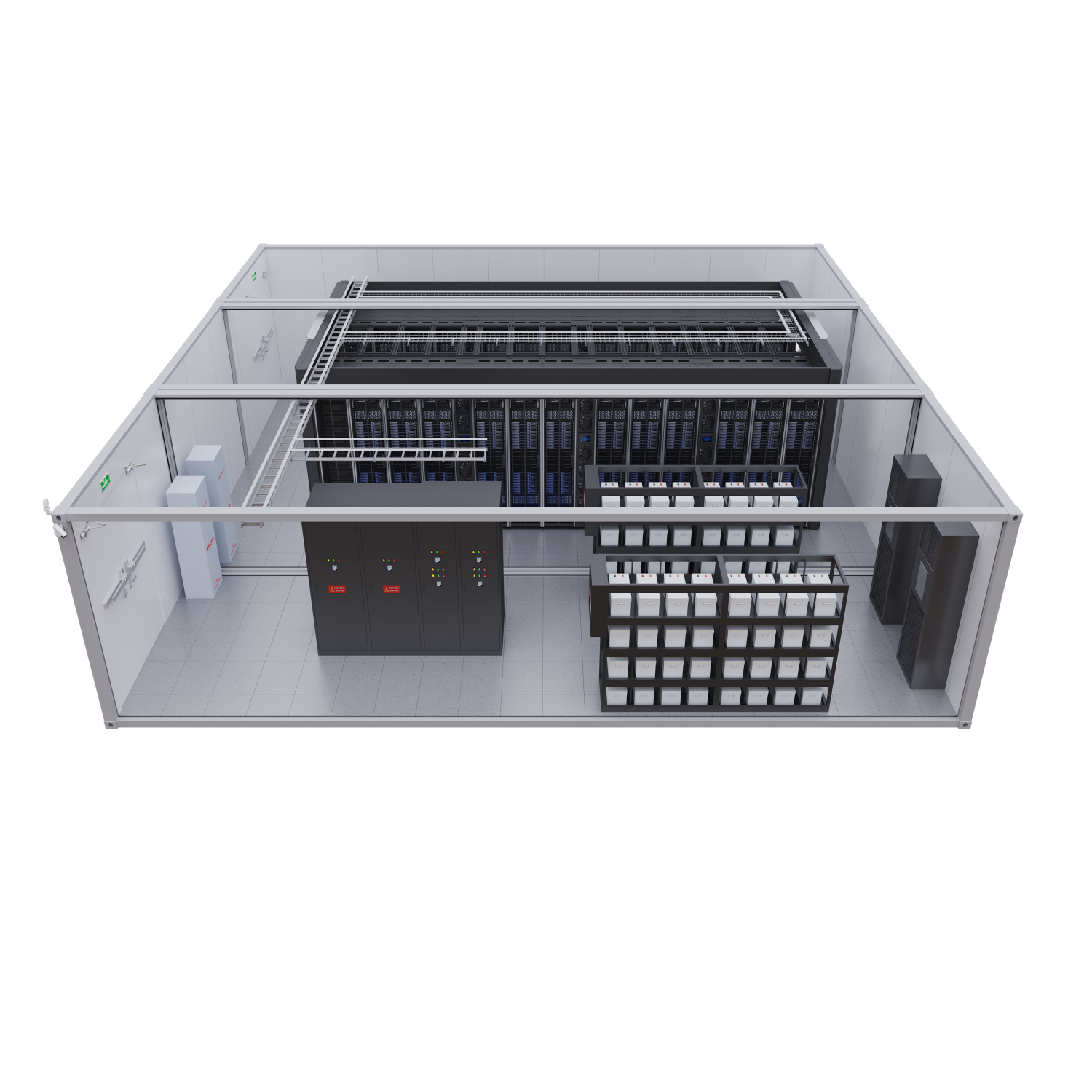
What Is a Container-Based Data Center?
A container-based data center is a self-contained IT infrastructure solution built inside a transportable enclosure, commonly based on standard ISO container dimensions. It integrates essential data center components, including server racks, power distribution systems, cooling equipment, fire protection, security systems, and environmental monitoring into a compact and deployable unit.
Unlike traditional data centers that require dedicated buildings, complex engineering processes, and extensive onsite construction, container-based data centers are typically manufactured and integrated in controlled factory environments before being delivered to the deployment location. This approach allows many infrastructure components to be installed, tested, and prepared in advance, reducing onsite workload and improving deployment efficiency.
The standardized design of container-based data centers makes them suitable for organizations that need flexible computing capacity without building a permanent facility. They are commonly used in edge computing, remote operations, temporary capacity expansion, disaster recovery, and other scenarios where infrastructure needs to be deployed closer to users or business operations.
Container-Based Data Centers vs Traditional Data Centers
Traditional data centers are usually permanent facilities that require site selection, architectural planning, electrical and mechanical engineering, construction work, and coordination among multiple contractors. Depending on project requirements, this process can involve significant preparation and onsite activities before the facility becomes operational.
Container-based data centers take a different approach by moving much of the manufacturing and system integration work into a factory environment. Power systems, cooling solutions, IT racks, monitoring equipment, and other components can be assembled and tested before transportation.
This prefabricated model helps reduce onsite construction complexity, improve quality consistency, and create a more predictable deployment process. Instead of building every infrastructure element from the ground up, organizations can install a pre-integrated solution and complete the remaining site connections and commissioning activities based on project requirements.
Compared with traditional facilities, container-based data centers provide advantages in mobility and deployment flexibility. They can be relocated or expanded according to changing business needs, making them particularly useful for distributed infrastructure environments.
However, container-based solutions are not intended to replace all traditional data centers. Large-scale facilities with highly complex requirements may still benefit from purpose-built buildings, while container-based systems are often better suited for flexible, scalable, and location-specific deployments.
Why Businesses Choose Container-Based Data Centers
The main advantage of container-based data centers is their ability to simplify infrastructure deployment. Because major systems are integrated before delivery, organizations can reduce onsite installation requirements and shorten the overall deployment process compared with conventional construction methods.
This flexibility is valuable for businesses experiencing changing computing demands. Instead of investing in a large permanent facility based on uncertain future requirements, companies can add infrastructure according to actual needs.
Container-based data centers also support more efficient infrastructure planning. Standardized designs help organizations replicate similar deployments across multiple locations while maintaining consistent configurations and operational processes.
Another important benefit is location flexibility. Traditional data centers are fixed assets, while container-based solutions can bring computing resources closer to where data is generated. This makes them suitable for applications requiring local processing, distributed computing, or infrastructure deployment in areas where traditional construction may be challenging.
Applications Across Different Industries
Container-based data centers are used across a wide range of industries that require flexible and rapidly deployable computing infrastructure.
In telecommunications and edge computing, these solutions support distributed network infrastructure by placing computing resources closer to users and connected devices. This helps organizations improve application responsiveness and support services such as IoT platforms, smart manufacturing systems, and other data-intensive applications.
In manufacturing and industrial environments, container-based data centers provide local computing capabilities for automation, production monitoring, and industrial data processing. Deploying infrastructure near production sites allows companies to process operational data efficiently without relying entirely on distant centralized facilities.
For energy, mining, and remote operations, container-based data centers offer a practical option for locations where building a permanent data center may not be convenient. Their transportable design allows organizations to establish computing environments closer to operational sites.
They are also used for disaster recovery, temporary projects, research environments, and business expansion scenarios. By providing pre-integrated infrastructure, container-based data centers help organizations respond more flexibly when additional computing capacity is required.
As artificial intelligence and high-performance computing continue to grow, container-based solutions are also being considered for specialized applications. However, high-density workloads may require customized power and cooling designs to meet specific performance requirements.
Key Considerations Before Deploying a Container-Based Data Center
Although container-based data centers provide many advantages, successful deployment requires careful planning. Organizations should evaluate factors such as available power capacity, network connectivity, environmental conditions, security requirements, and integration with existing IT systems.
The selection of a suitable solution depends on business objectives, workload characteristics, deployment location, and future expansion plans. A well-designed container-based data center should not only meet immediate capacity requirements but also support long-term operational needs.
By combining factory-based manufacturing, integrated infrastructure, and flexible deployment options, container-based data centers provide an alternative approach to traditional data center construction. They are especially valuable for organizations seeking faster deployment, adaptable infrastructure, and computing resources that can be delivered closer to where they are needed.
Frequently Asked Questions
What is a container-based data center?
A container-based data center is a portable IT infrastructure solution that integrates computing, power, cooling, security, and monitoring systems inside a transportable enclosure.
How is a container-based data center different from a traditional data center?
Traditional data centers are permanent facilities that require extensive construction, while container-based data centers use prefabricated designs to simplify deployment and reduce onsite installation work.
What are the main benefits of container-based data centers?
The main benefits include faster deployment, flexible installation locations, standardized design, easier expansion, and suitability for edge computing and remote applications.
Which industries use container-based data centers?
Industries such as telecommunications, manufacturing, energy, research, government, and enterprises with distributed operations can benefit from container-based data center solutions.
Can container-based data centers support AI workloads?
Yes. Container-based data centers can support AI and high-performance computing applications when designed with appropriate power, cooling, and infrastructure configurations.