
 EN
EN
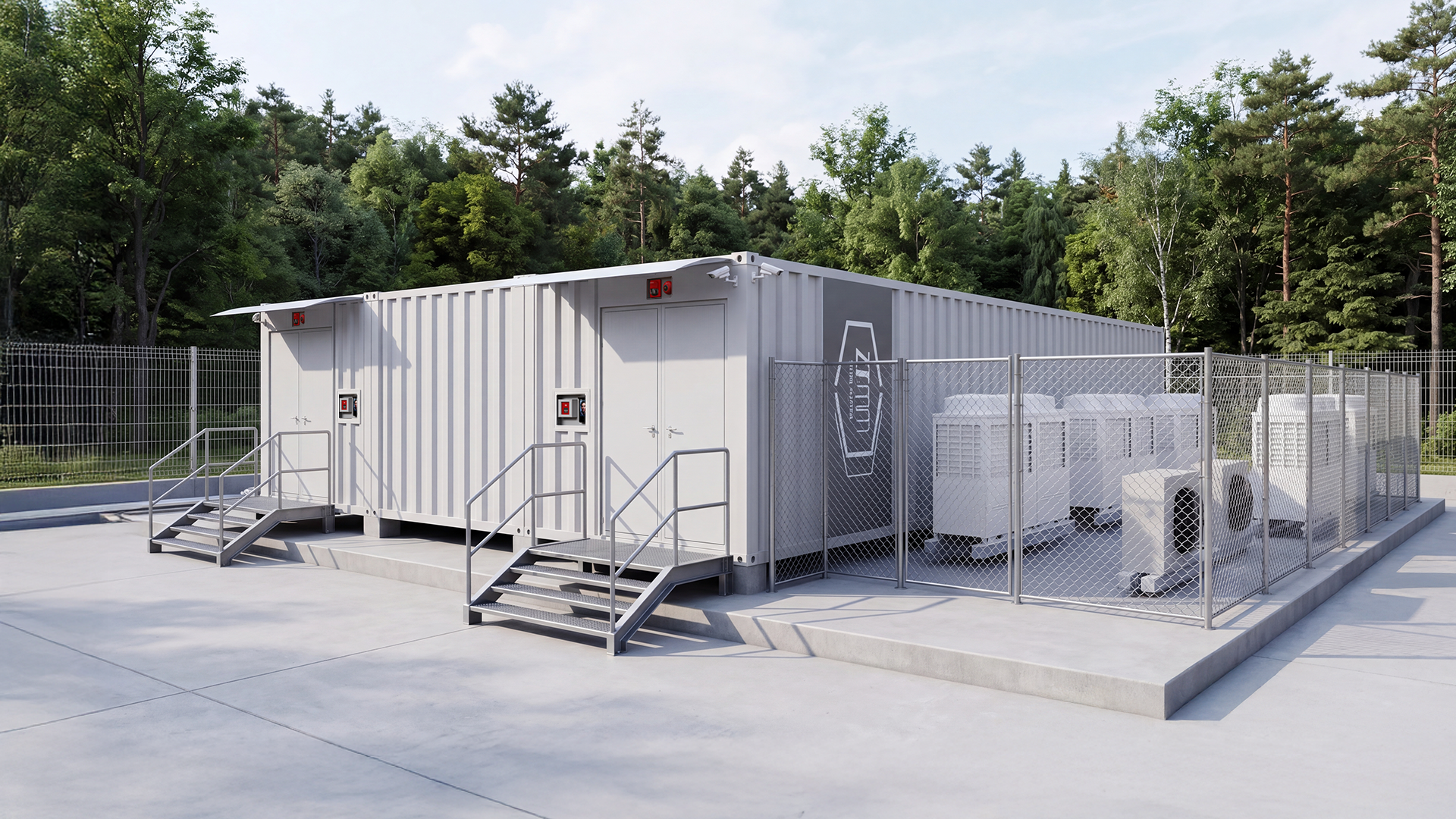
What Is a Containerized Data Center?
A containerized data center is a modular IT infrastructure solution designed inside a transportable enclosure, often based on standard container dimensions or purpose-built modular structures. It integrates essential data center components, including servers, storage systems, networking equipment, power distribution, UPS systems, cooling solutions, fire protection, and environmental monitoring into a compact and deployable unit.
Originally developed to provide rapid computing capacity for remote industrial locations, military applications, and temporary projects, containerized data centers have evolved into a practical infrastructure option for enterprises, telecommunications providers, research organizations, and businesses adopting edge computing.
Unlike traditional data centers that require extensive onsite construction, containerized data centers are typically manufactured and assembled in controlled factory environments. Major components are installed, integrated, and tested before shipment. After delivery, the deployment process mainly involves site preparation, power connection, network integration, and final commissioning, reducing onsite complexity and improving deployment flexibility.
Architecture and Key Components of Containerized Data Centers
Modern containerized data centers commonly use standardized modular designs. Many solutions are based on 20-foot or 40-foot ISO container dimensions, allowing compatibility with common transportation methods such as road, rail, and maritime shipping. However, some advanced modular data centers use customized enclosures designed specifically for higher-density computing environments.
Inside the module, containerized data centers typically include pre-installed server racks, network equipment, cable management systems, power infrastructure, and monitoring platforms. Since many systems are assembled and tested before delivery, organizations can reduce onsite installation requirements and achieve more predictable deployment processes.
The power infrastructure of a containerized data center may include power distribution units (PDUs), UPS systems, electrical panels, monitoring systems, and optional backup power solutions. Depending on business requirements, the design can support different levels of redundancy, such as N, N+1, or 2N configurations, to improve system reliability.
Cooling and thermal management are critical parts of modular data center design. Common cooling approaches include in-row cooling, direct expansion (DX) cooling, air-based cooling, and liquid cooling technologies. Compared with traditional facilities that rely on large centralized cooling systems, containerized solutions often use more independent cooling architectures, simplifying deployment.
However, modern workloads such as artificial intelligence (AI), machine learning, and high-performance computing (HPC) require higher power density and more advanced thermal management. In these cases, customized cooling solutions and specialized engineering may be required to support demanding computing environments.
Containerized data centers also typically integrate security and operational systems, including fire detection and suppression, access control, environmental monitoring, and remote management platforms. These systems are usually tested during factory commissioning to improve reliability after deployment.
Key Benefits of Containerized Data Centers
One of the primary advantages of containerized data centers is faster and more flexible deployment compared with traditional construction methods. Because many components are pre-installed and tested before shipment, organizations can reduce onsite construction activities, equipment installation work, and coordination complexity.
Actual deployment timelines depend on various factors, including customization requirements, site conditions, available power infrastructure, network connectivity, and local regulations. However, modular data centers can provide significant advantages for applications that require rapid capacity expansion, edge computing deployment, or temporary infrastructure support.
Containerized data centers can also improve cost predictability through standardized designs and factory-based manufacturing. Instead of building a large permanent facility based on uncertain future demand, organizations can expand capacity gradually according to actual business requirements.
This pay-as-you-grow approach allows companies to add computing resources when needed, helping avoid unnecessary upfront investment in excess capacity. It is particularly useful for businesses with changing workloads or distributed infrastructure requirements.
Another important advantage is deployment flexibility. Traditional data centers are usually built in fixed locations, while containerized solutions can bring computing resources closer to users and operational environments. This makes them suitable for applications such as:
- Edge computing infrastructure
- Telecommunications networks
- Industrial facilities
- Remote operations
- Disaster recovery environments
- Temporary computing projects
Limitations and Challenges of Containerized Data Centers
Although containerized data centers offer flexibility and rapid deployment, they are not the ideal solution for every application.
For large-scale computing environments, deploying multiple modules may introduce additional operational challenges. Organizations may need to manage inter-module networking, power distribution coordination, cooling management, and overall infrastructure monitoring.
For hyperscale facilities or long-term large computing environments, purpose-built data centers may provide advantages in terms of space utilization, operational efficiency, and infrastructure integration.
High-density AI and HPC workloads also present additional challenges. Many traditional containerized designs were initially optimized for conventional enterprise workloads. Modern GPU-based applications may require higher power capacity, advanced liquid cooling technologies, and customized thermal management strategies.
Therefore, while containerized data centers can support AI infrastructure, high-density deployments often require careful engineering based on workload characteristics.
Availability requirements are another important consideration. Organizations seeking higher reliability levels, such as Tier 3 or above design objectives, need to carefully plan redundant power systems, independent cooling paths, fault tolerance strategies, and maintenance procedures.
A containerized form factor alone does not determine reliability. Overall system architecture, component selection, and operational planning play a more important role in achieving high availability.
Frequently Asked Questions
What is a containerized data center?
A containerized data center is a modular IT facility that integrates computing, storage, networking, power, and cooling systems into a transportable structure, allowing organizations to deploy computing capacity more efficiently.
Are containerized data centers faster to deploy than traditional data centers?
Yes, containerized data centers can often be deployed faster because many components are manufactured, installed, and tested before delivery. However, actual deployment time depends on project complexity, site readiness, and infrastructure requirements.
What are the main benefits of containerized data centers?
The main benefits include flexible deployment, faster capacity expansion, reduced onsite construction requirements, improved cost predictability, and suitability for edge computing and remote applications.
Can containerized data centers support AI workloads?
Yes, containerized data centers can support AI workloads. However, high-density GPU deployments may require advanced cooling technologies, increased power capacity, and customized infrastructure design.
Which industries use containerized data centers?
Industries that commonly use containerized data centers include telecommunications, manufacturing, energy, research organizations, government applications, and enterprises requiring flexible computing capacity.