 EN
What Telecom Operators Should Expect from a Prefabricated Telecom Shelter Manufacturer
When Telecom Operators expand their networks they face challenges beyond space to locate servers and communication equipment. There are issues such as dependable power, efficient cooling, physical security, fire protection and other reasons to secure the shelter. A manufacturer of prefabricated telecom shelters must consider all these factors, rather than just the shelter. A modular data center can bring all essential edge computing systems and 5G infrastructure together. Buyers should look at the system architecture, IT load, rated cooling capacity, power distribution, backup power, function control and monitoring, and how easy is it to install. Also it is important to assess if the solution truly meets the operational workload and site constraints.
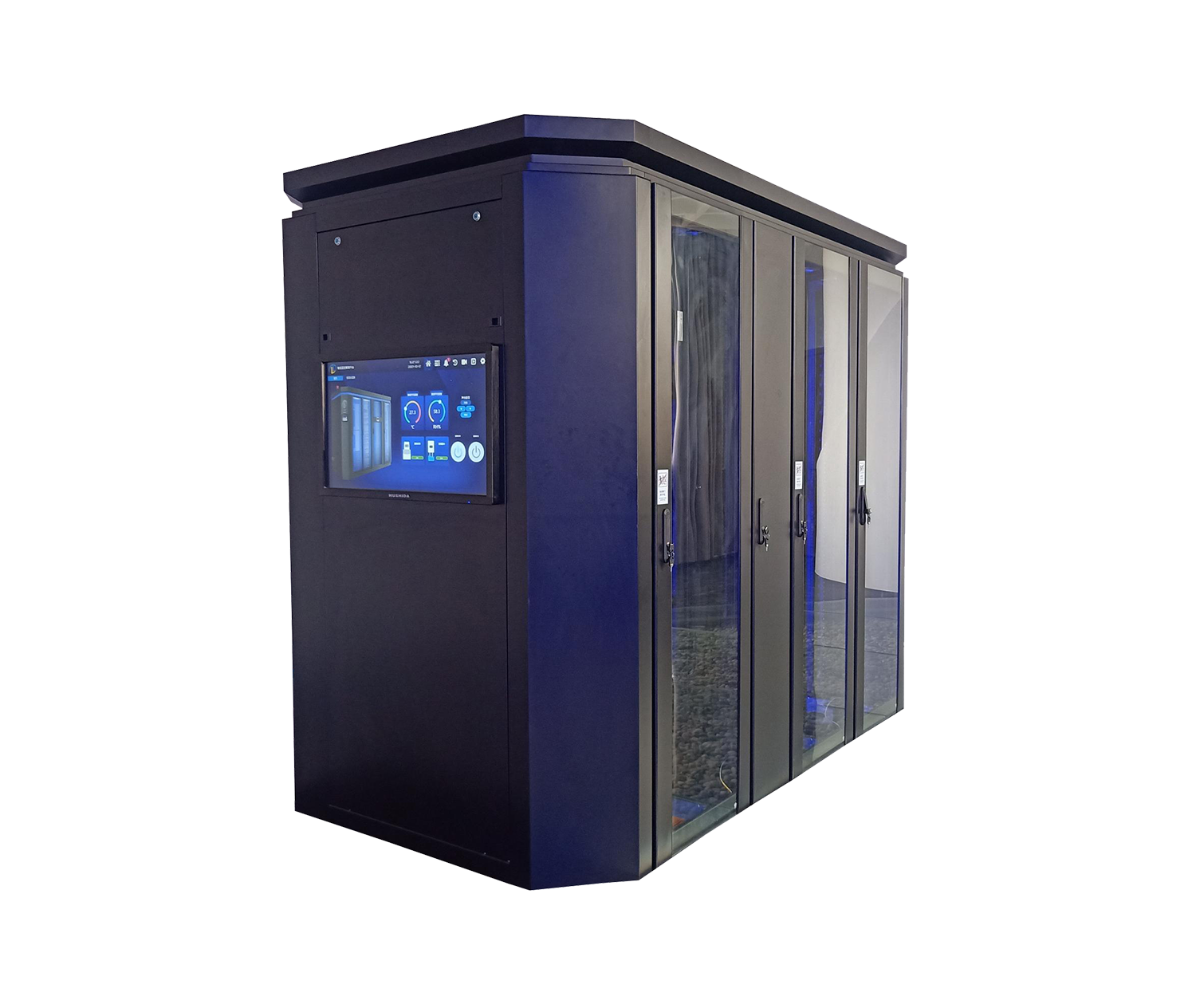
ZTMMDC provides several modules for various deployment types, including the Wizard Modular Data Center, Warrior Modular Data Center, and Nebula Modular Data Center. Wizard is built for small- to medium-size data center environments and integrates power and cooling systems as well as security and fire suppression systems while preserving space for IT equipment. Warrior provides a secured standardized enclosure for edge computing and distributed IT systems. Nebula has a modular design that integrates various systems for data center, IT, UPS, cooling, power, fire protection, access control and intelligent monitoring. A knowledgeable provider of prefabricated telecom shelters should provide information on which design best fits a customer’s operations, what comes with the sale, and what would require additional site work.This discussion is more productive than betting on claims for quick installation or high dependability.
How Factory Quality Control Should Work from Design to Assembly
Manufacturing begins long before the first piece of equipment arrives. At Morgan-Linton, Inc. we understand that a quality telecom shelter design integrates the customer’s electrical single line diagrams and equipment layouts. Calculations for the cooling load and cable routing, along with the identification of alarm points and interface requirements are all part of a quality design. The design review should ensure that maintenance access is provided for all equipment and that the design supports the required level of redundancy. During the incoming quality inspection, the designated quality assurance personnel should ensure the components received match the approved bills of materials, and compare nameplates against the approved design. During fabrication, quality inspection should verify that the enclosures are built according to the approved design.
Verifying wiring identification, terminal tightness, protective earthing, circuit separation, and the correct installation of breakers and distribution equipment is part of electrical assembly. Cooling and monitoring equipment is also checked for correct positioning and connections, as well as location of sensors and configuration of alarms. For example, a monitoring system may indicate that a server rack is cooling normally while a temperature sensor may be in a location that does not represent the inlet conditions, and in fact, the server rack is not being cooled. This problem may not be discovered until after the telecom shelter is installed onsite.A good manufacturing process would identify this during assembly and/or functional testing. Inspection records should include the item inspected, acceptance criteria, the result of the inspection, and corrective actions taken. This creates traceability for quality records, and management of reliance is not left to assumption that the item passed inspection.
Factory Acceptance Testing and the Evidence Buyers Should Request
Factory acceptance testing (FAT) allows the buyer to validate that equipment, integrated as designed, functions appropriately prior to shipment. A test plan for a prefabricated telecom shelter manufacturer would be based on the approved design, contractual requirements, and applicable electrical codes and provisions, as well as the functions delivered. Examples of typical checks would be a visual inspection, component label checks, power distribution checks, the status of the UPS, alarm responses, the operation of the cooling system and/or monitoring functions, and communication interlocks. If redundancy is required, the test plan should cover the operating sequence as well as the functions supported by the redundant equipment. The test plan should differentiate between a function which has been tested, a function which has been inspected, and a function which will be tested on-site.
Not all types of testing should be presumed to be included, e.g., full load testing, environmental testing, ingress protection testing, etc., unless they are specified in the contract and supported by evidence of testing. Buyers should request the results of factory acceptance testing (FAT), and a list of open issues. Photographs, equipment wiring diagrams, schedule of equipment, serial numbers, operating manuals, records of last maintenance, and records of installation should be provided for equipment handover and to support future equipment maintenance. A telecom shelter manufacturer should clarify which tests require a customer witness, which can be performed remotely, and which are dependent on the availability of site utilities and/or telecom network. The ZTMMDC takes a broad view of what is included within manufacture, and can be used as a practical guide for procurement teams defining inspection hold points and acceptance criteria for supplied equipment.
Understanding Certification Standards and Their Practical Limits
Certification needs to be assessed based on the product, the system boundary, the destination market and the scope of the claim. One important industry reference is UL 2755, which UL Solutions describes as an evaluation framework for modular data center systems and related modules. It identifies safety considerations for factory-built modules that include IT equipment and the supporting infrastructure, some of which may be difficult to inspect after installation. Buyers should confirm the applicable edition, the scope of the evaluation and determine whether the delivery conforms to the evaluation and if the evaluation report supports the delivered configuration. Other requirements may include local electrical codes, grounding and bonding, fire protection, battery safety, electromagnetic compatibility, environmental protection, and others, based on the country and project. IEC Standards may pertain to electrical equipment and the design of electrical installations, but the applicable Standard must be determined based on the equipment and the jurisdiction, rather than listed as a ‘badge’ Standard.
Like ISO 9001, modular data centers are certified to various quality management systems, and issuance of a component certificate does not mean the complete modular data center is certified. Similarly, the certificates of a manufacturer’s quality management system do not automatically mean that a system, sub-system, or component has been accepted. A telecommunications shelter manufacturer should include evidence to support any certification statement. Evidence should include the name of the certificate holder, the model or product scope, the issuing body, the limitations, and the period for which the certificate is valid.
Buyers should differentiate between the quality management system certificate of a manufacturer, a component level approval, a system level evaluation, and project acceptance. Published UL Solution’s evaluation of prefabricated modular data centers offers useful information and serves as a foundation for discussions on system level evaluation. It is important that the final compliance matrix be agreed to by the manufacturer, the customer, the engineering consultant, and the authority having jurisdiction prior to starting manufacture.
Matching ZTMMDC Modular Data Centers to Telecom Projects
The most useful comparison of suppliers links quality control with the equipment the customer is actually planning to use. For compact telecom edge sites, Warrior Modular Data Center provides an IT rack with UPS and battery backup, and provides precision cooling, power distribution, fire protection, and access control with monitoring in one standardized enclosure. The published options of the Warrior Modular Data Center include various rack UPS configurations and integrates temperature, humidity, door status and smoke sensors. This data center can be integrated into systems where a server room is not practical; however, the final design has to consider the site conditions (e.g. site power, clearances, ambient conditions, etc.) and maintenance access. For smaller and medium-sized installations that have the potential for growth, Wizard Modular Data Center supports configurations ranging from three to eight enclosures and integrates the required supporting infrastructure and leaves space for IT equipment. For larger integrated micro data center requirements, Nebula Modular Data Center provides configuration options that integrate racks, UPS and batteries, as well as precision cooling, power distribution, hot and cold aisle containment, fire protection, monitoring and access control. In a practical procurement scenario, a telecom operator planning several edge locations would first define the IT load, anticipated growth, the local conditions (e.g. available power, cooling, site maintenance, and required alarms), and interfaces.
The engineering team could evaluate Warrior for compact integrated deployments, Wizard for flexible smaller deployments, and Nebula for a more comprehensive modular deployments. The selection needs to be confirmed against the latest technical documentation rather than product names. Different components of the solution should be assessed to identify an implementable configuration, prior to issuance of a purchase order. This includes bill of materials, design drawings, factory test plan, certification, delivery scope, warranty, spare parts, commissioning, and other documents. A prefabricated telecom shelter manufactures more than a supplier. It is an engineering and integration partner. ZTMMDC helps the project team by providing three families of modular data center options and engineering transparency to provide a solution to their needs.
Frequently Asked Questions
Q1: What should buyers look for in a prefabricated telecom shelter manufacturer?
Buyers should examine a potential supplier’s engineering capability and experience with system integration. Full traceability of all components and the supplier’s ability to perform Factory Acceptance Tests (FATs) and relevant certifications should also be assessed. After-sales service capability and the potential supplier’s ability to ensure the telecom shelter solution offered is appropriate to the site-specific demands for power supply, cooling, and security access and maintenance should be evaluated.
Q2: What is the meaning of Factory Acceptance Testing?
Factory Acceptance Testing (FAT) is performed to verify that a fully integrated system has met all design specifications and functional requirements prior to shipment. Depending on contract terms, the test may cover the UPS and cooling systems, alarms, remote monitoring, and various redundant systems.
Q3: Does an ISO 9001 certification mean that a modular data center is fully certified?
There are many certification agencies, and some agencies may be more well-known than others, but this does not mean that the modular data center in question is fully certified.
No, that’s not correct. ISO 9001 validates the quality of the management system of an organization. It does not confirm the safety of the product or the compliance of the product to any standard. Therefore, independent evaluations are required to confirm product electrical safety, fire compliance and other applicable product regulatory requirements of the modular data center.
Q4: How are Wizard, Warrior, and Nebula different from each other?
Wizard is designed for modular data center scenarios for edge computing. Warrior is for edge IT deployments integrated in cabinets. Nebula is a more complete framework for architecture for micro modular data center.
Q5: What should be obtained before shipment?
Prior to shipment, the buyers should obtain approved construction drawings, bill of materials, equipment lists, certificates and test reports, FAT reports, a punch-list of open items, operation manuals, warranty documents, plus plans for commissioning and handover.
Table of Contents
- What Telecom Operators Should Expect from a Prefabricated Telecom Shelter Manufacturer
- How Factory Quality Control Should Work from Design to Assembly
- Factory Acceptance Testing and the Evidence Buyers Should Request
- Understanding Certification Standards and Their Practical Limits
- Matching ZTMMDC Modular Data Centers to Telecom Projects
- Frequently Asked Questions