 EN
Why the Integrated Power Panel Matters in Micro Data Centers
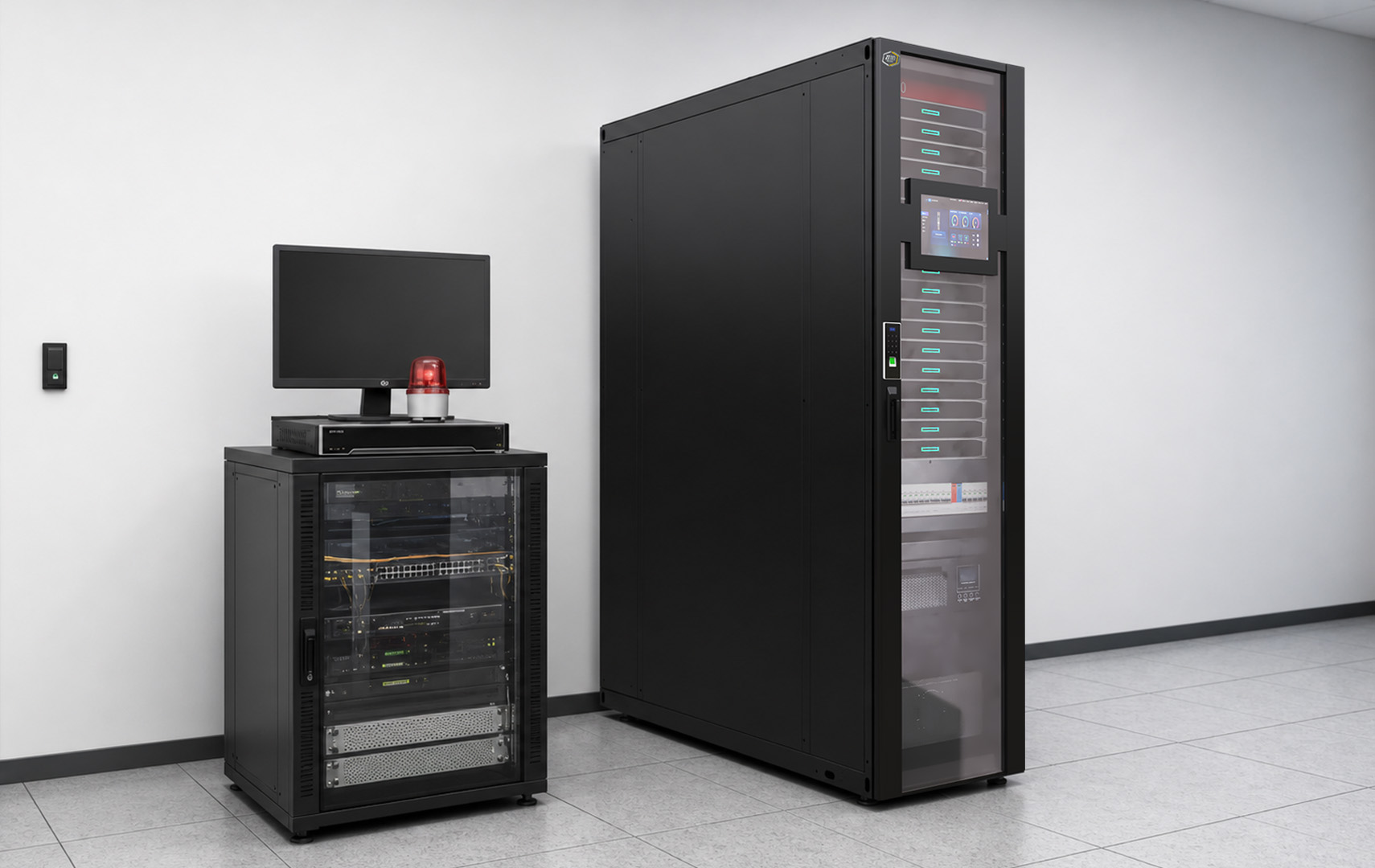
A micro data center is a complete IT infrastructure platform that combines computing, power, cooling, monitoring, and security functions into a compact enclosure. Among these subsystems, the integrated power panel plays a critical role because it manages how electrical power enters, protects, and distributes throughout the system.
Unlike traditional server rooms that use separate electrical rooms and distribution equipment, micro data centers require highly integrated designs where every component must work within a limited physical space.
A well-designed integrated power panel helps ensure stable power delivery, easier maintenance, and reliable operation for edge computing, enterprise IT, and distributed infrastructure applications.
For this reason, selecting a micro data center solution requires evaluating not only the enclosure design but also the engineering quality of its internal power distribution system.
Integrated Power Panel Design for Micro Data Centers
The integrated power panel in a micro data center is not simply a standard electrical cabinet installed inside an enclosure. It is designed specifically for the power requirements, space limitations, and operating environment of the complete system.
A typical integrated power panel combines incoming power management, circuit protection, monitoring functions, and distribution components into one coordinated assembly.
The design usually considers several important factors, including electrical capacity, protection coordination, heat management, maintenance accessibility, and compatibility with other subsystems.
For example, the panel must work together with the UPS system, cooling equipment, monitoring platform, and IT racks. Poor integration between these systems can create operational risks even when individual components meet their own specifications.
In the Warrior Modular Data Center platform, the integrated power panel is designed as part of the complete system architecture rather than as an independent add-on component. This approach allows electrical distribution, cooling airflow, structural layout, and management systems to be considered together during the design stage.
Electrical Configuration and Power Distribution Considerations
Micro data centers are deployed in different regions and environments, so integrated power panels need flexible electrical configurations.
Depending on project requirements, systems may support different input voltage options, including common single-phase and three-phase AC configurations.
The panel capacity must match the expected IT load while also supporting cooling systems, monitoring equipment, and other supporting infrastructure.
Proper sizing is important because an undersized power panel may limit future expansion, while an oversized system can increase unnecessary cost and space requirements.
Another important design factor is branch circuit protection. Each connected load should have appropriate protection so that a localized electrical fault does not affect the entire micro data center.
This requires careful selection and coordination of protective devices, including circuit breakers and monitoring components.
Space Optimization and System Integration
One of the main advantages of micro data centers is their compact deployment model. Therefore, the integrated power panel must be designed with efficient space utilization in mind.
The physical arrangement of electrical components affects:
- Maintenance access
- Cable routing
- Heat dissipation
- System reliability
A properly designed panel should allow technicians to perform inspections and maintenance without disrupting other systems.
For outdoor or demanding environments, enclosure protection levels should also match deployment conditions. Protection requirements may vary depending on whether the micro data center is installed indoors, outdoors, or in industrial environments.
The power panel should work together with the enclosure structure to maintain reliable operation under expected environmental conditions.
Standards and Compliance Requirements
Industry standards provide important guidance for designing and testing integrated power distribution systems[1].
Common standards related to electrical assemblies and data center infrastructure include:
- IEC 61439 series, including the applicable product-specific part for the low-voltage assembly design.
- UL 67 requirements for panelboards where applicable and project-specific North American projects
- ISO/IEC 22237-related requirements for data center infrastructure
The specific standards required depend on project location, application environment, and customer requirements.
For micro data center projects, compliance should not only focus on individual electrical components. The interaction between the power panel and the complete enclosure system is equally important.
A panel that performs well during standalone testing may require additional validation after integration with cooling, monitoring, and IT equipment.
The Warrior Modular Data Center approach focuses on system-level integration, ensuring that the integrated power panel is evaluated as part of the complete platform.
Factory Acceptance Testing: Ensuring Quality Before Deployment
Factory Acceptance Testing (FAT) is an important stage for validating micro data center quality before shipment.
For integrated power panels, FAT typically verifies electrical safety, component installation, protection functions, monitoring accuracy, and overall system operation.
Testing procedures may include insulation resistance checks, grounding verification, protection device testing, power monitoring validation, and other inspections where required by the project FAT protocol.
Compared with testing individual components separately, system-level FAT provides a more complete evaluation because it verifies how different subsystems operate together.
For example, the power panel must communicate correctly with the monitoring system, operate properly with UPS functions, and maintain reliable performance within the actual enclosure environment.
Detecting integration issues during factory testing helps reduce installation risks and improves deployment efficiency.
Beyond FAT: Site Commissioning and Operational Validation
Factory testing is only one stage of quality verification. After installation, site acceptance testing and commissioning confirm that the micro data center performs correctly in its actual operating environment.
During commissioning, engineers verify electrical connections, system communication, power quality, and interaction between power, cooling, and IT equipment.
This process ensures that the complete micro data center solution operates according to the project requirements.
A reliable manufacturer should provide support throughout the entire lifecycle, from initial design and factory testing to installation and operation.
Why Choose ZTMMDC Warrior Modular Data Center?
ZTMMDC designs and manufactures Warrior Modular Data Center solutions with integrated power distribution systems developed as part of the complete platform.
The integrated power panel is engineered together with the enclosure structure, cooling system, monitoring platform, and IT infrastructure requirements.
Through system-level design and factory testing, ZTMMDC helps customers deploy compact and reliable micro data center solutions for edge computing, enterprise applications, and distributed infrastructure environments.
Conclusion
The integrated power panel is one of the most important components in a micro data center because it directly affects power reliability, system integration, and operational efficiency.
When selecting a micro data center solution, customers should evaluate more than the electrical specifications of individual components. The overall design approach, testing process, and manufacturer’s engineering capability are equally important.
A properly integrated power panel helps micro data centers achieve reliable operation while maintaining the flexibility required for modern edge and distributed computing deployments.
[1]Ministry of Industry and Information Technology of PRC. YD/T 32902017 Technical requirements of all-in-one micro modular data center[S]. Beijing: Posts & Telecommunications Press, 2017.
Table of Contents
- Why the Integrated Power Panel Matters in Micro Data Centers
- Integrated Power Panel Design for Micro Data Centers
- Electrical Configuration and Power Distribution Considerations
- Space Optimization and System Integration
- Standards and Compliance Requirements
- Factory Acceptance Testing: Ensuring Quality Before Deployment
- Beyond FAT: Site Commissioning and Operational Validation
- Why Choose ZTMMDC Warrior Modular Data Center?
- Conclusion