 EN
Real world deployment challenges for channel partners working with integrated micro data center cabinet
I have successfully supported multiple reseller and channel partners’ teams across different global locations. There are consistent challenges encountered when customers seek compact IT infrastructures. Small to medium end customers do not usually have designated purpose-built computer room spaces. Traditional data center designs dictate that there be raised floors, mechanical rooms and long construction cycles. These designs place a lot of pressure on channel partners, especially when project budgets and site modification permissions are very restricted. Resellers also have the pressure to deliver validated hardware to customers so that they can then focus on solution consulting as opposed to resolve integration issues.
One representative channel project illustrates these practical hurdles. A regional system integrator worked with multiple local retail and branch office clients who needed localized compute capacity. Initial proposals using discrete separate racks, standalone UPS and external cooling units created heavy integration burden for the partner. Every site required separate component sourcing, on-site assembly and repeated performance tuning. Site by site workmanship inconsistency led to extra after sales support workload for the channel team. The partner later adopted Wizard Modular Data Center as their core integrated micro data center cabinet offering. Core subsystems complete factory assembly and multi-stage factory acceptance testing inside our production facility. Field work reduces mainly to utility connection. This change cut on-site labor input noticeably and helped the channel partner deliver consistent project outcomes across different end-customer locations.
This practical experience aligns with content from ASHRAE TC 9.9 Datacom Encyclopedia. The document notes that integrated micro data center cabinet style deployments serve an important niche for locations without purpose built data hall infrastructure. Thermal stability, built-in protection mechanisms and pre-tested subsystem coordination become critical evaluation points for infrastructure deployed inside ordinary office or commercial building environments.
Core hardware features built within integrated micro data center cabinet implementations
A capable integrated micro data center cabinet combines power backup, cooling, fire suppression, physical security and monitoring within unified rack groupings, while preserving maximum usable rack space for customer IT hardware. Many buyers mistakenly treat these units as simple standard server racks. In reality the supporting facility subsystems are fully pre-coordinated rather than added as aftermarket attachments. Poor matching between cooling output, UPS capacity and cabinet enclosure often creates avoidable operational trouble for end users.
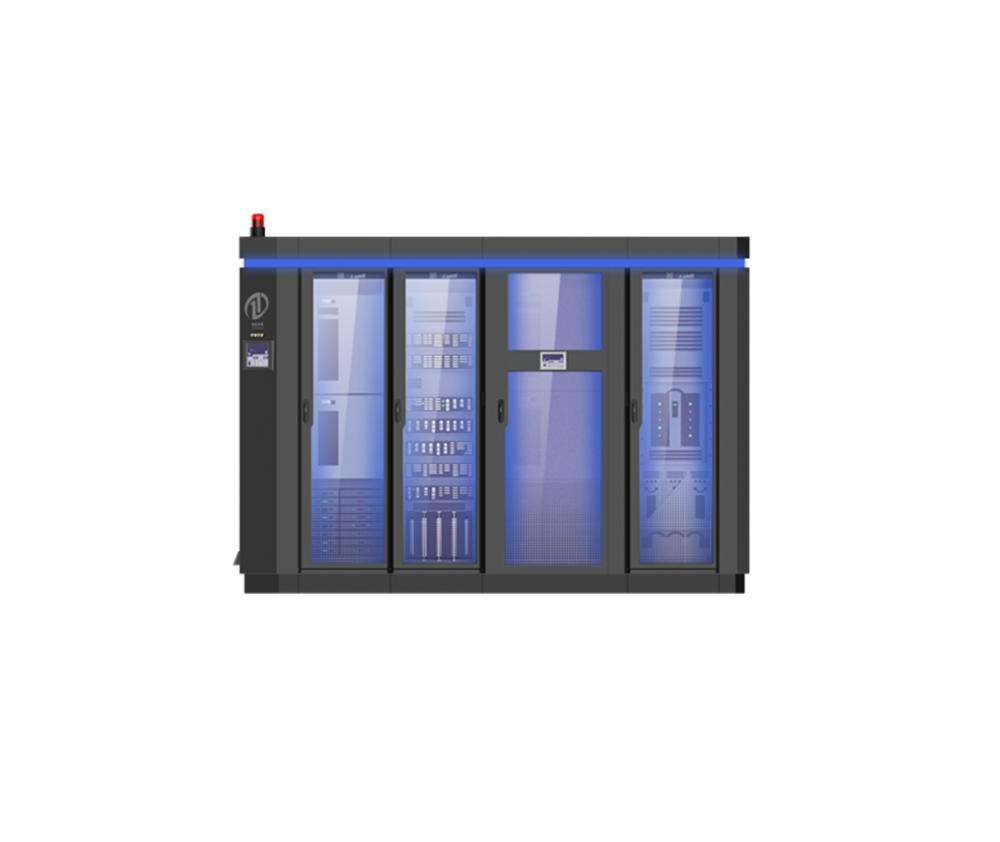
The Wizard Modular Data Center acts as our production ready integrated micro data center cabinet solution built for small and medium scale deployments. Configurations cover three to eight cabinet groups, supporting 42U or 47U rack heights. All power distribution, backup power units, in row cooling modules, fire protection and security controls are pre-integrated, reserving full rack space for customer IT equipment. Every unit goes through complete mechanical assembly, functional commissioning and simulated load testing within our 30000 square meter manufacturing workshop. This factory validation helps channel partners avoid unpredictable conflicts which frequently appear when separate components get assembled on customer premises.
According to guidance from ANSI/ASHRAE Standard 90.4 for data center energy design, compact modular infrastructure must balance cooling efficiency with real world site constraints. The cooling framework inside this integrated micro data center cabinet can dynamically adjust operating states responding to actual IT load variation. Hot and cold airflow containment controls reduce unnecessary energy draw. Channel partners receive verified performance documentation so they can clearly communicate expected operating characteristics to retail, branch and enterprise end buyers.
Site adaptability advantages of integrated micro data center cabinet for diverse end-customer premises
Many end customers purchasing integrated micro data center cabinet solutions operate inside existing office buildings, retail headquarters, remote branch sites or converted commercial spaces. These locations rarely meet strict traditional computer room specifications. Floor load limits, ceiling height restrictions and limited space for extra auxiliary equipment create real boundaries for infrastructure rollout. Good integrated cabinet design must work around these existing building conditions instead of forcing costly building reconstruction.
The engineering team has field experience deploying Wizard Modular Data Centers across building types. One major benefit is low site modification. A standard micro data center has a cabinet that traditionally would sit on a raised floor. Due to the flexibility of modular construction, Wizard can manufacture data center cabinets that can be placed on any surface, and therefore, be installed in any room in a building, including standard office spaces. Major hardware modules can be shipped and received separately, and then assembled onsite in a relatively short time window. This flexibility is especially beneficial to channel partners serving retail outlets, branch offices of local and regional governments and business. Partners can quickly set up IT infrastructure for customers without the end customers having to go through the lengthy civil engineering approvals process.
Protection and tolerance to the surrounding environment are also critical. The design of the Wizard enclosure offers stability to office environment temperature variation. Built-in monitoring tracks temperature and power status. A built-in DCIM provides real time data and cab be integrated into a partners’ own remote monitoring service to end customers. The unit ships with full factory test reports and component specification. This helps resellers satisfy due diligence for their end customers.
Channel business value brought by integrated micro data center cabinet solution portfolios
For reseller and system integrator partners, selecting the correct integrated micro data center cabinet product influences project profit margin, after-sales workload and overall customer satisfaction. Products with fragmented on-site integration transfer large technical risk onto the channel. When component compatibility problems surface after delivery, partners absorb extra support cost even if they did not manufacture individual hardware pieces.
Wizard Modular Data Center as an integrated micro data center cabinet shifts most integration risk back to the original manufacturer. Subsystem matching, functional debugging and load simulation all complete during factory phases. Channel teams focus on site survey, requirement collection, delivery coordination and final utility hook-up instead of complex cross-component troubleshooting. The product supports incremental scaling. Partners can deliver smaller three-cabinet configurations for initial branch requirements, then add additional cabinet modules later as end-customer compute demand expands. This pay-as-you-deploy model gives resellers flexible options when negotiating multi-phase project roadmaps with retail and enterprise buyers.
We supply channel partners with standardized technical briefings, configuration reference materials and project delivery checklists. These resources reduce internal training overhead for reseller technical staff. Partners can reference verified performance data rather than building all performance estimates from scratch. Consistent product quality across different order batches helps channel businesses build stable reputation among their local retail and enterprise client base.
Long term operation considerations for integrated micro data center cabinet end-users and channel supporters
Even well-built integrated micro data center cabinet hardware will show performance drift without reasonable ongoing operation arrangements. Many end-customer teams who purchase compact modular infrastructure lack dedicated data center operation staff. Channel partners often take partial or full responsibility for periodic inspection, firmware update and fault response. This creates both service opportunities and potential business risk if operational best practices are not clearly defined during project handover.
Wizard Modular Data Center includes design features oriented toward simplified long-term maintenance. Key service components have accessible service points without requirement for full cabinet disassembly. The embedded DCIM platform logs power, thermal and security related events for later review. Spare-part definitions keep consistent across product batches, making stock planning easier for channel support teams. At project handover we provide complete operation manuals, factory test records and maintenance guidance documents. These materials can be shared onward by resellers to their retail and enterprise end customers.
We maintain cross-border remote diagnostic assistance for shipped units. This capability supports channel partners when they handle technical issues for geographically dispersed end-customer sites. Clear division of responsibility between manufacturer, channel reseller and end-user helps avoid misunderstanding when faults appear. Proper attention to lifecycle operation allows integrated micro data center cabinet deployments to sustain stable performance through multi-year service periods for retail branches and distributed business locations.
Frequently Asked Questions
Q1: What core benefits does integrated micro data center cabinet bring for channel reseller partners?
A: Factory pre-integration lowers on-site technical risk and after-sales burden. Products fit non-computer-room environments and support phased expansion for retail and branch end customers.
Q2: How does Wizard Modular Data Center function as integrated micro data center cabinet in real deployments?
A: It integrates power, cooling, fire suppression and monitoring across three to eight cabinet groups. Factory testing reduces site work mainly to basic utility connection, suitable for small-to-medium-scale distributed infrastructure projects.
Q3: Does integrated micro data center cabinet comply with widely-accepted industry design standards?
A: Thermal and energy related design references ANSI/ASHRAE Standard 90.4 and ASHRAE TC 9.9 Datacom Encyclopedia. Each unit completes multi-phase factory acceptance testing before shipment. Final performance also depends on proper on-site utility setup.
Q4: Can integrated micro data center cabinet scale after initial deployment for growing retail business requirements?
A: Yes. Wizard Modular Data Center allows adding extra cabinet modules. Standardized mechanical and electrical interfaces support incremental expansion without tearing down existing running infrastructure.
Q5: What kind of after-sales resources can channel partners obtain for integrated micro data center cabinet projects?
A: Partners receive configuration documentation, factory test records and operation guidance. Manufacturer remote diagnostic support is available, helping resellers serve retail and branch end-users across different regions.
Table of Contents
- Real world deployment challenges for channel partners working with integrated micro data center cabinet
- Core hardware features built within integrated micro data center cabinet implementations
- Site adaptability advantages of integrated micro data center cabinet for diverse end-customer premises
- Channel business value brought by integrated micro data center cabinet solution portfolios
- Long term operation considerations for integrated micro data center cabinet end-users and channel supporters