 EN
AI Data Center Definition and Why It Is Different
An AI data center is a specialized computing infrastructure designed to support artificial intelligence workloads, including machine learning training, AI inference, large-scale data processing, and high-performance computing applications.
Unlike traditional data centers that mainly support general enterprise applications, AI data centers are optimized for intensive computing tasks that require powerful accelerators, high-speed networking, advanced cooling systems, and reliable power infrastructure.
The core difference lies in the hardware and infrastructure design. Traditional facilities are usually built around general-purpose servers, while AI data centers are designed to support specialized computing equipment such as GPUs, AI accelerators, and high-performance servers.
By combining advanced computing hardware with optimized power, cooling, and networking systems, AI data centers provide the foundation required for industries adopting generative AI, intelligent manufacturing, autonomous systems, scientific research, and cloud AI services.
Core Infrastructure Components of an AI Data Center
AI Computing Hardware and Accelerator-Based Architecture
The computing architecture of an AI data center is centered around specialized processors designed for parallel workloads.
GPUs, AI accelerators, ASICs, and other specialized computing technologies enable faster processing of complex AI models compared with traditional CPU-based systems.
These accelerator-based platforms are commonly used for:
- Large language model training
- AI inference services
- Computer vision applications
- Industrial AI analytics
- Scientific computing
As AI models become more complex, organizations require infrastructure that can support higher computing capacity, efficient resource utilization, and flexible expansion.
High-Density Power Infrastructure
AI workloads typically require more computing resources than conventional enterprise applications, which increases power demand inside the data center.
AI data center designs often include:
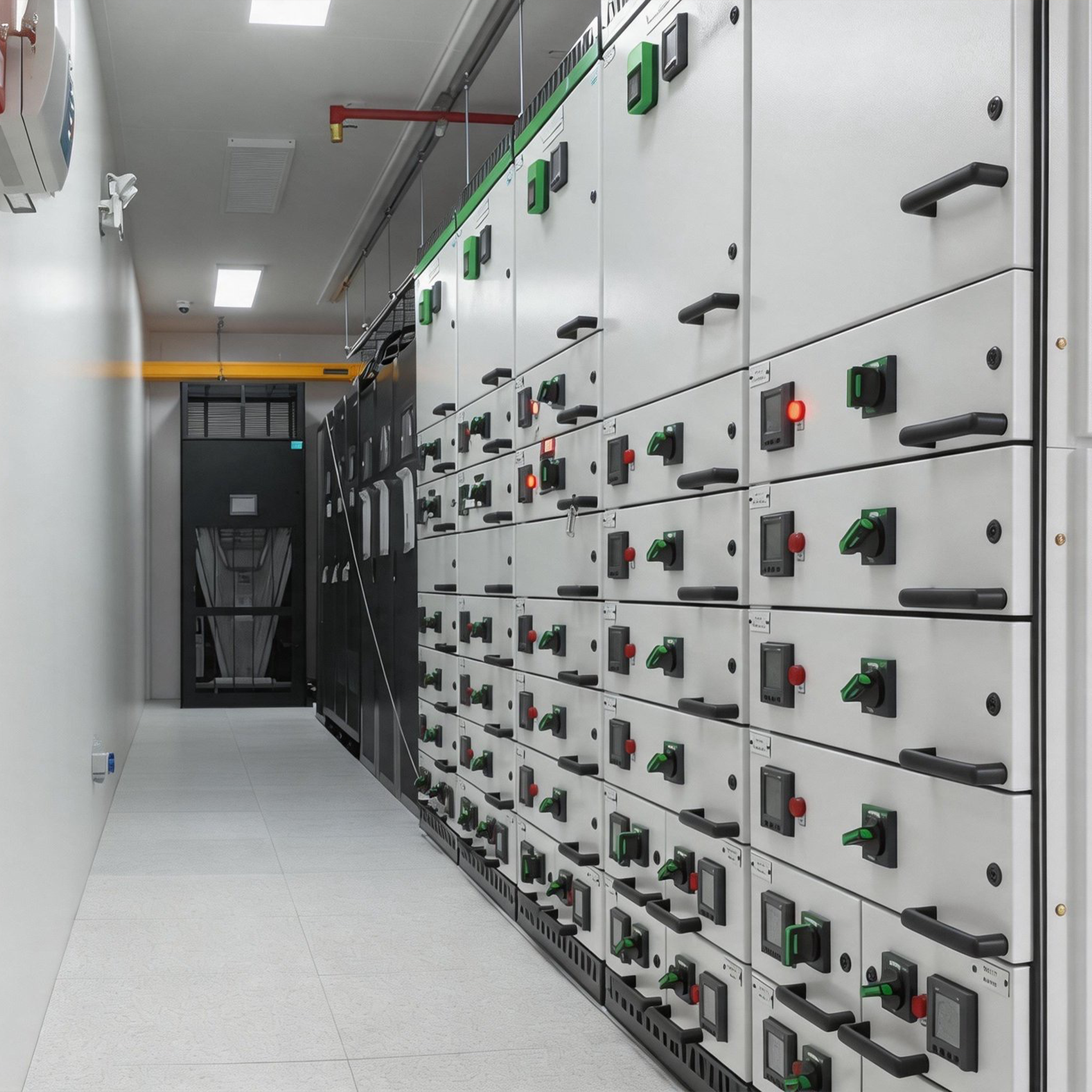
- High-capacity power distribution systems
- Advanced monitoring platforms
- Reliable UPS solutions
- Scalable electrical infrastructure
Compared with traditional IT environments, AI-focused deployments require more careful planning of power delivery, rack configuration, and future expansion capability.
A well-designed power architecture helps ensure stable operation while allowing organizations to increase computing capacity as AI requirements grow.
Advanced Cooling Solutions for AI Workloads
Higher computing density creates greater thermal management requirements.
Traditional air cooling solutions may be suitable for many enterprise applications, but some AI workloads require more advanced cooling technologies.
Common AI data center cooling approaches include:
- Precision air cooling
- Rear-door heat exchangers
- Direct-to-chip liquid cooling
- Immersion cooling solutions
Liquid cooling technologies are becoming increasingly important for high-performance AI environments because they can efficiently remove heat from densely packed computing components.
The optimal cooling strategy depends on factors such as server configuration, workload requirements, facility design, and operational goals.
High-Speed Networking for AI Cluster Communication
AI training and inference workloads require fast communication between computing nodes.
Unlike traditional applications that mainly rely on user-to-server communication, AI clusters generate significant internal data exchange between servers and accelerators.
Therefore, AI data centers typically use high-performance networking technologies to support:
- Faster data transfer
- Efficient distributed computing
- Improved GPU utilization
- Large-scale AI model processing
A reliable network architecture is essential for maintaining performance in AI computing environments.
Common Applications of AI Data Centers
AI data centers are increasingly used across multiple industries where advanced computing capabilities are required.
Cloud AI and Enterprise Intelligence
Cloud providers and enterprises use AI infrastructure to support:
- Generative AI platforms
- Data analytics
- Machine learning services
- Intelligent business applications
Smart Manufacturing and Industrial AI
Manufacturing companies use AI computing resources for:
- Machine vision inspection
- Predictive maintenance
- Production optimization
- Industrial automation
Research and Scientific Computing
Research institutions rely on AI data centers for:
- Simulation
- Data analysis
- Advanced modeling
- High-performance computing applications
Edge AI Deployment
For applications requiring fast response times, AI infrastructure can be deployed closer to users or data sources through edge data centers and modular solutions.
How to Choose the Right AI Data Center Solution
Selecting an AI data center solution requires evaluating several factors:
- Computing requirements
- Accelerator hardware compatibility
- Power availability
- Cooling architecture
- Scalability needs
- Deployment environment
Different AI applications have different infrastructure requirements. A research organization may need large-scale computing clusters, while an industrial company may require compact edge AI infrastructure.
A properly designed AI data center solution should balance performance, reliability, scalability, and operational efficiency.
Frequently Asked Questions
What is an AI data center?
An AI data center is a specialized facility designed to support artificial intelligence workloads through advanced computing hardware, high-performance networking, reliable power systems, and optimized cooling solutions.
How is an AI data center different from a traditional data center?
AI data centers are designed for intensive AI workloads and typically use specialized accelerators, higher-performance networking, and advanced thermal management compared with traditional enterprise data centers.
Why do AI data centers need advanced cooling?
AI computing equipment generates significant heat, especially in high-density deployments. Advanced cooling solutions help maintain stable operation and improve infrastructure efficiency.
What industries use AI data centers?
AI data centers support industries including cloud computing, manufacturing, healthcare, research, telecommunications, finance, and enterprises adopting artificial intelligence technologies.