 EN

Prefabricated Data Center: Scope and Acceptance
Quick Answer
| A prefabricated data center is an agreed package of enclosure, power, cooling, controls, fire-safety and rack infrastructure assembled and tested in a factory, then shipped for site connection and final acceptance. “Prefabricated” does not mean finished when delivered. Define factory work, site work and interface tests through drawings, schedules, factory acceptance testing (FAT) and site acceptance testing (SAT). |
Define the Package Before Comparing Prices
Prefab proposals often price different boundaries. Issue a responsibility matrix with the request for proposal: every line needs an accountable party, handover point and acceptance record. “By others” is incomplete unless the responsible party and deliverable are named.
Container format is not a power-density statement. ZT's published ranges are 15–25 kW total IT load for one 20-foot unit and 40–70 kW total IT load for one 40-foot unit. Both are whole-container values, not kW per rack.
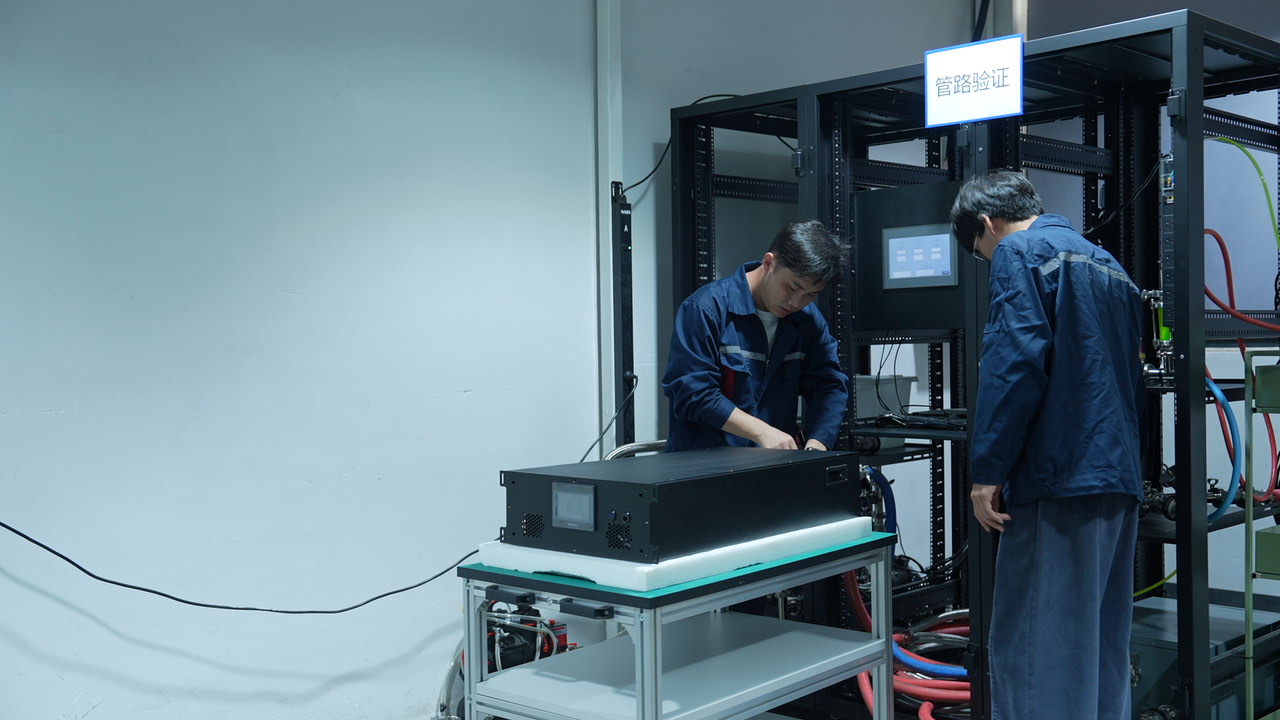
Scope Split: Factory, Site and Interface Acceptance
| System or work package | Factory scope to specify | Site scope to specify | Interface acceptance evidence |
| Enclosure and racks | Fabrication, rack fixing, internal doors, seals and finishes | Foundation, lifting, placement, anchoring and external access | Approved dimensions, level/alignment record, anchor inspection, door and seal check |
| Electrical | Internal switchgear, UPS/PDU arrangement, protective devices, internal cabling and labels | Utility supply, transformer or upstream switchboard, earthing connection and feeder termination | Approved single-line diagram, cable test records, phase/voltage checks and protection settings |
| Cooling | Internal cooling equipment, controls, sensors and internal pipework where included | External heat rejection, field pipework, water quality, drains and make-up systems where required | Duty-point record, flow/temperature checks, leak test and alarm demonstration |
| Network and controls | DCIM/BMS panels, internal sensors, gateways and point mapping | Carrier service, external network, site BMS integration and cybersecurity approval | Point-to-point list, communications test, time synchronization and alarm routing record |
| Fire and life safety | Included detection, suppression components, alarms and interlocks | Authority approval, external alarm connection, egress provisions and site fire strategy | Cause-and-effect test, interface signal record and approval documents |
| Commissioning | FAT procedures, factory records and open-item list | Energization plan, SAT, integrated systems testing and final training | Signed test sheets, closed punch list, as-built documents and acceptance certificate |
Freeze the project-specific split before manufacture. Show every connection, rating, responsible party and test method on the interface drawings.
What the Factory Should Complete
The purchase specification should identify which factory tasks are included:
- enclosure fabrication and rack installation;
- internal power distribution, protection, cable routing and labels;
- cooling equipment, internal pipework and control sequences;
- monitoring sensors, DCIM/BMS point lists and alarm logic;
- fire detection or suppression components within the supplied boundary;
- internal earthing and bonding;
- document production, inspection and FAT.
Freeze the rack schedule, maximum load by rack, voltage, redundancy, battery autonomy, server airflow, cooling medium, site conditions and external connections before manufacture.
For liquid cooling, separate facility-water and technology-cooling-system scope. ZT CDU parameters are 200–1400 kW, ±1°C secondary-side temperature control and an available 1+1 arrangement for pumps, instruments, power and communications. The project duty point still requires engineering approval.
What the Site Team Should Complete
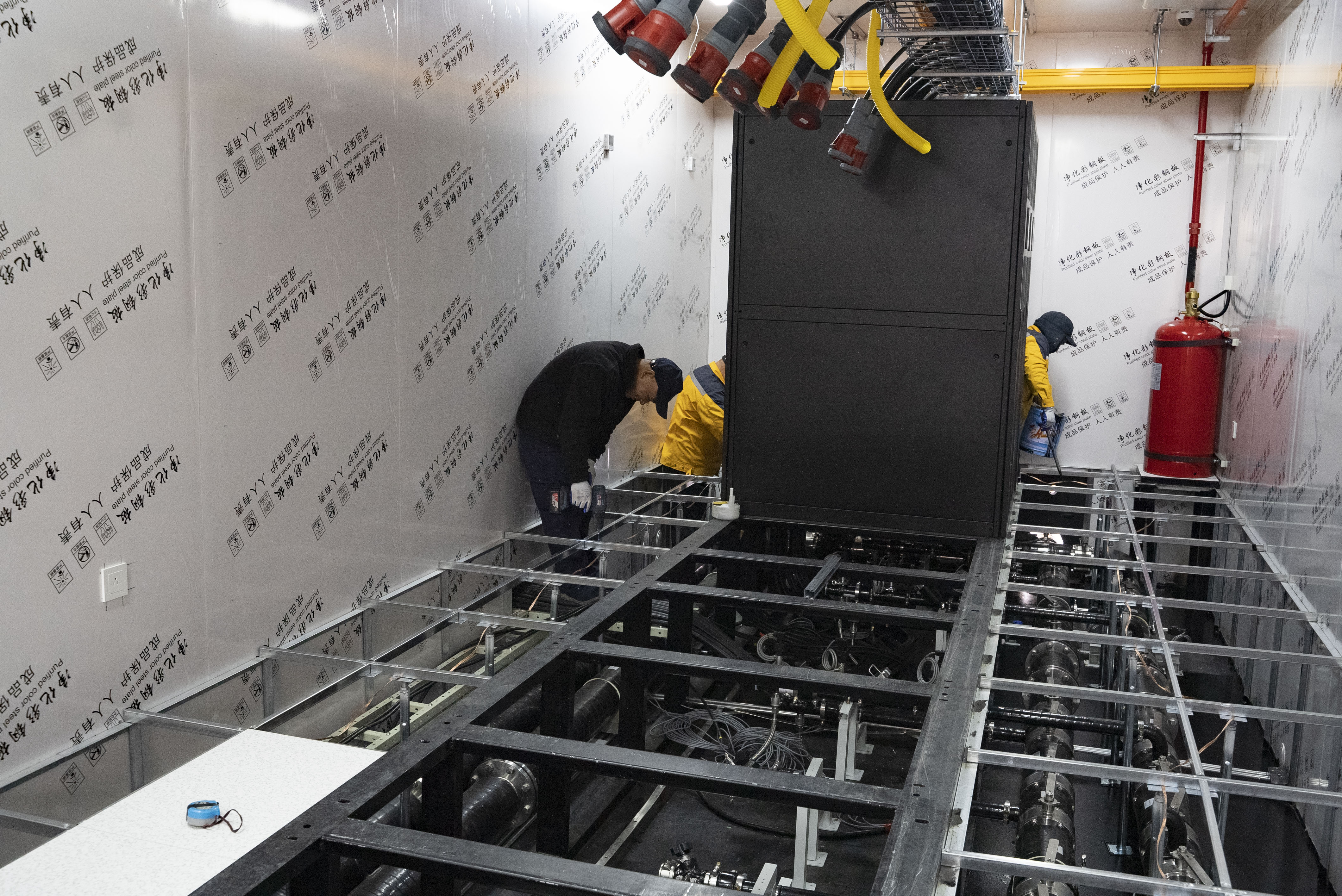
Site scope normally includes permits, foundations, drainage, lifting access, incoming electrical service, external earthing, network service, field pipework or heat rejection, and connections to site fire and building-management systems. Before commissioning, confirm water treatment, flushing, network addresses, upstream protection and safe access. SAT cannot close an unbuilt interface.
FAT: Evidence Required Before Shipment
Approve FAT prerequisites, instruments, limits and witness points before testing. Request records for:
- drawing and bill-of-material conformity;
- visual inspection, labels, workmanship and equipment access;
- electrical insulation, continuity, phase sequence and earthing checks as applicable;
- UPS, switchgear and protective-device functional sequences;
- cooling start/stop, duty/standby sequence and specified alarm simulation;
- controls point-to-point checks, communications and event logging;
- fire alarm, shutdown and other agreed cause-and-effect logic;
- leak checks for included factory pipework;
- power-failure and recovery sequence where the test setup permits;
- punch-list ownership, closure status and shipment release.
FAT covers the factory package, not site utility quality, external cooling, carrier service or authority approval.
SAT: Prove the Installed Interfaces
After connection, SAT repeats functions affected by transport or field work and adds site-only tests:
- inspection for transport damage and confirmation of anchors, seals and access;
- incoming voltage, phase, earthing and upstream protection checks;
- field-cable insulation and termination records;
- external cooling-loop flow, temperature, pressure and leak records as applicable;
- DCIM/BMS, network and remote-alarm communication tests;
- fire-system interfaces and approved cause-and-effect tests;
- operation under an agreed test load, including alarm and recovery behavior;
- integrated failure scenarios across power, cooling and controls;
- operator training, as-built drawings, settings backup and spare-parts handover;
- closure of FAT and SAT punch-list items.
Replace “system normal” with a test ID, instrument, observed value, limit, witness and disposition.
A Short Example of a Bad Purchase
A buyer orders a “40-foot, 70 kW prefabricated data center” and assumes external heat rejection, utility work and campus fire-panel connection are included. The supplier priced only the factory package. On arrival, the cooling connection, feeder and approved alarm interface are missing, so SAT cannot begin. A responsibility matrix would have exposed these omissions before manufacture.
FAQs
Is a prefabricated data center the same as a container data center?
No. A container is one enclosure format; prefabricated facilities may use data-hall, power or cooling modules.
What is the difference between prefabricated and modular?
“Prefabricated” describes where assemblies are produced. “Modular” describes an architecture divided into repeatable capacity or functional blocks. A project can be both.
Does FAT replace commissioning on site?
No. FAT checks the factory-built boundary. SAT and integrated commissioning check transport effects, field connections and the behavior of the completed system.
Who owns external utilities and heat rejection?
The contract decides. The responsibility matrix should name the party providing each feeder, pipe, drain, carrier link and external cooling component.
What should be frozen before manufacture starts?
Freeze the rack schedule, loads, electrical topology, cooling duty, redundancy, external connections, controls points, fire interfaces, drawings and acceptance plan.
How should buyers compare prefab proposals?
Normalize proposals to one scope boundary. Compare equipment, exclusions, interface ownership, FAT/SAT evidence and assumptions—not only price.
Three Takeaways
- Define a prefabricated data center by its work boundary, not its enclosure label.
- Assign every factory-to-site interface to one party and one acceptance test.
- Use FAT to release the package for shipment and SAT to accept the installed system.
About ZT
Founded in 2009, ZT (ZheJiang ZhiTing Information Technology Co., Ltd) designs and manufactures prefabricated data center infrastructure from a 30,000 m² production facility in Zhejiang, China, with 200+ staff. Certifications include ISO 9001, CE, CCC, TUV, RoHS, UL, and TIA-942.
Request a Scope Review
Send the rack schedule, utility data, redundancy target, cooling conditions and draft responsibility matrix. Ask for factory scope, site scope, interface drawings and FAT/SAT records.
Request a technical consultation or review ZT's data center project solutions.
Sources
Table of Contents
- Prefabricated Data Center: Scope and Acceptance
- Quick Answer
- Define the Package Before Comparing Prices
- Scope Split: Factory, Site and Interface Acceptance
- What the Factory Should Complete
- What the Site Team Should Complete
- FAT: Evidence Required Before Shipment
- SAT: Prove the Installed Interfaces
- A Short Example of a Bad Purchase
-
FAQs
- Is a prefabricated data center the same as a container data center?
- What is the difference between prefabricated and modular?
- Does FAT replace commissioning on site?
- Who owns external utilities and heat rejection?
- What should be frozen before manufacture starts?
- How should buyers compare prefab proposals?
- Three Takeaways
- About ZT
- Request a Scope Review
- Sources